The language was anything but diplomatic. The Bangladesh foreign ministry was “outraged” that a “convicted genocider” — the country’s disgraced former prime minister Sheikh Hasina — had been allowed to air “venomous vitriol” at a Foreign Correspondents’ Club of South Asia event in New Delhi. “Allowing her the opportunity to openly interact with the media under any pretext is deeply hurtful to our people’s sentiment,” the 5 August statement went on, “and detrimental to the development of harmonious bilateral relations between Bangladesh and India.”
Reading the ministry’s scathing comments my mind went back to a conversation last year at New Delhi’s exclusive, colonial-era Gymkhana Club, where a former senior Indian security official relayed to me the theory that Hasina had been overthrown by the CIA with the aim of installing a more pliable leader.
“Who put Yunus in power?” he said, referring to Nobel laureate Muhammad Yunus, who became Bangladesh’s interim leader after Hasina fled. “It’s a serious question. Yunus doesn’t represent anyone except the US. He belongs to them… he’s an artificial creation.” Later, a former Indian diplomat warned me it was “just a matter of time” before “terrorism and radicalism come back in Bangladesh,” adding that “any vestige of secularism is now being extinguished” under Yunus.
Did they really believe the conspiracy theories they were recounting? Their remarks seemed so disconnected from what I knew was happening on the ground in Bangladesh that I couldn’t be sure. Many contacts also quietly acknowledged that India’s hostility after Hasina fled was a self-defeating strategy that only further amplified Bangladeshi resentment. Even the more hawkish Indian officials seemed to recognise it couldn’t last.
What especially annoyed the Bangladeshi foreign ministry about Hasina’s speech wasn’t just that she gave it on Indian soil: the timing was also highly provocative. It was exactly two years since Hasina had fled to India after protesters descended on her Dhaka residence in protest at the brutal government she led. But she remains defiant over her role in violently suppressing demonstrations in July–August 2024, when United Nations investigators estimate up to 1400 people died, the vast majority shot by Bangladesh’s security forces, and continues to insist her government showed restraint.
Hasina has since been convicted of crimes against humanity and sentenced to death in absentia, a verdict she rejects as politically motivated. India has yet to act on repeated requests to extradite its long-time ally.
While much of Bangladesh was remembering these “July martyrs” on 5 August, Hasina was telling journalists she would return to her native country by the end of this year. “I may be detained, I may be sent to prison. But fear cannot decide my duty to the people,” she said. “I cannot stay away while my beloved countrymen are suffering.” Few observers expect her to return in December, and the declaration appeared aimed more at trying to re-energise her party’s beleaguered activists.
The fallout from her press club comments continue. Bangladesh’s new prime minister Tarique Rahman, leader of Hasina’s long-time rival the Bangladesh Nationalist Party, had been expected to visit India for the first time since his election victory in February. Bangladesh has since told India that Hasina’s interaction with the media “vitiated” plans for the trip, and India needed to create a “propitious environment” for it to go ahead. The echo of prime minister Narendra Modi’s warning last year that Bangladesh should avoid rhetoric that “vitiates the environment” is probably still ringing through South Block, as India’s foreign ministry is known.
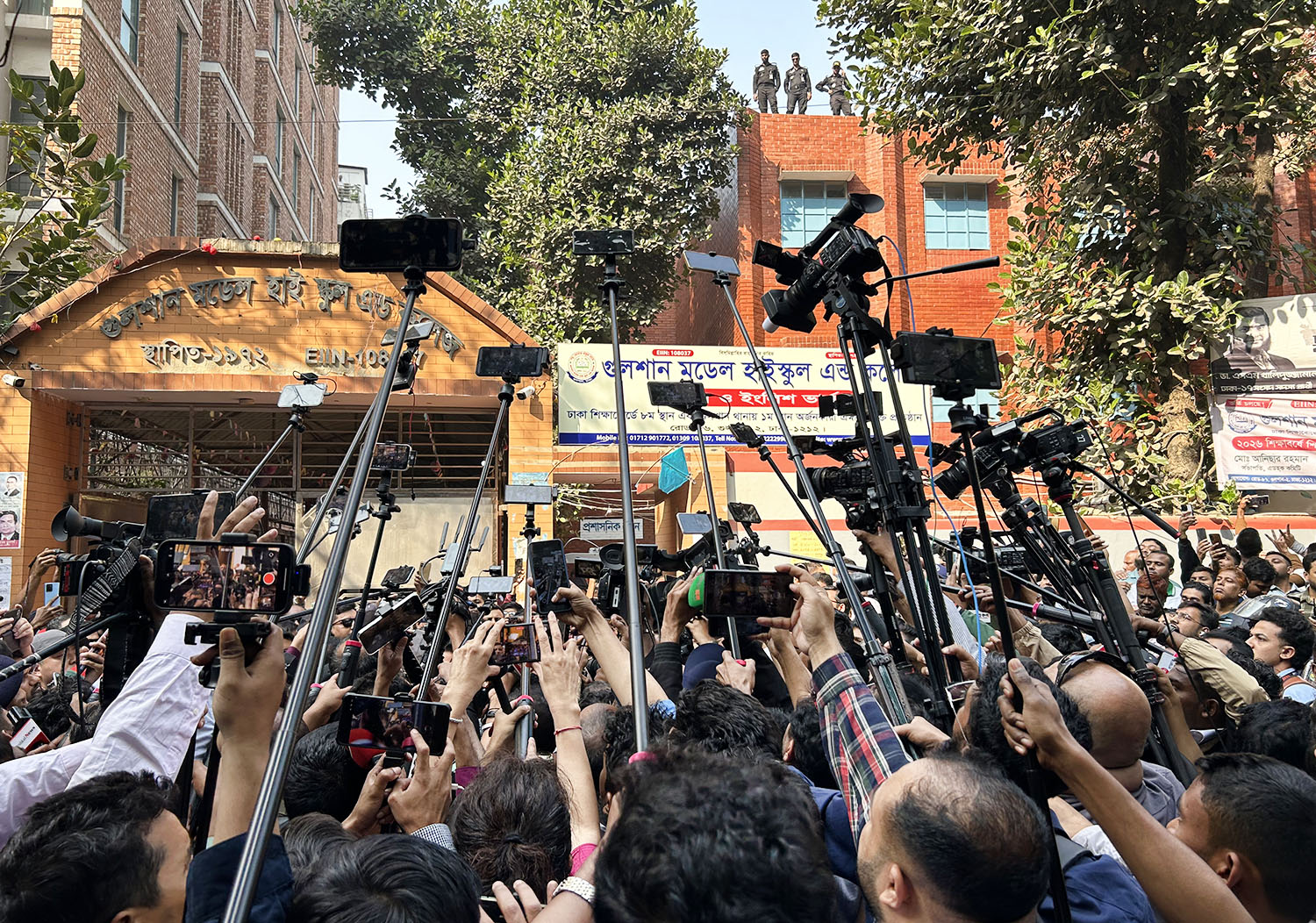
Bangladeshi and international media outside a Dhaka polling station as Bangladesh Nationalist Party leader Tarique Rahman voted on 12 February 2026. Thomas Kean/ Crisis Group
The visit is still likely to go ahead, potentially in the coming weeks. But the episode encapsulates how Bangladesh and India are still trying to find a diplomatic equilibrium in the wake of Hasina’s downfall. Under the interim government that followed, led by Nobel laureate Muhammad Yunus, relations plunged to perhaps their lowest ebb — no small statement, given the two countries’ historical animosities. But the reset many had hoped for, if not expected, after Bangladesh’s February election is still yet to materialise, and Hasina’s presence in New Delhi is far from the only irritant.
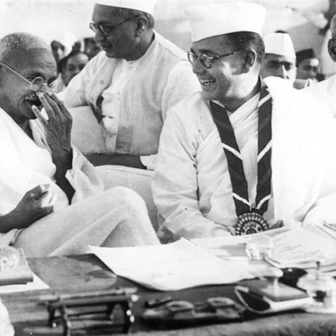
Why does India remain so attached to Sheikh Hasina? Personal ties matter; the Indian government has long maintained a close relationship with the Sheikh family. In 1971, it supported Bangladesh’s struggle for independence from Pakistan, a movement led by Hasina’s father, Sheikh Mujibur Rahman. Shortly after independence, he inked the India–Bangladesh Treaty of Friendship, Cooperation and Peace with Indira Gandhi.
Later, when Sheikh Mujib was assassinated by army officers in 1975, India gave Hasina sanctuary until she was eventually able to return home. More importantly, though, Hasina went on to deliver much of the security cooperation, connectivity and political partnership India had been seeking since Bangladesh’s independence. Her ouster was therefore a major strategic blow.
India is often said to have won the war but lost the peace in Bangladesh. For decades after Sheikh Mujib’s killing, bilateral relations were strained, if not outright hostile. India often viewed Bangladesh as insufficiently grateful for helping secure its independence and a threat to its national security; many in Bangladesh believed India’s intervention in 1971 was self-serving and complained bitterly of their country being treated as little more than a satellite. The depth of feeling is evident even in cricket, with many Bangladeshis traditionally backing Pakistan against India, despite the atrocities Pakistan and its proxies perpetrated during the liberation war.
But Hasina’s landslide election victory in December 2008 changed the dynamic. She immediately began to tackle India’s key security concerns — handing over anti-India militants, for example — and trade and connectivity expanded. Indian policymakers regularly referred to her fifteen years in power as a sonali adhyay, or “golden chapter.” They viewed Hasina as their only viable partner in Bangladesh, and continued to back her government even as it grew increasingly unpopular and authoritarian.
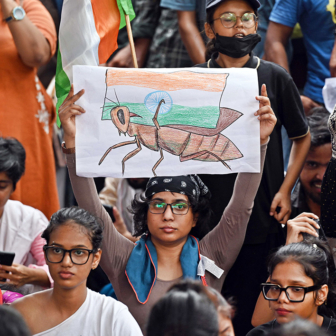
Indian support helped Hasina withstand international pressure through three deeply flawed elections, but domestic discontent at her corrupt and iron-fisted rule built like a pressure cooker. By the time protests erupted in mid-2024, anti-Hasina and anti-India sentiment had become deeply intertwined.
India’s response to Hasina’s downfall only further damaged its standing in Bangladesh. It tightened border controls and temporarily closed its visa-processing centres, citing security concerns; tit-for-tat trade restrictions soon followed. It allowed Hasina and her Awami League colleagues to rail against Yunus and his new administration from exile in India, while some mainstream Indian media outlets and India-based social media accounts circulated a sustained stream of false or misleading claims, including that attacks on Bangladeshi Hindus — some of which were real — amounted to a systematic campaign of genocide.
India’s Border Security Force began forcibly expelling thousands of people, including some Indians and Rohingya from Myanmar, simply by pushing them over the border. (India says it has been repatriating undocumented Bangladeshi nationals and accuses Bangladeshi authorities of taking too long to verify their identities, but many of the expulsions have bypassed established bilateral procedures.) The Indian foreign ministry, meanwhile, has repeatedly riled Bangladeshis by calling for “free, fair and inclusive elections” in Bangladesh — an oblique reference to the temporary ban imposed on Hasina’s Awami League party — despite having defended one-sided polls under Hasina as “a domestic affair.”
Ahead of the February election, India began extending an olive branch to the Bangladesh Nationalist Party, which seemed destined for victory in the absence of Hasina’s Awami League. When former prime minister Khaleda Zia, wife of party founder Ziaur Rahman, died in December following a long illness, Modi sent his foreign minister to Dhaka with a condolence letter for her son, Tarique Rahman. When the Bangladesh Nationalist Party won the election and Tarique Rahman became prime minister, Modi immediately invited him to visit India.
The Bangladesh Nationalist Party is not a natural partner for Modi’s government. Ziaur Rahman formed the party after Sheikh Mujib’s assassination as a broad coalition to oppose the Awami League, and it has long used anti-India rhetoric to rally supporters. But in recent years it had tempered its position, particularly after Hasina’s fall, when it assumed the mantle of the elected government in waiting. Party officials told me they wanted a constructive relationship with India and hoped pragmatism could prevail. But they were also adamant that India’s approach to Bangladesh needed to change: that it should no longer be based on a single person or party, but instead on the people of Bangladesh.
For many in Bangladesh, though, the problems between the two countries are rooted less in personalities than in geography. If history burdens the relationship, geography makes it inescapable.
The Bangladesh–India frontier is one of the world’s longest and most complex, winding from the Sundarbans mangrove forest on the Bay of Bengal to the remote forests of the Chittagong Hill Tracts, and cutting through densely settled farmland, shifting rivers and islands, and floodplains. Its remaining territorial anomalies were resolved only a little over a decade ago, under Sheikh Hasina, when India’s parliament passed a constitutional amendment greenlighting a 1974 border agreement and subsequent protocol concluded in 2011. But the constantly evolving ecology of the Bengal delta — particularly erosion, accretion and changes in river channels — continues to blur the riverine sections of the frontier.
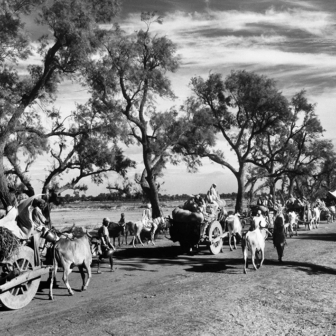
Ever present are the legacies of Bengal’s troubled colonial and post-colonial past, including the 1947 partition of British India, and Bangladesh’s emergence as an independent state in 1971. Partition drew an international boundary through communities in which Hindus and Muslims had lived side by side for generations, prompting mass displacement. Until 2015, thousands of Bangladeshis and Indians lived in what were known as “enclaves”: settlements belonging to one country but surrounded by the territory of the other.
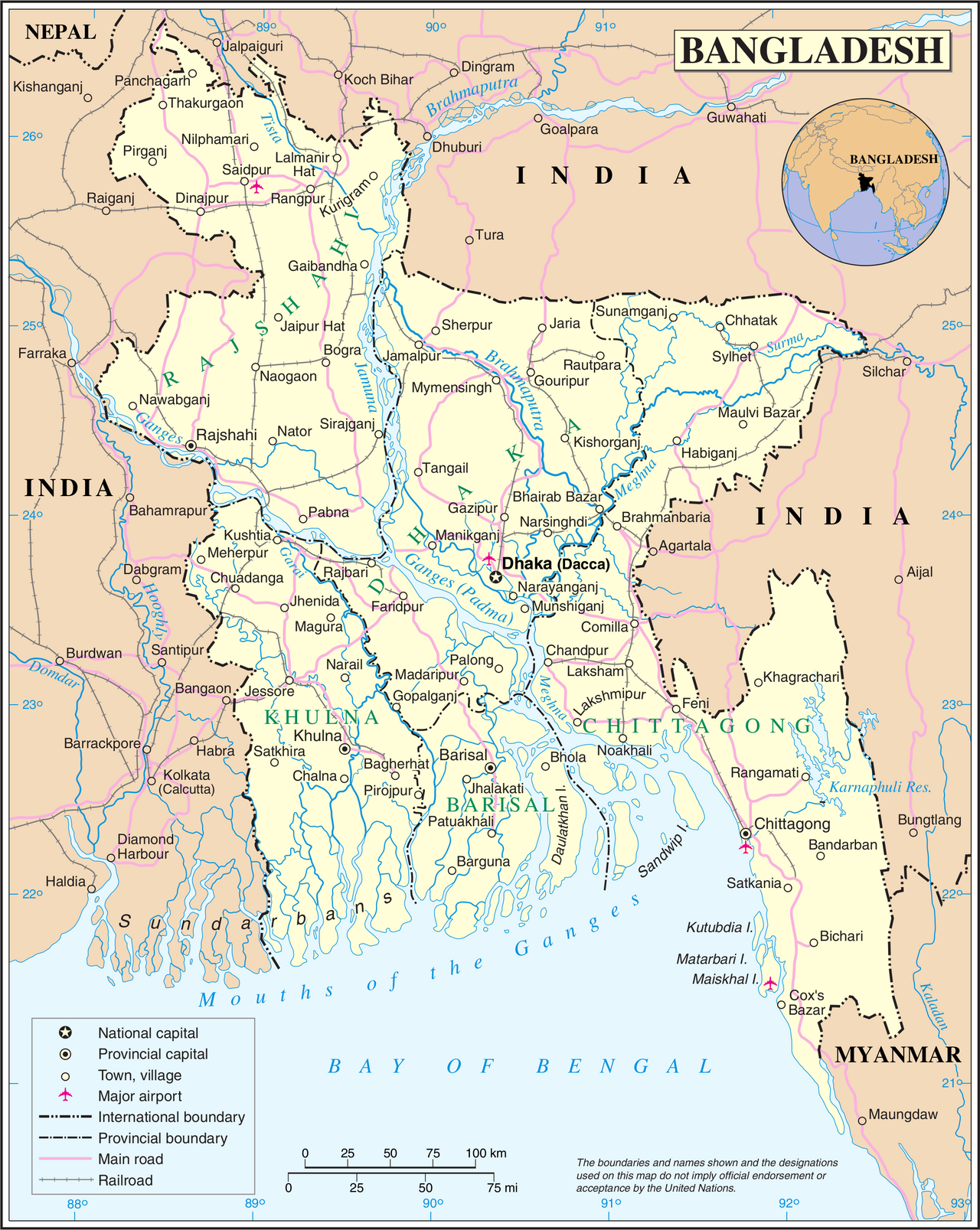
Post-Partition Bangladesh, formerly East Pakistan, is almost entirely surrounded by India. Wikimedia
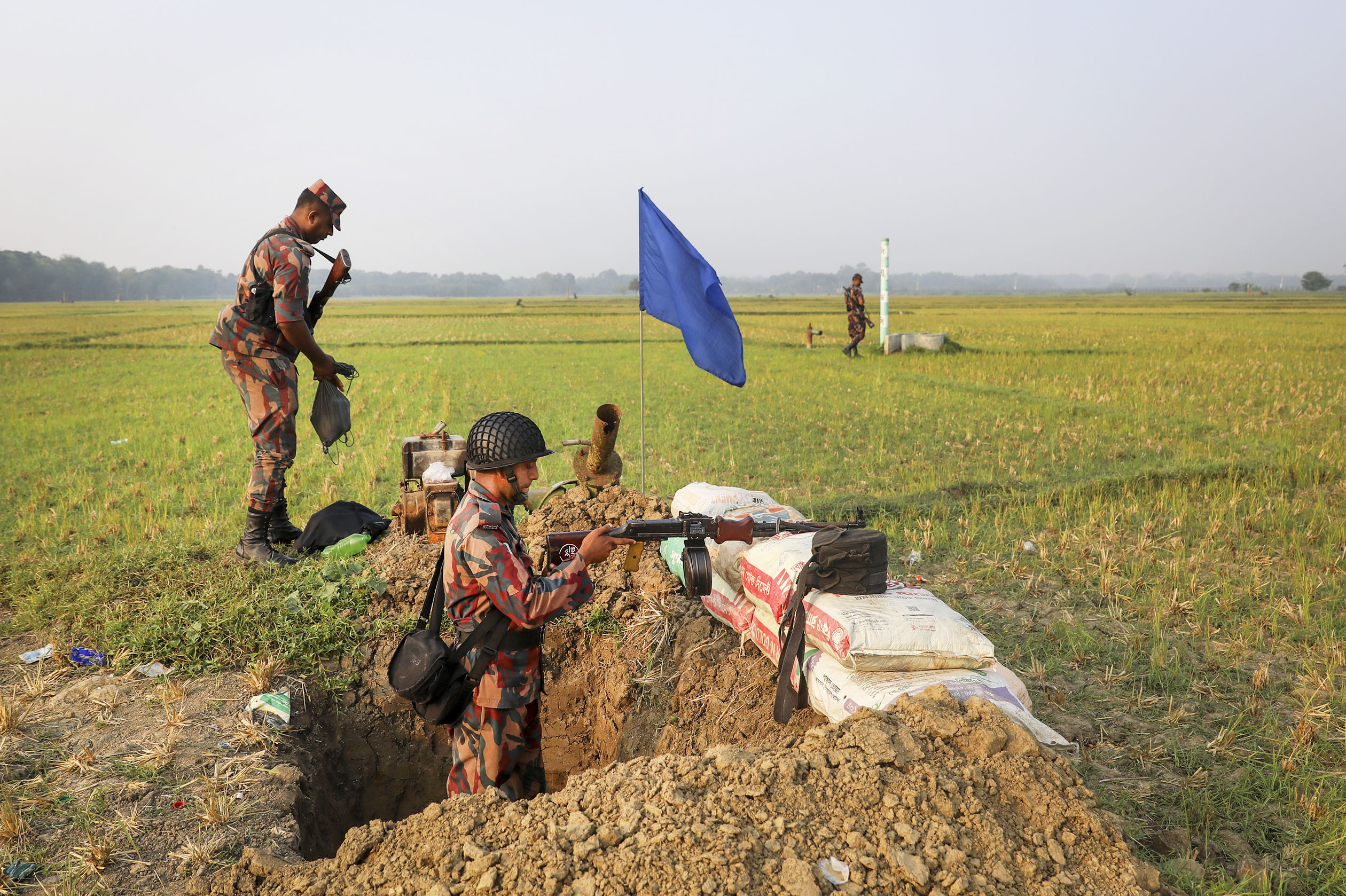
To many the border still feels like an artificial divide, albeit one that has progressively hardened. From the mid-1980s, India responded to growing anti-immigrant sentiment, particularly in the state of Assam, by erecting wire fences and guard towers. Construction accelerated in the 2000s and continued during Hasina’s premiership, with sections of the border further fenced, floodlit and capable of more sophisticated surveillance. Today almost 80 per cent of the 4096-kilometre boundary is fenced and the frontier is patrolled by tens of thousands of armed personnel from India’s Border Security Force, or BSF, whose job is to prevent not only smuggling but also illegal migration. It is now one of the world’s most securitised borders.
While Indians feel under threat from migration and insecurity, Bangladeshi grievances often focus on the BSF’s violent, heavy-handed border management. Human rights groups say BSF troops have killed or injured thousands of Bangladeshis over the decades. Despite repeated pledges from Indian leaders, this violence has largely continued, with the BSF rarely, if ever, held to account.
Habib Ali was still recovering from his injuries when I met him at his modest family home in Telkupi, just a few kilometres from the border, in March last year. On a cool morning in late January, he had woken early and walked through the pre-dawn gloom to his ripening wheat fields. Shortly after he switched on the water pump, gunshots rang out. Habib Ali barely had time to turn and start running back towards his village when a bullet slammed into his back.
In the rear yard of his house, near his tethered cows and goats, he lifted his shirt to show me the inch-long scar below his shoulder blade where the round had entered, requiring emergency surgery at nearby Rajshahi Medical College. He had little doubt who was responsible. “This is nothing new for the BSF,” he said bitterly. “They slap us, kick us for no reason — and now they are shooting. I’m too scared to go back.”
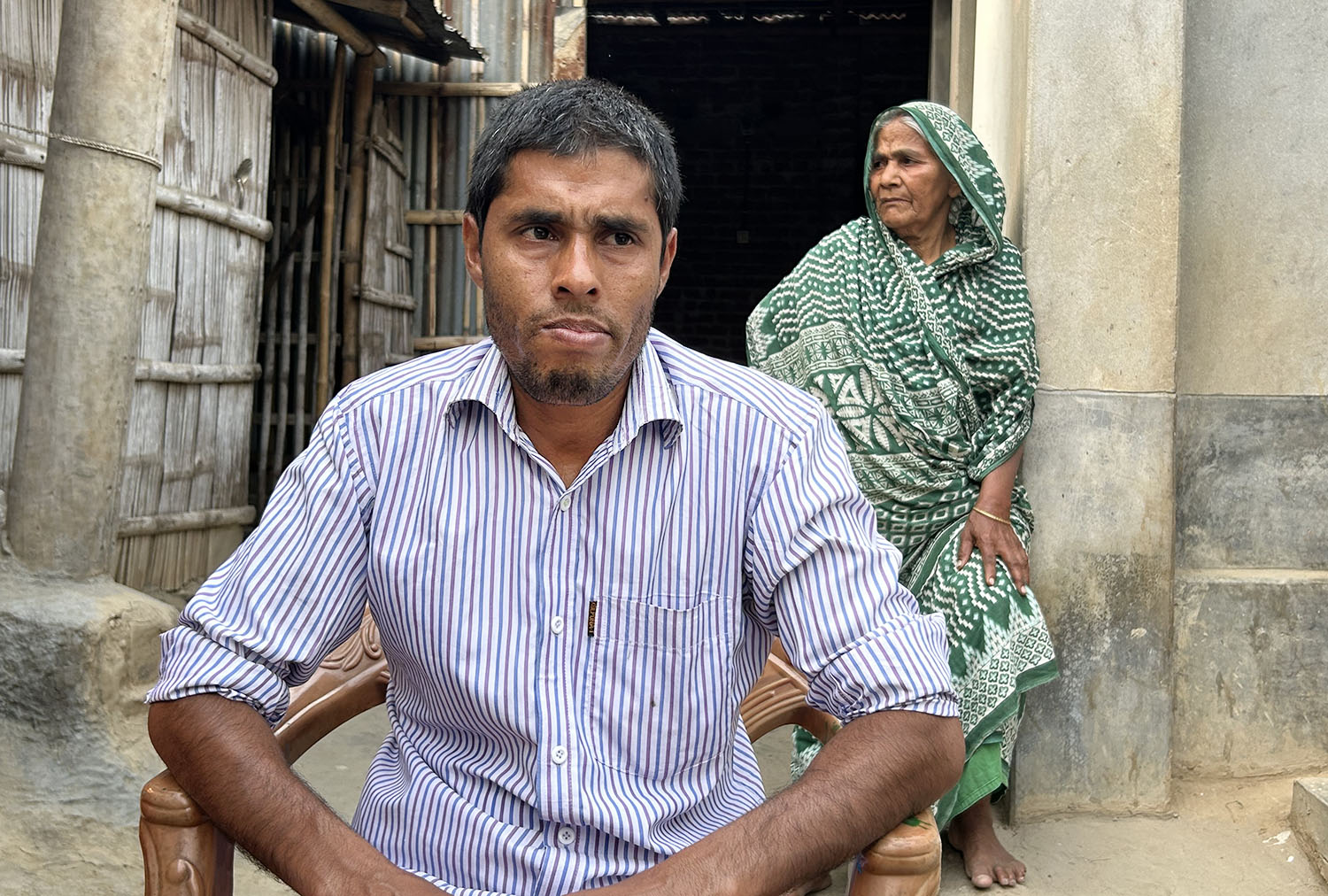
“Nothing new”: Habib Ali at his home in March 2025. Thomas Kean/ Crisis Group
Habib Ali’s shooting came at a time of particularly heightened tensions. As India’s relationship with Bangladesh’s interim government deteriorated, the BSF had started fencing some remaining sections of the border. Bangladesh objected on the grounds that work within 150 yards of the zero line — a strip colloquially called “no man’s land” — violated 1975 border guidelines. India countered that subsequent bilateral “understandings” allowed certain non-military construction close to the zero line.
Just a few kilometres south of Habib Ali’s village, at Chawka, the dispute had spiralled dangerously, with thousands of Bangladeshis and Indians briefly facing off amid allegations of damage to wheat fields and mango plantations. The rocks they threw at each other still littered the mango orchard when I visited two months later.
Even amid these tensions, Habib Ali had reason to think he would be safe. Three days before the shooting, Indian and Bangladeshi border forces had agreed to allow farmers to safely enter “no man’s land” so they could look after their crops. The BSF later accused Habib Ali of being a smuggler, a charge he denied. “They always accuse us of being smugglers and entering India illegally,” he told me.
Frustrations towards India over these border issues may also have contributed to electoral shifts in Bangladesh. Part of Hasina’s appeal to Modi and his colleagues was her role as a bulwark against Jamaat-e-Islami, an Islamist party that sided with Pakistan in Bangladesh’s 1971 liberation war and has remained a staunch critic of India. During her fifteen years in power, Hasina prosecuted — and in some cases executed — Jamaat’s leaders for war crimes committed during the conflict. Although it continued to wield political influence, Jamaat was excluded from electoral politics and subjected to severe repression.
Since Hasina’s downfall, Jamaat has emerged as the country’s main parliamentary opposition. Jamaat supporters — particularly those associated with the party’s student wing — played an important role in the protest movement, and in the process helped to rehabilitate the party’s tainted image in the eyes of some Bangladeshis. Its electoral alliance with the National Citizen Party, which was established by key student leaders who helped bring down Hasina, further broadened its political appeal.
When voters went to the polls in February, the alliance claimed seventy-seven of the national parliament’s 300 directly elected seats; of those, Jamaat won sixty-eight — by far its best electoral performance. The party’s strongest results came along the country’s western and northern borders, where it won dozens of seats. Even a year before the election, senior Jamaat officials in Rajshahi had been confident of a strong result, pointing to their longstanding criticism of border killings — and support for victims — as one of the reasons for their support. “Bangladeshis have been the victim of border killings but the previous government didn’t take any action,” one of them told me. “We think there should be more pressure on India to stop this.”
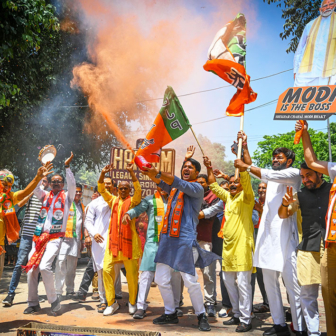
On the other side of the border, the continued ascendancy of Modi’s Hindu nationalist Bharatiya Janata Party, or BJP, has further hardened attitudes towards Muslim-majority Bangladesh. In May, the BJP for the first time won the state election in West Bengal, which shares a long border with Bangladesh, after a campaign that focused on illegal immigration and portrayed Hindus as under threat. Less than two weeks after taking office, new chief minister Suvendu Adhikari announced a “3D” campaign targeting undocumented Bangladeshis and Rohingya: “Detect, Delete, and Deport.” Attempts to push people across the border intensified immediately afterwards.
This time, though, Border Guard Bangladesh has mounted a concerted effort to block them, supported by local Bangladeshis. The BGB said recently that in barely two months it thwarted at least 138 attempts by Indian authorities to push allegedly undocumented Bangladeshi migrants across the border.
The next test for Bangladesh–India relations comes in December, when a water-sharing treaty for the Ganges, which flows from northern India into western Bangladesh, is due to expire. Signed in 1996, shortly after Hasina began her first term in office, the agreement sets a formula for sharing dry-season water that reaches India’s Farakka Barrage, just kilometres upriver from the border.
Farakka, commissioned in 1975, diverts water through a feeder canal into the Bhagirathi–Hooghly river system, partly to maintain navigability around Kolkata. But the formula draws on historical data and doesn’t resolve the larger problem of diminishing dry season flows caused by upstream water use, climate variability and other changes across the basin. Calls for a fairer deal are growing louder in Bangladesh, but with each passing month it seems less likely.
When I visited Rajshahi during the blistering March heat, the Padma (as the Ganges is known in Bangladesh) was more akin to a desert. As the sun finally slid below the horizon, children ran on the dry river banks beside the town. During the dry season, satellite images reveal the stark contrast between the broad expanse of water above the barrage and the much narrower channel downstream.
“After Farakka was built, the water level started to decrease,” fifty-eight-year-old fisherman Ashbakur Rahman explained to me, holding his meagre catch for the day. “But the past five years have been the worst. Now it’s hard to catch even a kilogram of fish.”
The Ganges is not the only source of contention. India and Bangladesh reached a draft agreement on sharing water from the Teesta in 2011, only to have it blocked by then West Bengal chief minister Mamata Banerjee. Although the BJP has now displaced her government, Bangladesh remains sceptical that her successor will prove more willing to surrender water.
With little sign of a Teesta agreement, Bangladesh is looking to other partners. During Tarique Rahman’s visit to Beijing in June, Bangladesh and China agreed to deepen cooperation on a management and restoration project for the Teesta River, another transboundary waterway. While it wouldn’t replace a water-sharing deal with India, the proposed project could help Bangladesh to control floods and store some water for agriculture, mitigating to some extent the limited dry-season flows.
The proposal has raised concerns in New Delhi, however, as it would bring Chinese influence uncomfortably close to the Siliguri Corridor, the narrow land passage nicknamed the “chicken’s neck” that links northeastern India with the rest of the country. Tarique Rahman’s decision to visit China before taking up Modi’s invitation to India has also caused consternation in New Delhi, prompting speculation the Bangladeshi government is moving towards Beijing.
In Dhaka, these relationships are not regarded as zero sum. Rather, they are part of a delicate geopolitical balancing act Tarique Rahman has dubbed “Bangladesh First.” Working with a diverse set of partners that also includes the United States, Pakistan, Japan, the Gulf states and members of the Association of Southeast Asian Nations, he is seeking to expand Bangladesh’s strategic and economic options while avoiding excessive dependence on any one country — a prudent approach in an increasingly turbulent world. He is also seeking to move Bangladesh beyond the pro-India or anti-India binary of the past. This recalibration is one of the legacies of the 2024 protest movement, when India’s key ally was so thoroughly swept from power.
Yet India retains advantages no other partner can match, including proximity, economic weight and deep cultural ties. A durable reset between the two countries will depend on much more than whether Tarique Rahman eventually visits New Delhi. It will require India to show greater respect for Bangladesh’s interests and political choices, and to pursue a fairer relationship despite the imbalance in size and power. So far, Modi and his colleagues have shown little sign they are ready to make such a shift. •