Language watchers will have noticed the rise of therapy-speak. Boundaries must be maintained, space must be held, gaslighting must be called out, and triggers, traumas and diagnostic terms abound. The popularisation of therapeutic language parallels a growing valuation of therapy itself. As mental ill-health and help-seeking have lost some of their stigma, therapy has become the preferred form of help.
Our federal government is on board. Projecting that the supply of psychologists will soon meet only half the public’s demand for therapy, it plans to accelerate production sharply to make up the difference. The confidence that more therapy will remedy the mental health crisis is rarely questioned.
Whether that faith is justified is far from obvious, not least because therapy is a protean beast. Hundreds of varieties have been developed, varying not only in matters of technique but also in the fundamental beliefs about human nature and mental health that support them. Schools of therapy diverge on what they think it is for and how its effectiveness should be evaluated.
This dissensus is not new. One participant at a 1949 conference hoping to unify America’s clinical psychology training summed up the sceptic’s view at the time: “Psychotherapy is an undefined technique applied to unspecified problems with unpredictable outcome. For this technique we recommend rigorous training.”
German psychologist Steve Ayan’s Soul Magic is an engaging and picturesque history of psychotherapy in the twentieth century. As a science journalist, Ayan is an ideal guide through this territory, especially as so many of the key figures hail from Central Europe. Many readers will come with a basic knowledge of Sigmund Freud and Carl Jung, but Soul Magic introduces an array of less celebrated figures who helped to shape the development of the talking cure.
The idea that words can heal mental illness didn’t originate with Freud. In 1621, Robert Burton’s The Anatomy of Melancholy opined that love melancholy can be cured by “good counsel and persuasion.” Verbal trickery can also be effective. Burton tells of an Italian gentleman “who was afraid to piss, lest all the town should be drowned; the physicians caused the bells to be rung backward, and told him the town was on fire, whereupon he made water, and was immediately cured.” Even so, Freud was the first to formalise an approach to the psychological treatment of neuroses and to do so in a way that claimed scientific and clinical legitimacy.
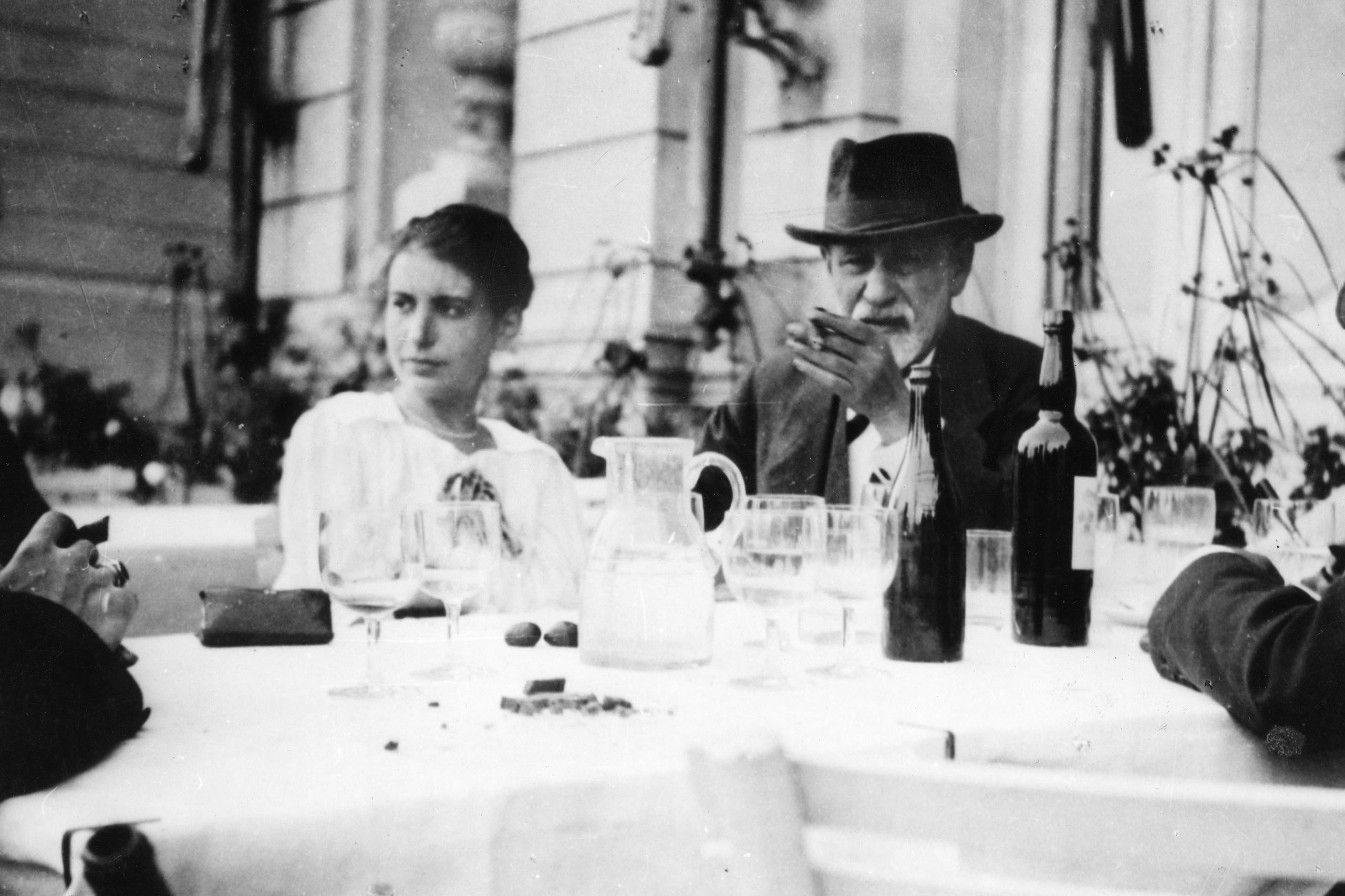
Beginning with Freud, Ayan spends a large fraction of his book recounting the development of psychoanalytic ideas about mind, mental illness and treatment. With a novelistic eye for biographical detail, including a morbid recounting of their deaths, he investigates how key thinkers developed and fought for their ideas. Freud is situated in his time and place and his rather severe personality is put under the microscope. Without being reductive, Ayan shows how the temperament of therapy’s pioneering thinkers manifests in their preferred approach to treatment. The tough-minded advocate rigour, the tender-minded heal with empathy, conservatives tighten up their patients and radicals loosen them down.
In Freud’s case, the result was a form of therapy in which the analyst occupies a position of unquestioned authority and rarely speaks — one analyst takes this principle of “abstinence” so far that he scrapes his shoe on the floor to declare the end of the session — and in which the goal of therapy is grimly modest. All patients can hope is for their neurotic misery to be replaced by ordinary unhappiness, an achievement that will require them to make peace with the inhibitions that civilised society demands.
Many of the psychoanalytic thinkers who followed Freud eased these strictures. Some, like Sandor Ferenczi, adopted a more active approach to treatment, making the therapeutic relationship a reciprocal encounter, and extended it to people experiencing psychosis. Others, like Wilhelm Reich, believed in overcoming all repression and introduced bodily interventions to break down the patient’s resistance. Things ended badly for Reich, who died in prison after being pursued by the US Food and Drug Administration for selling supposedly cancer-curing boxes for accumulating cosmic “orgone energy.” (Reich believed it was coloured blue, like love.)
Psychotherapy is the focus of Soul Magic, but Ayan examines evolving ideas about the nature and causes of mental illness as much as clinical technique. Front and centre are the doctrinal disputes that led to the many rancorous splits within the psychoanalytic movement. Theorists who had previously sat in Freud’s inner circle almost inevitably came to form their own beliefs about the basis of human motivation, the nature of the Unconscious, or the causes of neurosis. Ideas about the centrality of non-sexual motives (Jung), the drive for power (Alfred Adler) or birth trauma (Otto Rank) might be tolerated for a time, but eventually the heretic would be cast out to form his own school in opposition. Reconciliation and forgiveness were unthinkable.
Professional and personal rivalries play a key role in the proliferation of therapeutic approaches, according to Ayan. Many of the great soul-doctors dealt with their opponents as if with business competitors in a crowded market. Disagreements could rarely be adjudicated: they rested on deeply held axioms and hence could not be resolved by disinterested parties. The idea that systematic comparison of therapeutic efficacy could do so was not entertained.
Some disagreements did not merely reflect the narcissism of small theoretical differences. Soul Magic looks beyond the psychoanalytic tradition to explore the American origins of behaviour therapy and other approaches that rose there as the United States became therapy central. Theorists like John B. Watson were deeply antagonistic to psychoanalysis, or indeed to any attempt to intervene on mental life rather than expressed behaviour, let alone on the Unconscious. Later behaviourally oriented psychologists such as Joseph Wolpe and Hans Eysenck developed structured, short-term treatments that were the antithesis of ruminating on a couch and attacked psychoanalysis for sport.
Ayan pays significant attention to figures in the history of psychotherapy whose impact and visibility have waned. Psychodrama, Gestalt therapy, and the “third force” humanistic psychologists such as Carl Rogers and Abraham Maslow were prominent in the 1960s and 1970s but have since been absorbed into psychotherapeutic common sense or trivialised into leadership seminar handouts. Before fizzling out, they helped to broaden therapy’s mission from the treatment of psychiatric illness to the optimisation of well-being, performance and self-knowledge.
Soul Magic devotes relatively little space to the cognitive-behavioural approaches that are currently dominant in the Anglophone world. It bypasses the crisis that arose late last century when research findings indicated that alternative therapeutic approaches did not reliably differ in their effectiveness (the so-called “Dodo bird verdict”: “Everybody has won, and all must have prizes!”). Outcomes generally depend much more on attributes of the therapist and the quality of the therapeutic relationship than on the brand of therapy. The book largely ignores the science of psychotherapy with its focus on the field’s key ideas and thinkers. A follow-up history of recent developments would be a worthwhile undertaking.
Ayan’s book reminds us how our contemporary enthusiasm for therapy is not as new as we might think. Philip Rieff pronounced the triumph of the therapeutic mindset in 1966 and today’s criticisms of therapy-speak mirror R.D. Rosen’s 1977 critique of “psychobabble.” Current concerns about the inflation of the “mental health” sphere harken back to the humanistic psychologists’ promotion of therapy as a form of self-realisation, not just a clinical intervention. The scope of therapy has been broadening for a long time now, and Soul Magic is an entertaining and enlightening study of its many-sided expansion. •
Soul Magic: A Century of Psychotherapy
By Steve Ayan | Pushkin Press | $55 | 352 pages