A few months ago, when I was in the middle of a dispiriting time wrestling with words and seriously questioning my professional choices, my friend Siobhán got in touch bearing unexpectedly good tidings. Siobhán is a writer and editor for a European news magazine who had commissioned me the year before to write a piece on the decline of American soft power.
A publishing company in India had contacted her to see if I would give permission to reprint my article. The email included the magic words that makes every cash-strapped writer quiver with excitement: they would pay a fee. All I needed to do was provide my tax ID, my bank account details and my address and send it to the company’s US contact in upstate New York.
It wasn’t much money, but it felt like validation at a time when I so desperately needed it. Basking in the computer screen’s glow, I filled out the paperwork and sent it off, dreams dancing in my head of the portion of my everyday costs the fee would offset.
It will surprise you not, dear reader, to learn the fee never arrived. Yet the publishing team seemed very keen to interact with me on LinkedIn. Never were they up for a quick phone conversation to clarify matters. “Just send me the invoice again; here’s my email address,” they’d write, with my favourite brush-off being “I’d love to speak but I’m having an important family dinner.” If it was such an important dinner, I replied, then what on earth were they doing messaging me on LinkedIn.
After reading Carlos Barragan’s engaging, enlightening and frequently devastating new book The Yahoo Boys, I began to wonder if the “Indian publishers” I had been interacting with might have been amphetamine-fuelled, emaciated and frequently dirt-poor Nigerian kids with hands callused by relentless typing.
After all, says Barragan, this motley set of ragamuffins, collectively called Yahoo Boys, seem to impersonate just about everyone else under the sun. Their list of identities includes professional wrestlers, Middle Eastern royalty, Hollywood actors, pneumatic gym bunnies and lonely Christian girls with big smiles. Their trade is smooth-talking (or maybe more accurately smooth-typing) financial deception.
With their nom de plumes and fast-typing jive, the boys hook in their unsuspecting victims from the vast sea of the perennially online, a pathos-inducing parade of the painfully isolated, the insecure, the sex-starved and the plain dotty. Barragan writes the story of a “strange intersection between Western loneliness and Nigerian poverty,” a story with many shades of grey, and he does it brilliantly.
Barragan is a Spanish journalist working as a reporter and researcher for the New York Times. His entry into the scammers’ world is deeply personal, his own mother having fallen online for a Nigerian man purporting to be an American soldier called Brian. A divorcee, she even went so far as to buy a pair of rings for Brian, who serenaded her with honeyed emails making her feel beautiful and desired once again.
Barragan travels to Lagos to track down the man who scammed his mother. While he doesn’t succeed in that quest, he plunges into the world from which Brian hailed in order to understand it. Brian, he learns, is a Yahoo Boy, the name a nod to the once-ubiquitous scam of the late 1990s in which plaintive emails from Nigerian royalty promised untold riches if only their recipients would kick in a few dollars to get the process rolling. But where the Nigerian prince scam catered to greed, the new scams are tailored to the yearning for companionship in this age where so many people are always connected yet deeply lonely.
This new generation of scammers has left behind email in favour of using dating apps, Facebook, WhatsApp and other more interactive platforms. They are part of a global romance-scam market estimated to have netted a collective US$1.3 billion in 2022 — and the total might be much higher given that many of the victims are too embarrassed to admit they have been duped.
In the cold light of day, many of the scams are preposterous, yet their victims don’t think that way, just as I didn’t when I offered up my personal details to an “Indian publishing company.” We all have the capability to suspend disbelief for the sake of fleeting dopamine hits of friendship, recognition or status. The Yahoo Boys aren’t master manipulators, Barragan realises, just “fulfilling unmet emotional needs,” a much more disturbing finding about the state of humanity.
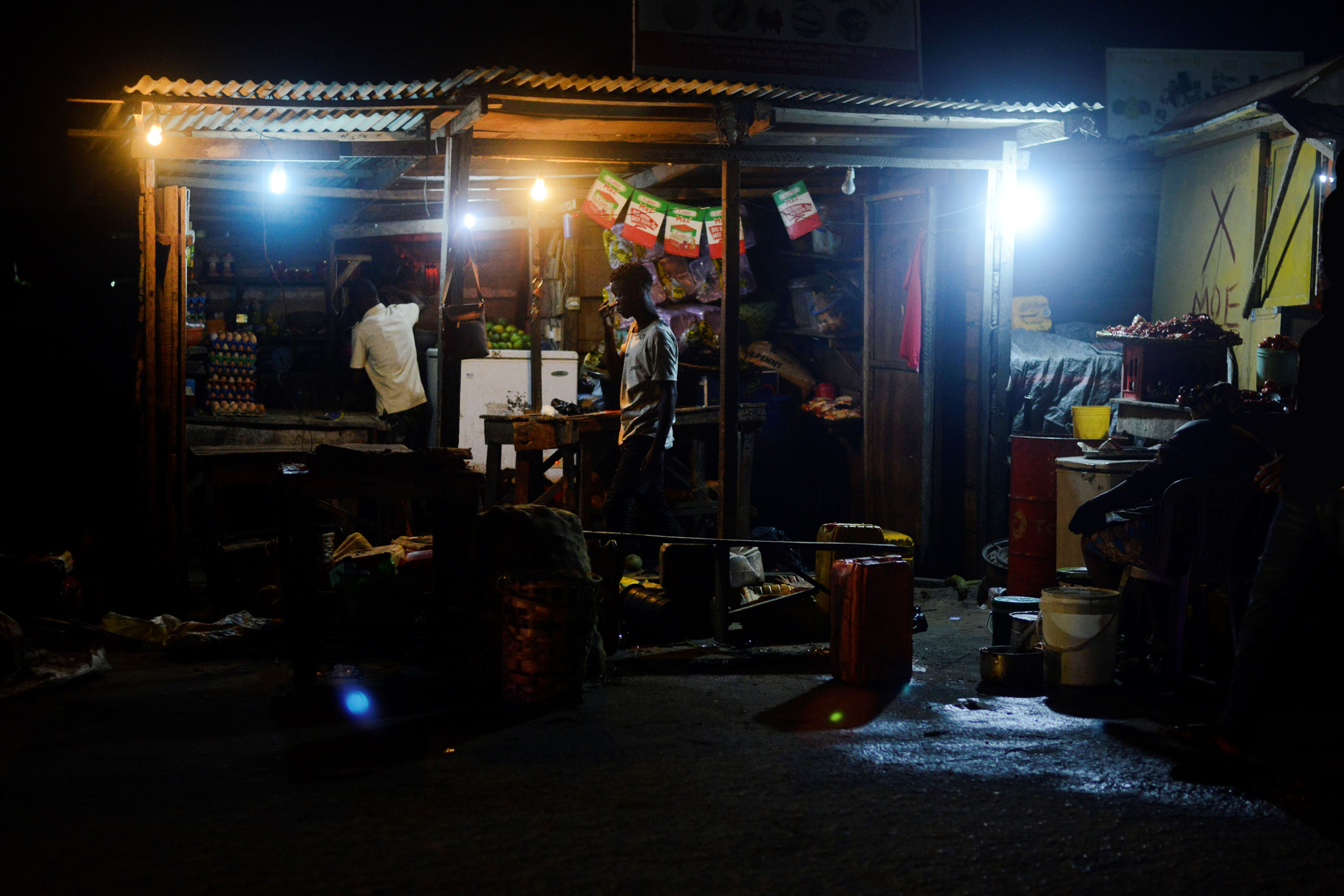
The sheer number of young men hustling in Lagos is staggering. One of the author’s sources tells him that “hundreds of thousands” is likely to be a severe lowballing of the actual number. For many in deeply unequal and economically lopsided Nigeria, where honest work is rare and pays abysmally, becoming a Yahoo Boy is a vocation to aspire to, and one that comes, for some of them at least, with considerable riches and social cachet.
This image is very different from that of scammers in Asia, where the mind summons images of wretches duped into working in fetid call centres surrounded by high walls and armed guards. The Yahoo Boys are more the equivalent of work-from-home types, hustling and scamming from wherever there is an internet connection, toggling between a dizzying number of false accounts and synchronising their phones to whatever time zones their victims happen to be in.
In their own ways, though, they too are imprisoned by their own circumstances. Few of Barragan’s interlocutors make significant money, and even if they do they soon squander it on the high life for a day or at the hands of sharks even more unscrupulous than they are.
Much of Brannagan’s vivid, engaging and thought-provoking book is structured around the stories of four scammers, Biggy, Chibuike, Azeez and Richie, he gets to know over the years of travelling back and forth to Lagos. His fine-grained and multidimensional depictions are deeply affecting: the four of them emerge as deeply flawed, sometimes likeable, sometimes callous and sometimes utterly pitiable.
Deserving of the readers’ whole-hearted enmity, on the other hand, are the people who make up the Nigerian government: a succession of scam artists, scoundrels and thieves who rob government coffers while doing utterly nothing for the millions of their citizens. With the elite — Barragan dubs them Yahoo Men — so utterly rotten, and the state they preside over so inept and unequal, there is often little other viable choice to make ends meet.
In real terms, Barragan writes, wages in Nigeria are lower today than they were in 1980. The country emerges a place where it seems borderline impossible to make an honest living. As one father tells Barragan with a shrug, “No parent wants their son involved in internet scams, but putting food on the table is a priority.”
The antics of both the Yahoo Boys and the Yahoo Men are supercharged by the internet, but their origins long predate the personal computer or mobile phone. In one of the occasional micro-histories salted into his text, Barragan shows the long history of impersonation scams in Nigeria. British colonial officials’ reports of the early twentieth century are replete with stories of local people arriving in communities not their own dressed as colonial emissaries and encouraging the villagers to hand them money, cattle or grain. After the second world war, the US consul in Lagos was warning citizens about a smooth-talking “prince” persuading gullible Americans to hand over their cash.
One the most affecting chapters in this deeply moving book takes place in the United States. Barragan travels to rural Kentucky to find the truth behind a story that a penitent interviewee tells him about an American family so torn apart by a scam that the husband murdered his wife, who had been spending her time online with an “American businessman working overseas.” The truth Barragan finds is even more disturbing, upsetting and hope-sapping.
When I finished the draft of this review, I checked my email. Some famous literary voices had been in touch. “Sigrid Rausing” from Granta magazine had written to praise my writing. So too had “Zadie Smith,” and there was an invite to join an online book club whose compere likened my books to the works of the great travel writers. The club’s readers were purportedly struck by my “grounded, observant approach”; perhaps I’d be keen to join? “The timing feels right,” I read, and “readers right now are hungry for ideas that challenge how they understand the world, and the conversations we’ve been having in our community reflect that.”
All I had to do, of course, was to send them a fee. The words were coming out easily that day and I was feeling good about myself, so I took it calmly for the catfishing attempt it was. If I was feeling flush, I’d be tempted to send them a copy of Barragan’s book. •
The Yahoo Boys: Real Life with the Love Scammers of Lagos
By Carlos Barragan | Orion | $34.99 | 304 pages