Asia’s future comes down to a simple yet fiendish equation — the difference between choice and no choice. What can Asian states negotiate and create for themselves, versus what will be imposed, unavoidable or just accidental?
Asia wants growing affluence and peaceful agreement. What it gets could be sharper and nastier. The balance between opportunity and risk means bad luck and major misjudgements could just as easily deliver massive misfortune: Asia becomes the international “crucible”; the temperature rises as the metals melt and meld.
Severe test is the headline metaphor of Nick Bisley’s Asian Crucible: Globalisation, Geopolitics and the Contest for the Future. La Trobe University pro-vice chancellor for research and professor of international relations, Bisley ponders how Asia might march or argue or stumble into war.
“An Asia of backward-looking nationalist grievance is one that will be doomed to fight,” he writes. “The long Asian peace showed the region could match its historical and cultural legacy with commensurate achievements in human development. The challenge is to break out of the current cycle of competition, nationalism and disintegration.”
Dispensing with the terms “Indo-Pacific” and “Asia-Pacific,” Bisley writes of modern “Asia” as a coherent political, strategic and economic system. Yet this integrated Asia is “on the cusp of a period of intense contestation” that will have a profound impact on the world.
At the centre of the crucible are the United States and China. America’s “partners and allies” in Asia are Australia, Japan, Singapore, South Korea and Taiwan, he says, with two other states, the Philippines and Vietnam, “tilting towards the US.” Note the complexity: the Philippines is a formal ally of the US while Vietnam is a former foe.
China’s “partners and allies,” he says, are North Korea, Myanmar, Pakistan and Russia. But the largest group of all is fourteen swing states, listed alphabetically from Bangladesh to Uzbekistan.
Bisley’s weighting of alignments shows the “considerable strategic fluidity in Asia and that the US advantage, while real, is less strong than it may appear.” Asia’s balance was long maintained by American military dominance. No longer. And Asia has “neither a set of spheres of influence nor a settled strategic landscape.”
US strategic strength confronts China’s central place in Asian economics. By 2020, Bisley says, Asia had a “China-centred but not Sino-centric economic system,” which means an integrated production system centred around China:
Asia’s economic integration was the product of market logic, not a political creation. Modern integrated Asia was bound together by economic ties that were created by the opportunities of market-led globalisation, not the dominant leanings of a powerful state or the rules of regional organisations. For the first time modern Asia had become a really existing economic system. It had intraregional trade volumes approaching those of the EU, which is regarded as the world’s most integrated economic zone.
In the recent past, Bisley says, northeast, southeast, south and central Asia were not sufficiently linked to share a sense of economic and security interests; by the late 2010s, however, “globalisation and geopolitics had bound them together.”
But the Covid pandemic years dimmed globalisation’s glow, Bisley writes, and “fundamentally altered Asia’s trajectory,” raising the temperature in the crucible:
Great power competition was accelerated as confidence in China collapsed. Critically, globalisation had previously been seen as a kind of golden guardrail that would keep Sino–American rivalry within manageable bounds. These rails were broken, and geopolitical competition became untethered from the constraints of economic interdependence. This pushed the world’s most populous region onto a much more dangerous path.
Integrated Asia was a creature of the era of markets. Bisley judges that period is over. The new era will recast the balance of state and market power. The Covid pandemic “showed just how finely balanced the global economy had become.”
The balance shakes again today because the Iran war has caused the biggest oil-supply shock in history. Asia has an extraordinary and enduring dependence on hydrocarbons from the Gulf: it takes 80 per cent of crude oil and oil products shipped through the Strait of Hormuz and nearly 90 per cent of LNG. Acute energy shortages hit at Asian needs, from fuel to food production.
By next year, the oil shock may be receding as a painful chapter. Yet it’s another lesson—like Covid or the 1997-98 Asian financial crisis—teaching that international disasters are an intricate mix of human action and accident.
For Bisley, Asia’s uncertain future is shaped by major changes:
• The global consensus about globalisation and the neoliberal economic policy is broken.
• US–China competition has become the most significant facet of Asia’s and indeed global security concerns.
• Asia has lost a shared belief in the underlying value of a broadly liberal structure to international economic relations.
Faith in markets and globalisation provided hardnosed incentives for Asian cooperation: “With the loss of faith, statism and nationalism are unfettered and now Asia faces a much more daunting future… The sad reality is that Asia faces a dangerous and uncertain future, in which military rivalry catalysed by nationalism and ambition is here to stay.”
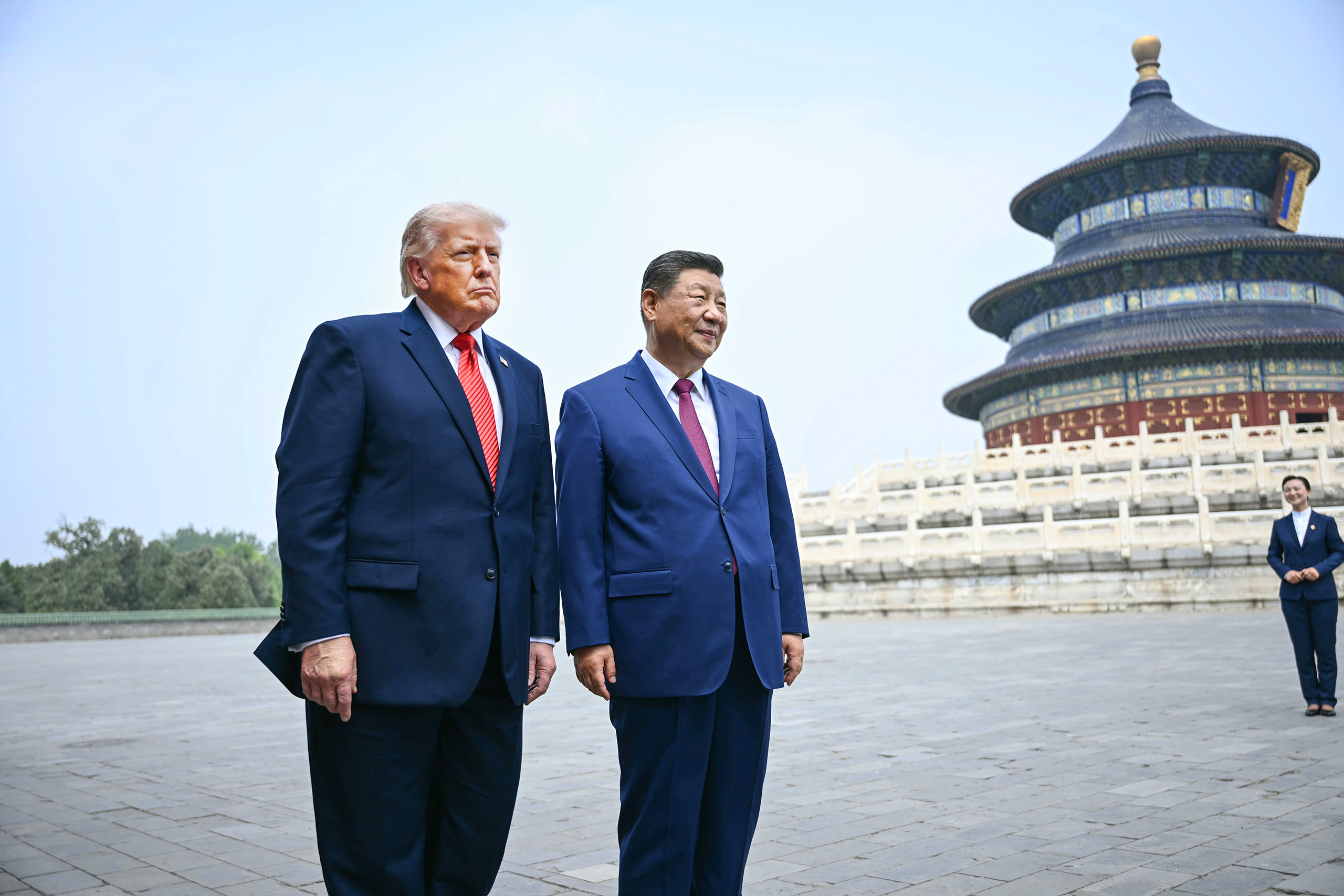
The China–US contest is both personal and structural. The book mentions Donald Trump and his administrations more than eighty times, while China’s Xi Jinping scores more than ninety.
Xi believes China is on the right side of history, Bisley says, as Beijing works to reconfigure Asia to its interests, with a sense of “both opportunity and risk. It perceives that the balance of power is fluid, and that the US is weaker than it has been in decades.”
Trump’s second administration “seems likely to continue where it left off in 2020,” Bisley writes. “The US will remain focused on Asia and will continue to try to roll back Chinese power in the region.” Under Trump, Washington will be less worried about economic rules, instead seeking deals that ensure “the US benefits and that China suffers.”
“Trump’s taste for bellicose theatre notwithstanding,” Bisley says, the US has long had a consistent Asia policy — ensure the region is not “dominated by a power hostile to US interests and values.”
Bisley sees Xi kicking the race for supremacy into overdrive. China has built a military to match its economic might, and its leader’s ambition has transformed Asia’s strategic setting. Since Xi became general-secretary in 2012 and president in 2013, China has clearly abandoned its “hide and bide” foreign policy, which had been “cautious, deliberately low profile and risk averse,” Bisley says. Xi’s China pushes against the prevailing international order as made-in-the-USA to serve the values and interests of Washington. An “unsettled military balance is a critical factor in the return of geopolitics” in Asia, Bisley writes:
At the turn of the twenty-first century, China was a conscript-based military that, while large, was badly equipped, poorly trained and focused almost entirely on domestic defence. It had virtually no capacity to project power beyond its own territory and immediate approaches. Now it is a highly professional fighting force with a substantial inventory of high-quality equipment. Its navy has more ships than the US, it has more than 1000 fourth-generation or better fighter jets, dwarfing all others in Asia bar the US, and it has a strategic nuclear arsenal that is rapidly expanding in number, range and precision. China’s ability to contest American naval supremacy is real.
Despite China’s riskier military behaviour harassing opponents in the East and South China Seas, Bisley is relatively sanguine about its current intentions. China’s “overall risk appetite remains low,” he judges, seeing no evidence that Beijing “is prepared to make a radical push to achieve its goals in the short to medium term, nor that it is willing to sanction the kinds of risks to social order and regime legitimacy that a war-led change to the region’s setting would likely create.”
Bisley offers three scenarios for the future: Fractured Asia, Rebalanced Asia and Unified Asia:
• Fractured Asia is “the bleakest future, in which uncontained geopolitical rivalry reinforces deglobalising trends. These are amplified by nationalism to create a dangerously unstable and combustible world.”
• Rebalanced Asia manages to hold an “uneasy strategic equilibrium.” While political and nationalist imperatives distort some sectors, the logic of interdependence still shapes the region’s economy.
• Unified Asia is the optimistic picture, with geopolitical competition “corralled and a stable and structured strategic balance prevails, allowing the many shared interests across the region to drive collaboration to tackle problems like climate change, health crises and economic inequality.”
Major shocks would distort and drive each of these scenarios. Bisley imagines the different effects of four seismic impacts:
The US departs Asia: Donald Trump’s “mix of bombastic nationalism, grievance and mercantilism” make it plausible that the US might “initiate a full-scale drawdown of its military presence. This would fundamentally transform Asia’s military balance and create a period of tremendous geopolitical instability.”
China changes course: Don’t assume that the “authoritarian, nationalistic and thin-skinned China of Xi Jinping will be a system that we will have to live with for many decades to come.” China has “a young political system,” Bisley argues, without deep social roots, now just past the age of the Soviet Union when it collapsed. When Xi goes, a new leadership could take the country away from its current assertive trajectory, a shift of “immense consequence for Asia’s future.”
Climate change bites: Environmental impacts are readily visible across Asia. Summer heat records are broken across the region, and cities in Southeast Asia regularly have days with temperatures exceeding 45°C. An “all too believable shock entails a series of climate catastrophes, such as an intense drought leading to a collapse in agricultural production twinned with widespread inundation caused by a series of super typhoons in the Western Pacific. These could be devasting to millions and also prompt political extremism and hyper-nationalism.”
Military Armageddon: “Major power war is now a plausible scenario in Asia’s short- and medium-term futures,” Bisley writes. The region’s flashpoints are combustible and escalation risks are growing, fanned by angry nationalism. Brinksmanship and tensions over Taiwan could spiral out of control, he writes, and escalate to a nuclear exchange that would kill millions.
To befit the times, this book is tense and tight. Part of the tightness is taut word count. Bisley is an academic who can write. His elegantly constructed book delivers ten chapters in 279 pages.
Because of a light touch on references in the text, Bisley then offers twenty-one pages of sources and reading, walking the reader through each chapter to show the ideas that shaped his thinking. He follows with twenty-eight pages of references and a thirteen-page index. Thirteen maps and tables show the strategic alignment of Asia’s states and the region’s political systems.
Asian Crucible starts with five chapters on how Asia got to here, covering imperialism, the cold war, Asia’s integration during the long peace among major powers, and the Covid pandemic years that brought “the end of globalisation.” The second half of the book offers five chapters on geopolitics and the great powers, flashpoints and zones of contest, risk and vulnerability, and paths to Asia’s future.
Bisley’s final paragraphs start by marvelling at the making of modern Asia:
At the end of World War II, Asia remained desperately poor, and it seemed as if it were doomed to remain stuck in a cycle of poverty and underdevelopment. Within a human lifetime the continent was transformed utterly. The resilience of its peoples, their entrepreneurship, creativity, hard work and ingenuity were the cornerstones of the greatest story of human development ever told.
Asia is on the precipice, Bisley concludes, entering a time of extraordinary opportunities but also immense risks: “War is not inevitable. It is imperative that it is avoided.”
The war-is-not-inevitable judgement is scary reassurance. Nothing in the human drama is inevitable except death and taxes. What is sure, though, is Asia’s unsettled balance. The reality that war is possible, even plausible. After an era of glorious growth, Asia must evade a future where it is doomed to fight.
One meaning for “crucible” is any severe test or trial. Asia will be severely tested. This region of diverse and dynamic nations must come together to ensure a rising strategic temperature does not crack the crucible that holds all their shared hopes. •
Asian Crucible: Globalisation, Geopolitics and the Contest for the Future
By Nick Bisley | Bristol University Press | 358 pages | $30.95