“You who are seated here today will be China’s elites tomorrow,” declared the middle-aged party secretary at my senior high school. Alongside hundreds of other first-year students at one of the top schools in the province, I was stunned by the over-the-top welcome speech.
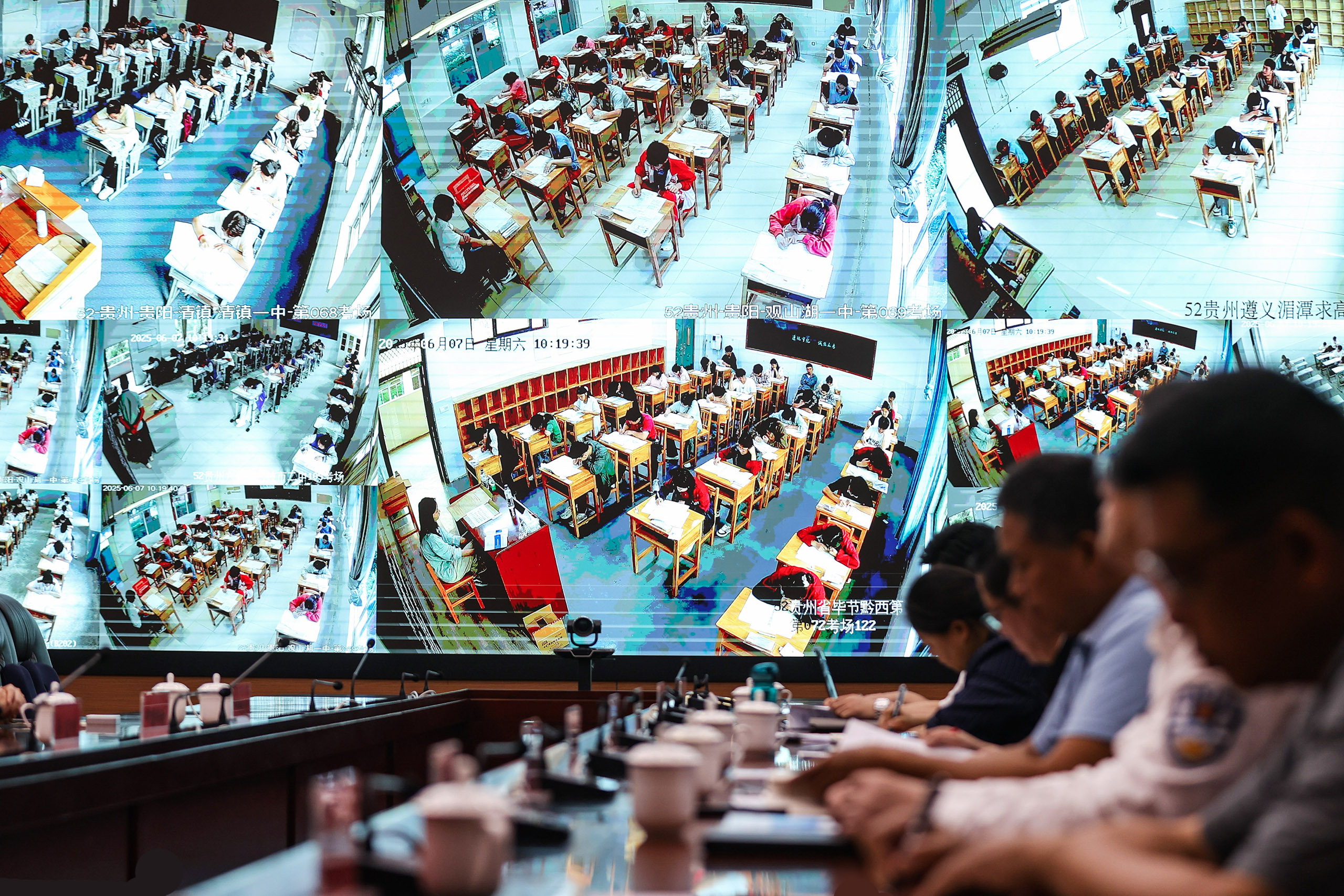
The other pronouncement of this party official was no less striking: “Your first day in high school shall be your first day of preparing for gaokao.” This nationwide university-entrance exam is the sole basis of university admission for most Chinese students — the thundercloud on the horizon, the trial that (everyone insists) would determine our fate.
I felt more apprehensive than inspired. The final year of junior high school (corresponding to year nine in Australia) was intense enough, with much of it being preparation for the senior-high admission exams. Now we were thrown into the deep end from day one.
And being part of an elite? That didn’t feel quite right. Shouldn’t we aspire to something more egalitarian under socialism?
The year was 2008; some of us were vaguely aware that Western economies were running into trouble and China was perhaps rising fast. The prospect of personal and national fortunes soaring together into grandeur would have been intoxicating for many.
Elites we would become — or at least those of us who won our tickets to prestigious universities.
In their compact but ambitious new book The Highest Exam, Chinese-American scholars Ruixue Jia and Hongbin Li give their English-speaking readers a guided tour of China’s elite (re)production factory against the backdrop of the country’s development and globalisation. The timing of this book could hardly have been better: 2025 was the year when China emerged from its post-Covid torpor, led the world in clean energy, flaunted its cutting-edge tech achievements, and stood its ground against America’s global trade offensive. Meanwhile, the weaknesses of American institutions were exposed for a second time by Donald Trump.
What has China been doing right? Having experienced and then worked in the country’s education system themselves, Jia and Li in no way assume that China has got it entirely right. They see gaokao as a relentless, centralised “hierarchical tournament.” Its content, and the country’s university student quotas, are dictated by China’s central government. It is designed to sort students according to their performance in a single annual examination. It creates a zero-sum competition between students in the same province as they vie for limited university places based on a province-wide ranking.
Gaokao is a microcosm of contemporary Chinese society. It is distinctly modern in both form and content, yet it resonates profoundly with standardised exams for government officials dating back to seven-century imperial China. It is a powerful instrument wielded top down by a highly organised, stratified Chinese state, fostering human capital and channelling it towards the country’s inexorable economic growth. It mirrors the pervasiveness of quantitative assessments in China’s universities and party–state bureaucracies. The tournament never ends.
A reader might, with some encouragement from the writing itself, develop the impression that an all-powerful Chinese Communist Party exercises complete control over the society through this and other governance instruments. But, as Jia and Li point out, gaokao enjoys public buy-in, and the party often recoils from major reforms to China’s education system when a public backlash becomes visible. What often goes unappreciated is that political contests (beyond court intrigues) do happen in the Chinese society, and the party state can’t always impose its will.
The government’s slow progress in raising the retirement age is a case in point: once averse public reactions became obvious, the leadership’s repeated signals seemed to come to nothing. Not until September 2024 did Beijing put its foot down and formalise the incremental lifting of the retirement age by three years over a twelve-year period. Women had been retiring at fifty or fifty-five and men at sixty but life expectancy is now seventy-eight; nonetheless, I’ve encountered much dismay among Chinese employees approaching retirement age. The Chinese middle class is hard to please and even harder to move.
Regardless of how students feel, the Chinese public mostly favours gaokao. The strictly standardised testing regime is an even playing field in a society that too often distributes opportunities through relationship networks. Gaokao offers students from poor families a way into a middle-class life.
Of course, rich families can still improve their children’s chances using private tutoring and other financial firepower. In my three years of senior high school, neither I nor most of my top-performing schoolmates had private lessons, though most equipped themselves with supplementary learning material (usually a mixture of notes and practice questions). Schoolwork was plenty enough for me. Still, for students on the borderline of qualifying for elite or first-tier universities, tutoring probably helps. So the middle-class families have a stake in gaokao as well: it is a predictable mechanism to keep their kids in the middle-class.
Still, the rank-based quota system means some less-fortunate students are elbowed out. Inequities also arise from the highly uneven distribution of educational resources between regions, both in school education and university placement quotas.
Jia and Li’s extensive explication of these problems plays down a striking observation from themselves: elite university education is far more accessible for poor families in China than it is in the United States. This should come as no surprise to anyone even vaguely familiar with American universities: their practice of assessing for extracurricular activities biases towards those who can afford them; applicant interviews implicitly favour those already socialised into professional–managerial class sensibilities by their families; and a formal preference for alumni’s children might as well be affirmative action for the privileged.
There’s no denying that high school in China is a gruelling experience, perhaps precisely because no one can escape the “objective” standards and the attendant tournament atmosphere. Ranking is everything.
As a constant reminder of the importance of rankings, and a drill in itself, mock exams are a staple in Chinese high school experience. My school held monthly exams testing all subjects in formats similar to those in gaokao. Everyone in the year was then ranked, with the results usually visible to all. The top-ranked students had their names chalked up on notice boards next to our classrooms.
Given our school’s previous performance, we knew roughly where the cut-off would be for second- and first-tier universities (which number about 100) or indeed elite universities (the dozens of Project 985 universities). During my time, less than half the cohort would enter first-tier universities and perhaps a fifth made it into an elite university.
Of course, high school life was more than that. We enjoyed moments of collectivism — admittedly rare — competing for our whole class in sports carnivals. (Each cohort is divided into classes, each with its designated classroom.) We found ways to minimally comply with the already loosely enforced uniform rules. We passed around comic books or gaming-ready mobile phones during lessons and, more openly, during quiet evening-study sessions when the classroom wasn’t supervised. We tested the lengths of afternoon breaks — the happy hours between afternoon and evening sessions — playing basketball or badminton, or (as boarding students) we often found ways to sneak past the school gate into eateries and internet cafes. We gossiped about who we were secretly dating (or hoping to date) despite the prohibition against “premature relationships.”
The exams and the rankings were less enjoyable. Weekly quizzes were also held for many subjects, cunningly administered at 10pm in the final segment of our study time to wring the last bits of energy from us, and were usually too long to finish. The collective groan whenever the papers were handed out still rings in my ears. The quizzes were not ranked but the teachers did announce the top scorers; I would usually clock off on time rather than trying to win. There was only one test that mattered, I thought to myself, the rest was just vanity.
At the beginning of year 11, according to each student’s performance in the exams during year 10, we were divided into advanced, sub-advanced and standard (euphemistically called “paralleling”) classes. I fell short of the top two options and proudly took my place among the proles.
Unexpectedly, I thrived. With no pressure to keep up amid the most competitive peers, I settled in to enjoy the ride with every subject — most of which were at least somewhat interesting — and not worry about rankings. Year 11 was also when the cohort separated into arts and science tracks. I picked science, having decided that arts subjects had too much ideological slop and STEM was also the safer career bet. This allowed me to focus on fewer subjects, all assessable in gaokao.
After the second monthly exam, I consistently came first in my class; by the second half of year 11, I would consistently be the highest-ranked student from a “paralleling class,” and beating about half of those in even the “advanced classes.” I fancied my achievement as a two-finger salute to those elites. I also kept up my table tennis training, when hardly anyone else had time for extracurriculars.
I hated the system, but I enjoyed excelling in it
The public’s broad support for gaokao accompanied a widely held belief in meritocracy. If gaokao is an objective measure of a student’s ability, it must be a fundamentally fair system, allowing the capable and hard-working to get ahead. As it serves as both the lynchpin and archetype for many other hierarchical structures in China, these hierarchies are also accepted as fair and natural.
It also follows that social mobility is a personal responsibility, or at least the job of the family. Jia and Li note this fundamentally neoliberal ethos but don’t much dwell on it, though it shatters the cliché about contemporary China being a collectivist society. Indeed, they could have considered points of resonance and connection between the Chinese system and Western practices to produce a much more generative account.
Corruption, the problem standardised competitions like gaokao are designed to circumvent, is another point where more sophisticated comparisons might have been helpful. The Highest Exam offers vivid examples of this problem, such as parents giving gifts to teachers to ensure their children are not neglected in the class (which can have up to sixty students). But the suggestion that the American political system has corruption under control would strike many America-watchers as naive: insider trading and the cushy corporate positions upon retirement are well known; the lobbying industry is little more than a series of formalised cash-for-access arrangements.
The book makes a compelling case that mono-dimensional “centralised hierarchical tournaments” are designed to counter China’s corruption and nepotism. But is China uniquely susceptible to weak institutions and over-corrections? Corruption has not stopped America from remaining one of the best-performing developed economies; its only viable competitor today is China. As much as gaokao is a powerful instrument for the Communist Party to cultivate and harness the next crop of talent, it could be seen as a deeply imperfect solution for a big developmental state.
As I grew more familiar with the Australian society, having arrived as an international student, I was somewhat surprised to learn that Australia also relies on centralised standardised exams for university admissions. Another surprise was that Australian school students have quite strict uniform codes. Chinese high schools might have more rules but they have less enforcement. Every system has exceptions that are part of the rule.
Controversies come with perceived challenges to the rules. As The Highest Exam’s final chapter highlights, new faultlines in America’s education system — and by extension local and national politics — have been opened up by Chinese migrants bringing with them the gaokao ethos. Together with other migrants from East and South Asia, they have created growing pressure on individual schools, school districts and university admission process to move towards explicit, “objective” hierarchies based on standardised testing.
Many Australians will be familiar with such controversies: the fairness of the selective school system is at the forefront of public debate about the education system here. Yet, in another neoliberal twist, relatively little criticism seems to be directed against the relentless squeeze on public school funding that creates the scramble for educational resources in the first place.
It is worth reminding ourselves that few migrants are looking to remake the world in their old country’s image. Many Chinese moved away precisely in search of a different life; not a few could be described as escapees from the rat-race (these days known as “involution”) that seems to dominate every facet of that society. Still, as Jia and Li astutely observe, the migrants’ lack of pre-existing social capital in new lands often leads them, quite reasonably, to see academic excellence as the route to good lives for their children. The promise of meritocracy has a powerful allure, especially when we accept stratification as a given.
This is not the first time China’s exams have influenced Western institutions. When Britain began to formalise its civil service in the 1850s, it also adopted standardised testing for candidates rather than recruiting through intraclass networks. A recent historical study reaffirmed that imperial China’s civil service exam system was drawn upon to support such reforms; it is even clearer that many Enlightenment intellectuals were aware of China’s practice and generally looked favourably upon it.
When Britain drew inspiration from imperial China’s civil service exam, it was also forcibly bringing China into a Europe-dominated world system. Influence has always flowed both ways when a behemoth like China is concerned.
What we encounter in gaokao — and its international ripples — is not some Chinese peculiarity, but the problem of modernisation with its demands on administration and resources. Given China’s scale and rapidity of development, these dynamics and their disruptive potential reach unparalleled proportions. It is no surprise that the policy responses often seem equally radical.
Then again, European and American systems are themselves products of radical changes. The experience of Chinese modernisation, refracted through the country’s particular circumstances, is part of the same historical situation in which China, America, Australia and others find themselves. It would be surprising if China’s institutions made no impact abroad.
If China is a special case, it could be considered, as Adam Tooze puts it, a “master key” to understanding modernity. This renders the industrialisation of the West a preface to the industrialisation of a country with a larger population than Europe, North America, Japan, Australasia and the “Asian Tigers” combined.
Consider the expansion of China’s tertiary education. From my birth to my gaokao year, 2011, the number of annual graduates from Chinese universities exploded from fewer than a million to nearly seven million; it has continued to balloon since, exceeding twelve million in 2025. More than 80 per cent of the graduates of my high school now go to a tier-one university, roughly doubling the rate when I was there. High-quality tertiary education has become increasingly accessible for Chinese students.
To fixate on the rat-race and neglect the collective racing ahead is to miss the forest for the trees. Despite the constant outflow of talents to America, and despite Washington’s tech export restrictions, China’s (remaining) university graduates have propelled the country to the cutting edge of various critical technologies.
Yet modernity exacts a toll on all swept up in it, especially for developmental latecomers — and certainly for those without the spoils of continental-scale colonial conquest. In South Korea, high schoolers put up with less than six hours’ sleep per day on average; in contrast, most of my classmates had at least six-and-a-half when siesta was accounted for. University admission in Korea could be based on a mix of school records and the College Scholastic Ability Test, an annual standardised examination like gaokao but all administered within one day. It is a society similarly organised around centralised hierarchical tournaments, as dramatised in the most on-the-nose allegory in Squid Game. Does the popularity of that program in the West suggest a profound resonance with what might otherwise seem a peculiar Asian problem?
Gaokao is China’s growing pains experienced at the individual level. With many fewer natural resources per capita than America or Australia, China nonetheless aspires to enjoy similar standards of living — and why wouldn’t it, when rich countries have been preaching the desirability of convergence for decades? But when the unevenness of rapid modernisation is compressed into one country, inequality assumes dramatic forms and the game of social mobility takes on veritably high stakes. The “winners” of this game join what is almost a Chinese “nobility”; as their country becomes richer, they are also increasingly part of the global elite.
Some of us, especially as we reflect on our own positions, might be disquieted by our alienation from those relegated to lower classes — even if, or especially when, we have moved overseas. But have we failed to consider the effects of “natural” hierarchies of power and influence among people and nations? Who is going to set the terms for the game of modernisation? And can we truly see a world beyond the incessant tournaments that sort us into elites and servants? •
The Highest Exam: How the Gaokao Shapes China
By Ruixue Jia and Hongbin Li, with Claire Cousineau | Harvard University Press | $51.99 | 256 pages