In the same week the World Health Organization declared the Ebola outbreak in the Democratic Republic of the Congo an international public health emergency, its Global Preparedness Monitoring Board found the risk of a major new pandemic has skyrocketed even as funds and measures to tackle a threat of this magnitude have stagnated or diminished.
The International Society for Infectious Diseases ProMED website, which provides an early warning system for infectious diseases, has a long and disturbing list of reports from around the globe. Beyond the growing number of Ebola cases — now also from Uganda and suspected in Italy — come reports of the Andes Hanta virus spreading from an initial outbreak on a cruise ship as passengers have travelled further after disembarking. Covid-19 cases in Singapore have risen dramatically; measles cases have broken out in Spain and Mexico; Crimean-Congo haemorrhagic fever has resurged in Iraq.
Little of what we learned from the Covid-19 pandemic and previous outbreaks of Ebola has been implemented effectively. Despite widespread agreement that the risk of pandemics is increasing, only lip service is being paid to preparedness and global cooperation.
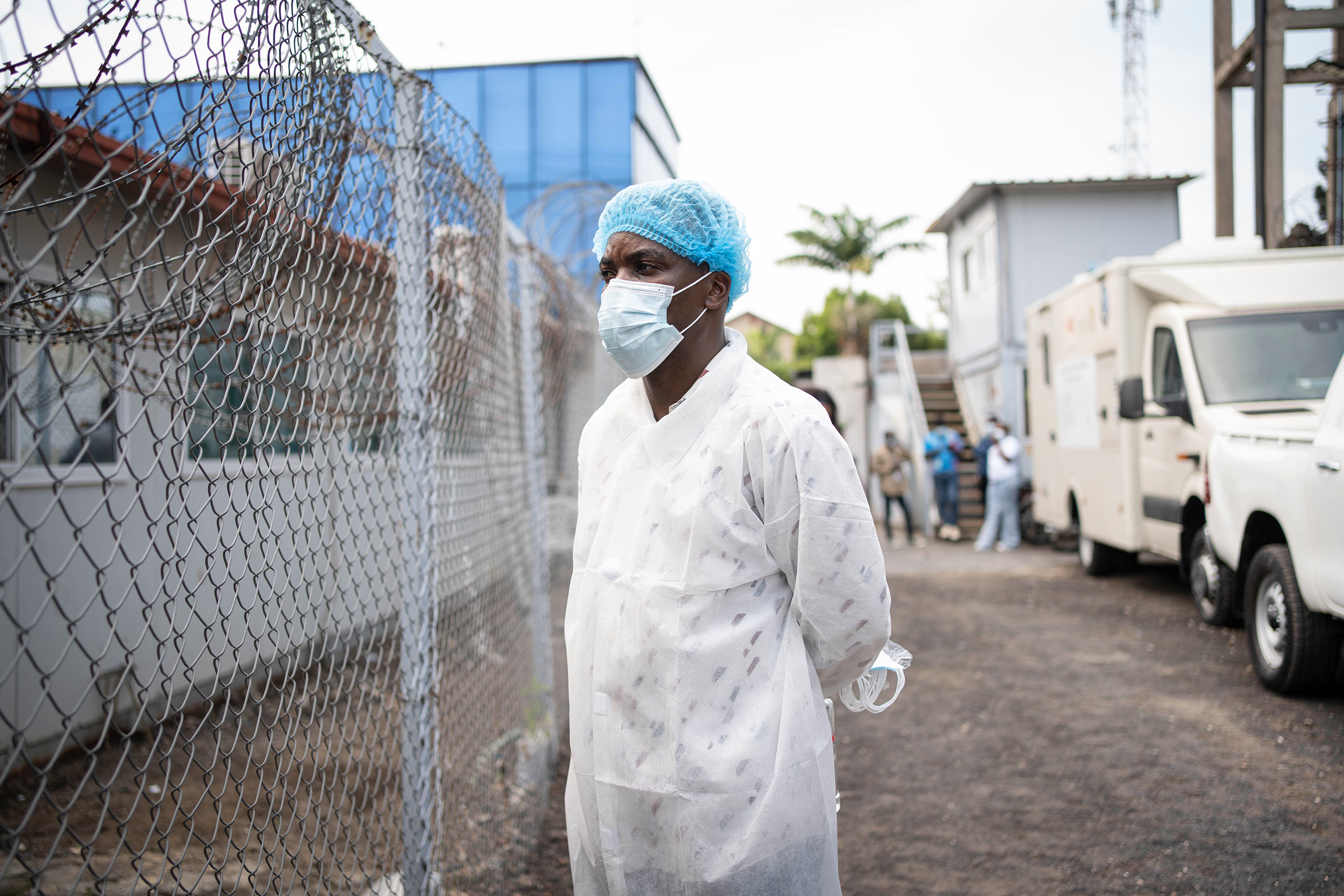
The Ebola epidemic, which appears to have been reported only after early cases went undetected for many months, is spreading rapidly and outpacing containment efforts. As of 27 May, the Democratic Republic of the Congo had reported more than 1077 suspected cases and 246 suspected deaths. Neighbouring Uganda confirmed seven cases and one death. With the DRC also sharing porous borders with Burundi, Rwanda and South Sudan, the fear of cross-border transmission is rising. The Africa Centres for Disease Control and Prevention warns that ten African countries are now considered to be at risk.
Most of these countries have limited healthcare resources and many are experiencing major population movements as a result of political violence, famine and climate change. In Ituri province, where the outbreak began, multiple attacks have been reported on Ebola treatment centres, on hospitals treating patients with suspected and confirmed cases, and on the morgues that receive the dead, further hindering control efforts.
Fast detection and response are obviously crucial. But programs designed to support local health systems and international organisations at work in these countries — vital to detecting outbreaks and alerting communities, building medical stockpiles and dispatching response kits and personnel — have had their funding reduced or eliminated.
Particularly damaging has been the abrupt cutting of hundreds of millions of dollars in international health funding by Donald Trump’s administration. The United States used to fund robust disease surveillance networks across Africa and maintain emergency teams to respond to crises like this one. Most of this work ended with the shutdown of USAID and cutbacks at the US Centers for Disease Control and Prevention. A National Institutes of Health laboratory designed for Ebola work was closed last year and expert staff laid off.
The formal withdrawal of the United States from the World Health Organization has created a US$553 million gap in the organisation’s budget. While emergency response funds have been allocated by WHO and a number of other nations, the systemic damage is not easily repaired.
Making the situation worse is the fact that the outbreak involves the rare Bundibugyo strain of Ebola, for which no approved vaccine or treatment exists. Urgent efforts are underway to develop an effective vaccine, but American laboratories and expertise are notably absence from the push. The Oxford Vaccine Group is working to produce and scale doses of a monovalent Bundibugyo Ebola virus vaccine in partnership with the Serum Institute of India.
World Health Organization officials calling call for international cooperation caution that “no single country can respond to this magnitude of outbreak alone.” What the Trump administration fails to see is that American leadership delivered real benefits for the United States. It allowed US public health officials to learn first-hand about emerging threats and the coordinating of countermeasures; it decreased political and economic instability in fragile states; it protected American citizens at home and abroad in a world where any pathogen is just a plane flight away.
When Ebola tore through West Africa in 2014 and threatened to become a global catastrophe, the White House installed an “Ebola czar” to coordinate a massive response across agencies and governments. A detailed playbook was developed for responding to future outbreaks. The Trump administration has dismantled all that. Many US health agencies now lack key political leadership and senior staff.
Instead, the American focus is on minimising any direct impact on the United States. “We cannot and will not allow any cases of Ebola to enter the United States,” declared secretary of state Marco Rubio earlier this week. This approach extends to sending any Americans likely to be infected to offshore facilities in Kenya. In one case, reports the Washington Post, an American doctor with Ebola was flown to Germany for treatment after being refused entry to the United States.
Reports indicate the administration is blocking key US researchers from attending global virus response talks and, reflecting the current anti-vaccine stance of senior health personnel, no apparent efforts are being made to develop a vaccine against the Bundibugyo strain. Instead, American health officials are working with a small biotech company to provide an experimental treatment (a monoclonal antibody) that may be used in patients exposed to Ebola. With limited production and significant costs, this approach is clearly designed to help only those from wealthy countries.
The Ebola threat to Australia is also just a matter of one infected person arriving on an overseas flight. But the current response here seems rather too laissez-faire. The Department of Health, Disability and Ageing hasn’t made any changes to management strategies for airport arrivals. The website of the Australian Centre for Disease Control states the risk to Australians is very low and Ebola has never been diagnosed in Australia. If Australian volunteers working in Ebola areas become infected, or simply want to return home, how will they be managed?
The list of other recent failures in outbreak management doesn’t inspire confidence either. The Hanta virus outbreak on the Hondius cruise ship has produced thirteen cases and three deaths, with infected patients travelling to a number of countries and several isolated islands visited by the ship threatened with outbreaks. But international law still lacks clear rules for public health emergencies on cruise ships, despite the lessons learned from the Diamond Princess and the Ruby Princess during Covid-19
The Hanta virus’s transmission dynamics mean this outbreak won’t become a pandemic, but its long incubation period (up to forty-two days) and high mortality rate nevertheless require appropriate precautions to be taken. In a number of cases, people who might have been infected were allowed to travel without any precautionary measures to reduce airborne transmission.
In the United States, where Hanta virus infections are often reported in western rural areas, the news of a foreign strain soon had social media spreading rumours, speculation and falsehoods, including inevitable claims that the MAGA favourite, ivermectin, was an effective treatment. Health and human services secretary Robert F. Kennedy announced on 23 May that he had signed a targeted declaration to support the development and deployment of medical countermeasures to the Andes Hanta virus, noting specifically that this would not include the development of a new mRNA vaccine.
Worldwide, healthcare systems are being confronted with significant disease outbreaks entirely preventable with effective vaccination programs. They may not reach epidemic levels, but they cost lives, use up healthcare resources and demonstrate system failures, often as a result of political interference.
A measles outbreak in Bangladesh is estimated to have reached more than 67,000 and killed more than 500, mostly small children, since March. Bangladesh was getting measles under control until, in 2024, a new government upended vaccination efforts by attempting to revamp the program and how vaccines were ordered. Malnutrition, common in many parts of Bangladesh, is one reason this outbreak has hit hard; the number of severe cases and the death rate is considerably higher than typically seen in high-income countries.
Significant measles outbreaks in first world countries have been attributed largely to growing anti-vaccination sentiment. The United States is currently experiencing its largest measles resurgence since the disease was declared eliminated in 2000. A recent outbreak in Mexico, with some 17,000 infections and at least forty deaths mostly among unvaccinated people, is attributed to a young Mexican boy who visited relatives in Texas, a state where conscience- or religious-based exemptions for childhood immunisations have allowed a measles upturn.
Below-target vaccination rates are driving measles transmission across England — so much so that the WHO stripped the United Kingdom of its measles elimination status in January this year. This follows Canada losing its measles-free status in November 2025. Measles is extraordinarily infectious and for outbreaks to occur countries don’t need to slip much below the required 95 per cent immunisation rate needed for herd protection. The resurgence of measles transmission in England in 2024 occurred when coverage for the first dose of vaccine was 92.3 per cent and for the second dose 84.4 per cent.
In Australia, diseases like measles, whooping cough and diphtheria, once considered banished or rare, are making a comeback as childhood vaccination levels drop below herd-immunity levels and adults are missing booster shots. More cases of measles have been reported in Australia in 2026 (106 cases) than the same period in 2025 (seventy-eight). Most have been in unvaccinated or under-vaccinated people who acquired their infection overseas and then transmitted the disease locally to unvaccinated or under-vaccinated contacts.
Australia is facing the worst diphtheria outbreak in decades, with 223 notifications made as of 19 May. The majority have been cases of cutaneous diphtheria, but around 30 per cent have been more serious respiratory infections. The vast majority (94 per cent) of the affected have been Indigenous Australians. Factors contributing to the outbreak include low immunisation rates, specifically in adults whose immunity levels have fallen, the prevalence of skin infections in affected communities, overcrowded housing and limited access to healthcare services.
Other viral threats — old and new — loom. A paper from Gavi, the vaccine alliance, lists the following as immediate threats to global and regional health: conflict-associated outbreaks of disease such as cholera; climate change’s reshaping of the geography of diseases caused by mosquito-spread arboviruses; and Marburg virus, which is related to Ebola. Other viruses — including the H5N1 avian flu, which has acquired some ability to infect humans and for human-to-human transmission, and Mpox (related to smallpox), now been reported in 145 countries and territories — also demand timely reporting and monitoring and a coordinated global response.
It’s also important to note that a 2025 international workshop found that high-burden, endemic diseases of poverty — tuberculosis, hepatitis, cholera, malaria and others — are considered to pose a greater infection threat than novel or emerging pathogens.
At a time when the need is very obvious, it is concerning that WHO member states failed to finalise the pathogen access and benefit-sharing annex (which guarantees access to medical tests, vaccines and treatments in exchange for sharing information on emerging pathogens) to last year’s WHO Pandemic Agreement ahead of the World Health Assembly on 18–23 May this year. This annex is legally required for the broader treaty to enter into force, and so it remains in limbo until negotiators can bridge some stark divides.
As the Global Preparedness Monitoring Board points out, the growing distrust of public health expertise, attacks on science, global inequalities and geopolitics and nationalism are all undermining pandemic preparedness. •