In 2020 Harvard political philosopher Michael Sandel inspected the taken-for-granted idea of “merit” and concluded that perhaps it’s not such a good thing after all. Now another member of the American East Coast academic elite has done something similar for the idea of “choice.” As a self-described “historian of the taken-for-granted,” Sophia Rosenfeld has set out to “lay bare” the “obscure history” of consumers, consuming, and choice.
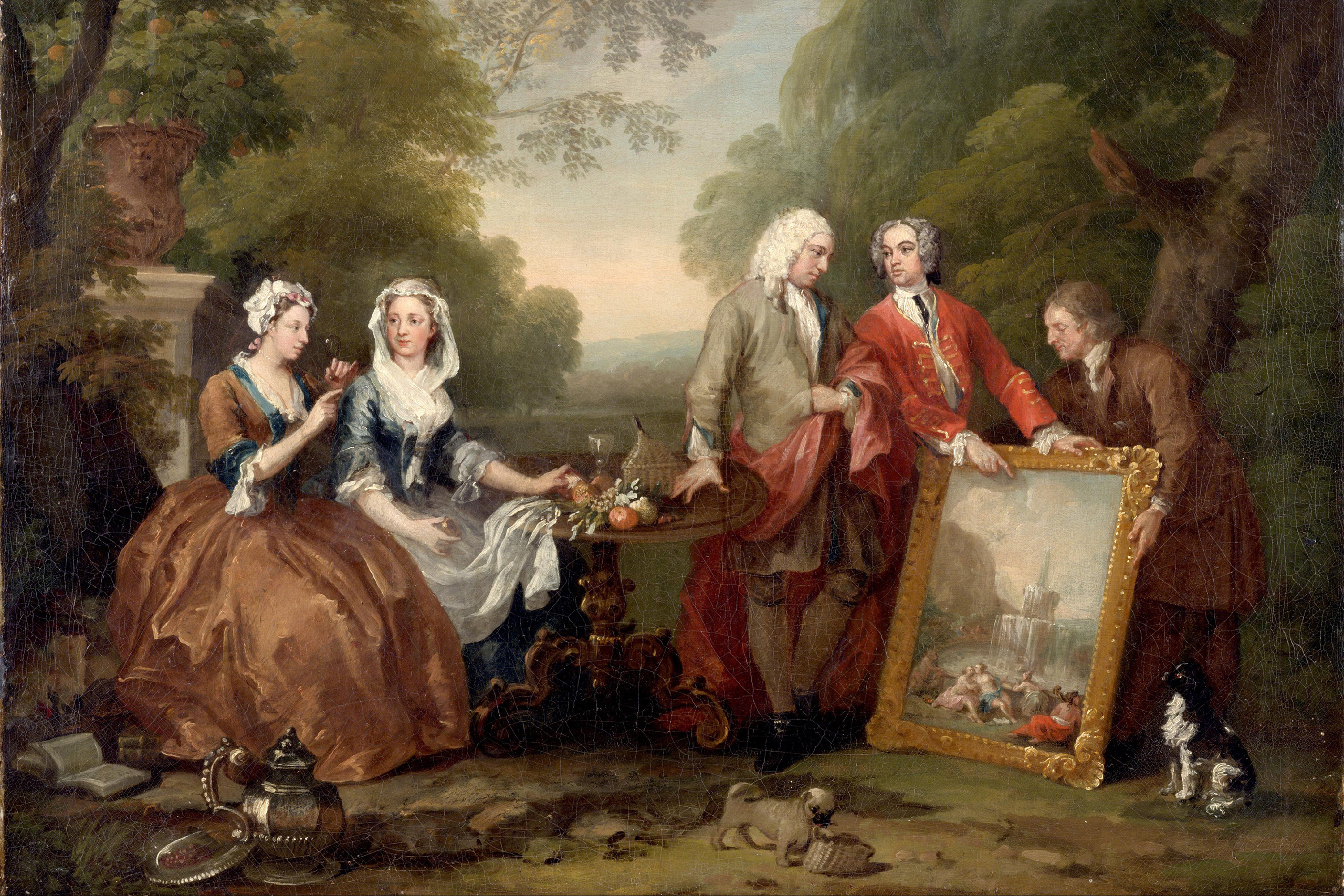
Rosenfeld’s history, The Age of Choice, begins with Christopher Cock, a London auctioneer of the 1720s and 1730s. Cock worked out how to sell just about anything to just about anybody. His heavily promoted auctions encouraged want rather than meeting need. His printed catalogues listed every item on offer, with every one of them laid out for prior inspection. And the auctions themselves became a form of theatre, engaging buyers and bystanders alike in “carefully choreographed choice-making behaviour.” Cock was the progenitor of Sotheby’s, Christies and countless other “auction houses,” but more important by far, he was a pioneering “choice architect.”
Choice-making didn’t spread all by itself or in a straight line, but spread it did, colouring almost every sphere of life in rich societies and then, via “the export of choice itself,” at least some fraction of lives elsewhere. Rosenfeld illustrates several centuries of complex history through five cases in point: the choosing of things, of what to believe, of a life partner, of political representatives and, via the women’s movement of the 1960s and early 1970s, of whether or not to continue a pregnancy.
Idealised by Western thinkers as a “form of aesthetic and personal fulfilment, even liberation, for the person who aspires to live and define him- or herself precisely how she wants, unimpeded by the traditional boundaries of family, class, gender, taste, race, religion, age, or local culture,” choice is, in Rosenfeld’s view, as ambiguous in its moral complexion as it is complicated in its movement.
Some have more choice than they know what to do with, while others have little or none at all; choices made by individuals for themselves — about vaccination, for example — are in fact choices made for others too; sometimes emancipatory, “choice” has promoted a vacuous way of life; experienced as freedom, it is in reality heavily shaped by capitalism’s want-manufacturers and choice engineers. Countless millions of apparently individual choices have added up to an eroded sociability and cultural commonness; a weapon that helped win the cold war has also sponsored bread and circuses at the expense of democratic politics, shifting the balance of political power from democratic institutions to private corporations and hollowing out the lofty ideal of “freedom.”
The Age of Choice could be read as yet another account of the pathologies of a collapsing social order. “Our reigning concept of freedom,” Rosenfeld says, “has lost its way.” But her hedging of that and other conclusions with exceptions, qualifications and caveats makes it difficult to be sure exactly what she intends or concludes. Her prescriptions — she insists that historians have a duty to the future as well as the past — are Delphic. “I leave you, as a reader, with… the invitation to make choice a problem to be wrestled with before it is a default solution,” she says. “Let’s start wondering… if choice as we know it is really what freedom should be all about.”
Michael Sandel published Tyranny of Merit: What’s Become of the Common Good just in time to see a ferocious reassertion of “merit” as a defined by and for white males, along with a takeover bid for political ownership of “the common good.” So too Rosenfeld. Her wokeish conceptual wrestling won’t make much headway against those who have done their wrestling and emerged with a very clear idea about who will make what choices for whom.
Only in America? We could take comfort from our national government’s assault on the choice for tobacco and now on that apotheosis of choice, social media. Or we could list other decisions ceded to individual choice, ranging from gambling, highly processed foods and killer utes to that great corroder of the common good, choosing a school on social, ethnic and religious grounds and conclude that the social democratic tradition that marks Australia off from the US free-for-all is no longer capable of doing more. •
The Age of Choice: A History of Freedom in Modern Life
By Sophia Rosenfeld | Princeton University Press | $59.99 | 480 pages