Among schooling’s many running sores, teacher education — the subject of more than a hundred formal reviews since the late 1970s, and still not fixed — must hold some kind of record.
I was there when it went wrong, and was among the many who have tried to do it better. More than half a century ago, a 1973 proposal to an Adelaide teachers college had a fundamental point to make. Sad to relate, it still needs making.
Teacher education went wrong in the mid-1960s. A huge surge in school enrolments was about to end at last, and so too the need for stop-gaps and workarounds in teacher education. Everyone — employers, the teacher unions, the government in far-off Canberra, teacher educators — thought the old-style training had done its dash, and they were right.
I’d been a student at an old-style teachers college, a glorified high school complete with weekly assemblies, a sign-in book and a women’s warden who, as well as keeping a close eye on the doings of the young female students, determined whether our boarding arrangements were of sufficient probity to warrant a living away from home allowance.
The college, a huddle of wooden temporary classrooms jammed into the garden of a suburban mansion, was run by the Department of Education. It was the department that employed the staff, took students from wherever they could be got, processed them for a couple of years then certificated and employed them. One of my colleagues at my first school was eighteen; she’d got into teachers college after eleven not very successful years at school.
If everyone was right about the old system, they were wrong about the new, and, as it happened, I saw that too. Just four years after my last day at the glorified high school came my first day as a lecturer at Bedford Park Teachers College, which was supposed to blaze the trail to the future of teacher education. It certainly looked the part. Gouts of Canberra money bought flash new buildings (including gratifyingly vast offices for staff), three- and four-year courses, attractive salaries for more highly qualified staff and, the lynchpin, a principal who was also professor of education at the nearby Flinders University. The Department was nowhere to be seen.
Every day the joint appointee would come down — in symbolic as well as topographical fact — to make clear that we’d better get on with becoming more like his other staff up the hill at Flinders. They did research. No one ever suggested, so far as I can recall, that vice versa might also obtain. It was research that would count; teaching (and especially teaching about teaching), not so much. It wasn’t long before Bedford Park Teachers College became the Sturt College of Advanced Education and then, once the research goats had been sorted from the teaching sheep, the whole thing was folded into the university.
All this was sold as making teaching “a graduate profession.” It was a semi-fraudulent professionalisation by higher qualification rather than by building a higher standard or better kind of teaching work.
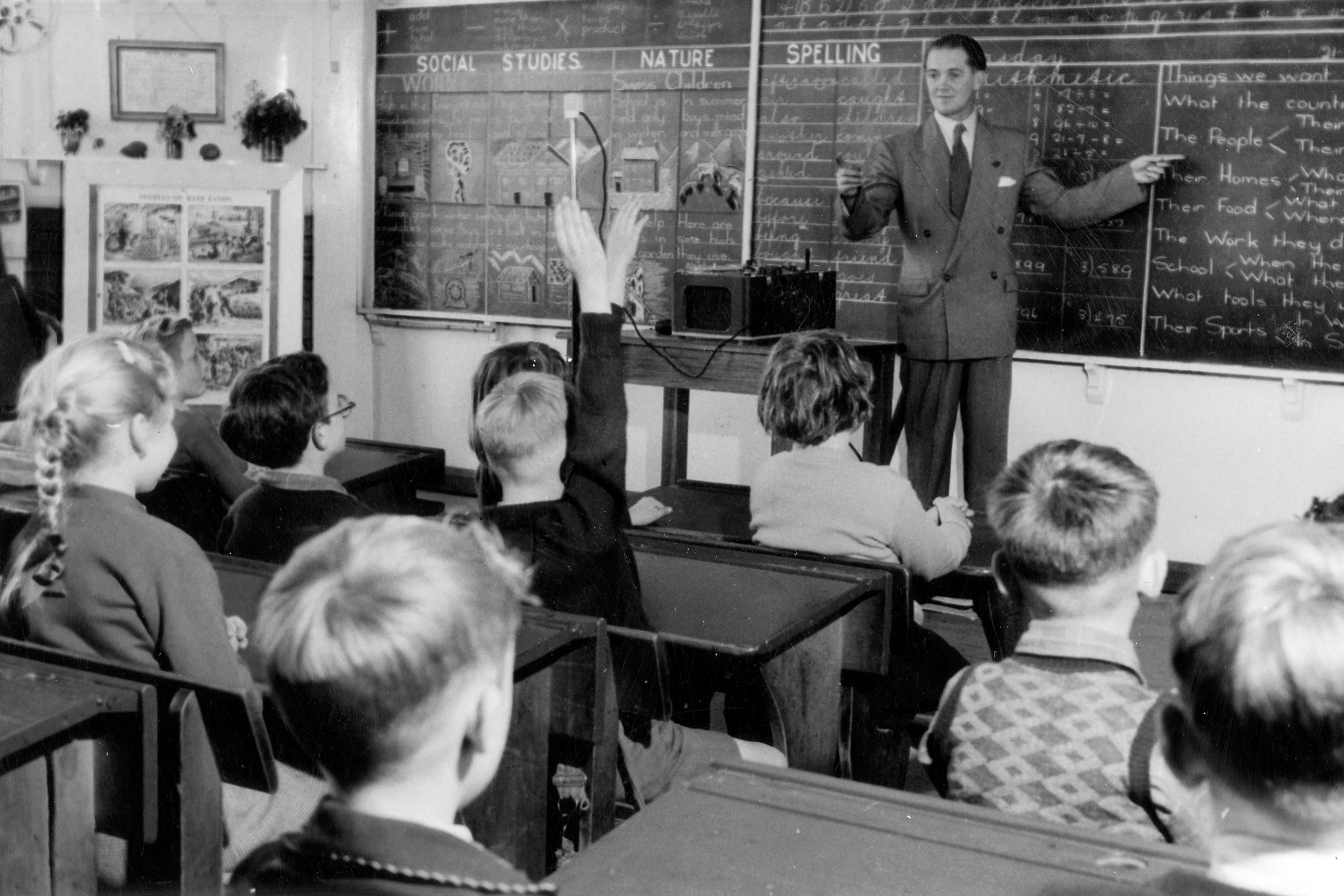
Worse, the new scheme pressed against any such ambition. The old-style teachers college, for all its cringe-making anachronism and its intellectually undemanding gruel, was respectful of schools, teachers and teaching. All were constants in our minds. As well as practical teaching stints we’d all — staff as well as students — troop out to “demonstration schools” every Wednesday morning to watch the gun teachers at work before trooping back to college for assembly. It was teaching as a craft, a skill transmitted from old hands to tyros.
From its new perch, however, Theory was learning to look down on Practice. A ruthless academic rewards system would soon push researchers toward esoteric and scientistic (and therefore more academically respectable) regions; eventually they would arrive at the astonishingly solipsistic and misconceived mantra of “evidence-based practice,” where “evidence” meant that which researchers produced, and only that.
Well before that unhappy day arrived, however, it was becoming obvious that learning about teaching, in splendid isolation from actual classrooms, wasn’t working. Students struggled to understand what their various branches of extended study had to do with each other let alone with teaching. As the day of Going Out Teaching loomed, many were in a funk. Hence the IGPP, the Integrated, Group-structured Pre-professional Program.
The IGPP’s proponents — there were four of us — didn’t wear Che Guevara berets or wave Chairman Mao’s Little Red Book. But the beards, long hair and jeans — or khaki bib-and-brace overalls for one of us — made what would now be called a Statement.
Our proposal was for an opt-in final year of teacher ed in which students’ lives would revolve around three pivots: extended practical experience in the schools; a major project; and a student–staff group (max 15 students, three staff) as an educational forum, the monitor of the program’s progress, and its rule- and decision-maker. The group would be “(a) participatory democracy based on the equality of rights and responsibilities of all members … decisions (will be) arrived at by consensus wherever possible, and by majority vote where not.”
At the end of the IGPP year a panel (school-dominated) would determine whether the student was “competent in classroom practice, in the formulation and explication of a teaching rationale, in demonstrating the interaction of theory and practice, and shows an understanding of the subject matter of relevant parts of the [school] curriculum.” We proposed running the trial for one year only, with evaluation and next steps, if any, to follow.
We were fortunate in our timing. Most of our colleagues, youngish, of liberal rather than radical mind, weren’t convinced the IGPP was workable or desirable but were willing to give it a try; many signed up to help students work through their major project if and as required. The leadership that had taken over from the principal-professor when BPTC became Sturt CAE wasn’t sold on the idea either, but it too was willing to hear us out.
Thanks to three things — the good-natured persistence of our rep (the bib-and-brace wearer), an excruciatingly courteous resistance led by the head of English (owner of the only highly polished Land Rover in Adelaide, perhaps Australia), and the spirit of a time when “innovation” was taken as a self-evidently good thing — the hearing was both exhaustive and exhausting. It consumed several meetings of Sturt’s academic committee and was eventually flicked to a special meeting of council (for which the head of English turned up in beautifully laundered white overalls). The debate went deep into the night, ending, eventually, in a tied vote. The chair determined that the status quo would obtain.
Among my mixed feelings was a certain relief. In the course of arguing the case I was beginning to realise that the dynamics of a leaderless group, the membership of which was based on a false equivalence and blurred responsibilities, could have taken us to a place very different from that imagined. And the assessment as proposed was, to say the least, open to challenge. Against a bad structure we were proposing something that had very little structure at all.
But whatever the limitations of our prescription, the underlying diagnosis was right: to base teacher education in universities/proto-universities was to get just about everything wrong: the relationship between learner teachers and actual teaching, between schools and universities, between “theory” and “practice,” between teaching and knowledge in/about teaching. In making its big shift teacher education had jumped out of the frying pan into the fire.
It is true that teaching has become a more explicit practice, requiring greater command of a wider range of formal, “out there” knowledge including, centrally, knowledge of the process of learning and growing and how teaching helps or hinders. But to be a teacher is to enter into myriad relationships, many of them complicated, tricky and fast-moving. Knowing how to behave in these relationships can be helpfully talked and written about, but to be usable it must be embodied so that it can be deployed intuitively, as a reflex.
In this respect, you do not learn how to teach or about teaching; you become a teacher. Think jazz musician, stunt pilot, or stand-up comic. Some start with more of what it takes than others acquire in years of effort. There is, moreover, no one way to be “a teacher”; it all depends on the individual, the others with whom they work, the circumstances in which they work and, perhaps above all, what kind of learning and growth is being developed. Teaching is, as the cliché has it, “value-laden.”
The only place in which you can become a teacher is where teaching happens: in schools. Schools are also the best place to acquire much formal, out-there knowledge about learning and growth and their relationship to “teaching.” It’s when you’re actually doing teaching that a better understanding of it becomes both urgent and absorbable.
All that boils down to two conclusions: first, “teacher education” should be based in schools. Second, learning about teaching and becoming a teacher is a process, relatively short for some, long for others.
On the location: that doesn’t mean schools as they are now; it does mean schools geared up to become what all schools can and should be, hotbeds of thinking and doing, “learning organisations” as the jargon has it. That would mean schools calling on universities (and others) as required, not vice versa. No more tail wagging the dog.
On the process, the obvious industrial form of a learning/becoming is an apprenticeship, not of the old lock-step Year One to Year Five apprenticeship à la the trades, but a process framed by general principles/objectives, structured by standards-based “developmental continua” (or “learning progressions’) and authenticated by robust assessment, with progress to be linked to expanded responsibilities and remuneration.
The deal we had with the Education Department back in the sixties might be a starting point for figuring out ways and means. (It paid us students a liveable stipend in return for which we were contracted to teach in a school of the Department’s choosing for three years.) So might Teach For Australia, La Trobe University’s Nexus program, the University of Melbourne’s Internship Program, and various upgrade pathways for paraprofessionals, not to mention the Australian Institute for School Teaching and Leadership’s standards for teachers. Even the IGPP might have something to offer.
For most of those examples I am indebted to the most recent of those one-hundred-and-something formal reviews of teacher education, the Scott report (2023). Its suggestions for “mid-career entrants” are particularly interesting, but why apply that kind of thinking to that small minority only? How many young people now trying to swim in the mainstream might jump at the chance to earn as they learn? In a really classy work-based program? That would take them as far and as fast as they could go? And how many of teacher education’s catalogue of chronic declines — in the “quality” of entrants, in the proportion of entrants lasting the distance, in the proportion of them actually going into teaching and in proportions of them who stay in teaching — might such a program tackle?
Scott’s recommendations for the bulk of teacher education — more like commands, really, given the government’s riding instructions — show no such willingness to reorder the underlying relationships. To the contrary: Scott lends the existing order the weight of compulsion, financial incentives, and national uniformity. That might bring some improvements but it won’t fix the problem, precisely because the problem is in the structure as installed sixty years ago.
This is not suggest that teacher education should once again leap out of the frying pan into the fire, this time from the frying pan of university-based instruction into the fire of school-based apprenticeships. For one thing, the vested interests of 2025, aka the universities and the research industry, are much better defended than those of 1965 — they got three of the six spots on the Scott review, for example, including Scott himself, a university vice-chancellor. For another, it wouldn’t work.
A better approach by far is that which we took in proposing the IGPP: start a small alternative, then learn through doing. All it needs is one state/territory minister, one teacher organisation, a bit of money from the feds and a handful of go-getting schools. And after all, now as then, there’s not much to beat. •