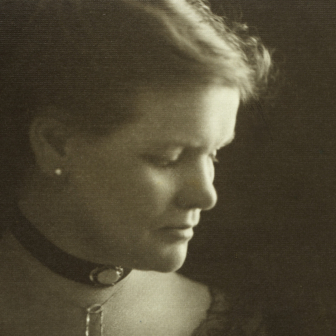
Who is Gisèle Pelicot? The world knows about the worst things that ever happened to her. Dominique, her husband for half a century, routinely drugged and raped her for almost ten years and invited more than eighty local men to rape her while she was unconscious. The rapes were arranged in a chat room, Without Her Consent, hosted by the now-defunct hook-up site Coco. Dominique made videos and took photographs of men raping his wife.
Pelicot consequently spent close to a decade plagued by unexplained memory lapses and gynaecological problems, and having “endless medical examinations.” She feared a brain tumour. No doctor took her, a woman in her sixties, especially seriously. Throughout, Dominique was “always there,” by her side. “He knew.”
Pelicot’s “health concerns” had begun around the time she and her husband retired to the rural village of Mazan in southern France in 2013. They rented a lovely house with a pool, and their three grown children and their offspring were frequent visitors. Then, in late September 2020, Dominique was arrested for filming under three women’s skirts — “upskirting” — at the local supermarket. When he confessed to his wife, she insisted that he apologise to the women and see a therapist. Wanting their life to “go back to normal,” she decided not to tell the children. Yet “what he had done” was “a warning sign — but of what?”
Later, after police seized Dominque’s phone and computer, his wife learned from the magistrate that her husband had drugged her the same night of his tearful arrest confession. She “realised in the magistrate’s office that the rapes had become more frequent in October. He must have known they would be his last.” On 2 November 2020, her husband entered the police station knowing “he would not leave it a free man.”
By the time he and fifty other accused men came to stand trial in September 2024, the couple had divorced, and Dominique had confessed to the attempted rape of a woman back in 1999 and been linked to the unsolved rape and murder of twenty-three-year-old Sophie Narme in 1991. Pelicot, meanwhile, had decided “the door to the courtroom had to be opened.” The words she had first heard more than a decade earlier as a slogan supporting women who had survived rape and domestic violence — “shame has to change sides” — inspired her decision.
“Everyone needs to see the faces of the fifty-one rapists,” she writes. “They should be the ones to hang their heads in shame, not me.” On reflection, it’s a decision she “wouldn’t have dared request” had she been “twenty years younger.”
The catastrophic impact of Dominique’s crimes on the Pelicot family has been told previously from the perspective of his daughter Caroline Darian in her memoir I’ll Never Call Him Dad Again, published in English early last year. For Darian, the horrors were amplified by the knowledge that among the photographs in her father’s files were two taken of her, partially clothed, asleep and possibly drugged.
Darian praised her mother as the “strongest, most admirable woman I know,” but for a time they were estranged. While she remains convinced her father raped her too, Pelicot — acknowledging the photographs as “abject, showing her father’s unbearable incestuous gaze” — sought to “reassure her that it was implausible that he had raped her.”
Each woman is frank about their starkly contrasting responses and personalities. Of her three children, it was Caroline, “the least predictable,” that Pelicot was most concerned about when it came to sharing the shocking news about their father’s abuses. Mother and daughter were each victims, but a gulf grew between them. While the elder woman “embraced silence,” the younger “demanded noise.” Pelicot’s assessment here is less a judgement about Caroline than a claim for her own process, the need she had to “be alone. To close the bedroom door.” By herself, she “breathed more easily, moved ahead at my own pace.” She shifted to a small cottage on an island, took long walks, and rediscovered the “importance of friendship.”
A Hymn to Life is a record of Pelicot finding “my words, the thread in my history, an old story, deeply anchored in me.” Shaped by her beloved mother’s death from cancer when she was a child (“the little nine-year-old girl is still here, restless within me”), Pelicot’s clear-eyed memoir also offers the wisdom of a survivor who long ago accepted that “both love and adversity” were “my inheritance.” Chapters alternate between the unfolding present and a past that began in 1952 when she was born in Villengen, a small German town where her soldier father Yves was stationed during the postwar French occupation.
The man Pelicot married when they were both barely adults, each escaping childhoods of deprivation and neglect, is indelibly part of her story, for if “I erased everything I would be dead.” She narrates their shared life in all its shades — from love story to early parenthood, and through the infidelities and financial stresses of middle age — and via their sex lives, dictated largely by his desires. Focused on building her family, she witnessed feminism only from the sidelines.
Pelicot expresses no regrets about this, but at the same time A Hymn to Life is a profound reclamation of self. Hers is a life story which in any other circumstances would not have been told. She did not seek attention, and nor did she seek to be defined by serial violations or reduced to an inert body on video submitted as evidence.
Written with the assistance of award-winning writer Judith Perrignon and expertly translated from the French by Natasha Lehrer and Ruth Diver, A Hymn To Life is striking for its intimacy of voice. In the face of unfathomable betrayal and the flattening effects of public labels such as “victim” and “icon,” Gisèle Pelicot — who has since reverted to her father’s surname, Guillou — stands her ground, neither disavowing her past nor turning away from her newfound mission, in her seventies, as “the symbol of a new feminist wave that I know nothing about.” If she had never imagined she would write speeches about her “deep urge and determination to change our patriarchal, sexist society,” nor has she given up on men, or on love.
But what of the men, the ones her ex-husband invited to rape her? Their seeming ordinariness has been much commented on, including now by Pelicot: “Many had wives and children. Men of all ages and occupations, the kinds of men you come across all the time… most of them insisting they had done nothing wrong.” Fifty were charged and ultimately convicted; a further thirty could not be identified.
As the case built for a trial, Pelicot “couldn’t stop thinking about those filthy bastards walking free. What further crimes were they committing, who were they going to rape?” During breaks in court proceedings, she heard the men standing trial “talking, not even bothering to lower their voices, naturally buoyed by male camaraderie.” However diverse in appearance and manner — “there were old men, bald men, men with paunches, men who were young and athletic” — what they shared, observed Pelicot, was a “sense of entitlement.”
Also observing the men in court was French feminist philosopher Manon Garcia, whose book Living with Men: Reflections on the Pelicot Trial was published last year in an English translation by Maya B. Kronic. A worthy companion to Pelicot’s memoir, Garcia’s intervention is also wider and ongoing. Since the Pelicot trial ended in December 2025 with all men convicted — among them a man in his forties who appealed his sentence only to have it extended when he returned to court — more networks have been revealed of “ordinary men” facilitating sexual violence in various online platforms, most recently by CNN following a months-long investigation.
Among the many questions the Pelicot trial prompted for Garcia — and in this she was hardly alone — was “Can we live with men? And if so, at what cost?” Well aware of the provocative nature of this question, Garcia brings together her visceral experience of attending the trial, her own experience of being a woman in the world, and her academic expertise. In fewer than 150 pages, she captures the particulars of the trial itself (including the experience of watching the videos of Pelicot’s rapes, which left her “trembling and weeping”), perceptively examines a range of related themes, and advances a nuanced feminist critique of the limits of the law.
Garcia is a recognised authority on “consent,” and her book on the topic, published in 2023 in English as The Joy of Consent: A Philosophy of Good Sex was cited at the trial. For Garcia, what the Pelicot trial revealed was that “it was not the courts or the law” that “failed to take consent into account” — the videos were damning evidence, and all men were found guilty — but “rather that the men examined in the trial had not understood what consent is.”
If the Pelicot trial is to be understood as a turning point, as it clearly is, then what it ultimately marks for Garcia is “the end of the idea that we can place our hopes exclusively in the legal system.” Nor is she convinced that the oft-used feminist term “rape culture” is sufficient to capture “the scale of the problem.” Like Pelicot, she refers instead to “patriarchy” to make sense of how a “single man in a small town like Mazan can manage to find at least seventy others” willing and eager to rape his wife — and to not fathom it as such.
Under the umbrella of “patriarchy,” Garcia turns readers’ attention to other aspects of the trial and wider society. To give one example, she writes that “[i]n this trial as elsewhere, incest is all around us, its ubiquity equalled by the silence that surrounds it.” (She dedicates her book to both Gisèle Pelicot and Caroline Darian.) Elsewhere, she homes in on the explanations some of the men provided for why they went to the Pelicots’ house, such as “they no longer had a sex life with their wives, or not enough of one,” suggesting that “for many men, sleeping with their partner and the mother of their children and sleeping with a woman twice their age who is so sedated that she looks dead, basically amounts to the same thing.”
Garcia’s book is infused with anger, but like Pelicot’s it is not without hope. She brings fresh force to longstanding feminist arguments that patriarchy hurts men too, and that social change — and not just legislative reform — is needed. Eschewing polemic at every turn, she writes in an elegant no-nonsense style shared by other French women writers on similar themes, among them Neige Sinno, author of the incest memoir Sad Tiger (which Garcia approvingly cites).
While a conversation with a male journalist who claimed that attending the trial was a job like any other leaves her gobsmacked at his lack of introspection, Garcia is buoyed by the social movement that swelled throughout the trial. She is inspired too by “Gisèle’s calm, her hope in the face of everything,” and ends her book with an invitation. Rather than women asking themselves whether “we should really love men the way we do,” Garcia instead encourages men to love women “so that we can go on loving them.” •
A Hymn to Life: Shame Has to Change Sides
By Gisèle Pelicot, with Judith Perrignon | Translated by Natasha Lehrer and Ruth Diver | Bodley Head | $36.99 | 256 pages
Living with Men: Reflections on the Pelicot Trial
By Manon Garcia | Translated by Maya B. Kronic | Polity | $41.95 | 208 pages