At a famous moment during the October 1962 Cuban Missile Crisis the news came through to President Kennedy and his advisers that the Soviet ships they feared were about to challenge the US blockade of Cuba had turned away. Recalling a childhood game in which he and his friends would try to outstare each other, secretary of state Dean Rusk observed: “We’re eyeball to eyeball and I think the other fellow just blinked.”
As it happens, the blinking had occurred sometime before. Almost as soon as Moscow learned of the blockade it ordered Soviet ships to stay clear. Contrary to the apprehensions of Kennedy and his advisers, all Soviet ships were far away from the quarantine line by the time Rusk made his comment.
Nor was that the moment of greatest danger. More blinking would be done before the crisis was over. The big test was getting the Soviet missiles out of Cuba. Nonetheless, that moment showed the crisis was potentially manageable and the Soviets were wary about escalation.
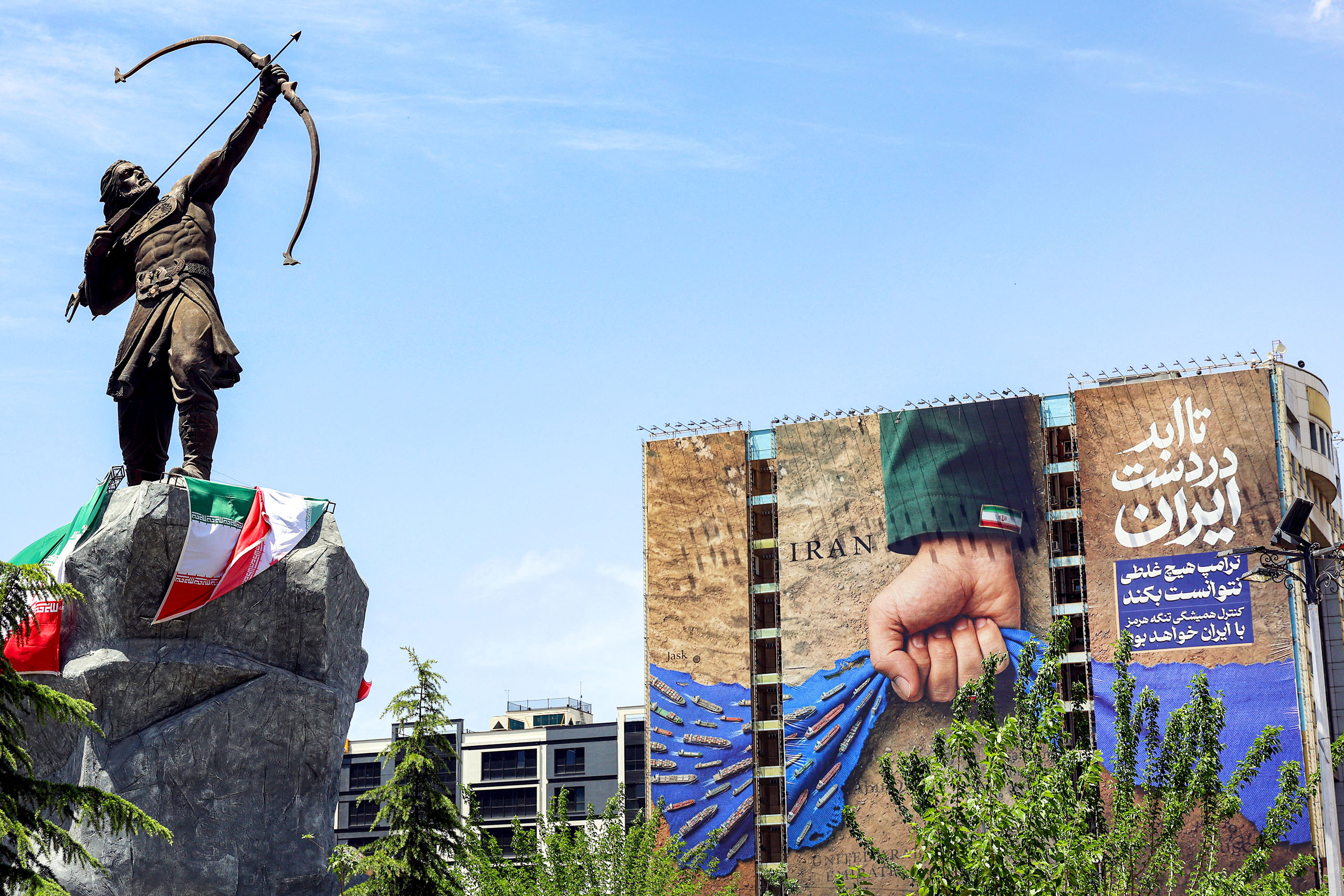
Not one but two blockades are currently in place in the Strait of Hormuz. The first, imposed by the Iranians in response to the initial US–Israeli strikes, effectively shut the Strait. Iran’s leaders did, however, intend to allow their own and other favoured ships through, as well as those prepared to pay a toll to Tehran. That led to the second blockade, this one imposed by the Trump administration to deny Iran those benefits. Both blockades are being enforced, with merchant ships fired on and Iranian vessels seized.
In 1962 the world watched the developing crisis in the Caribbean with anxiety. Everything was dependent on decisions being made by a few people in Washington and Moscow. If the crisis got out of hand then all would suffer the consequences of what could be a nuclear war. In 2026 the world watches a contest of wills between Tehran and Washington, also with anxiety. Much economic damage has already been done: the longer the standoff the greater the prospective chaos.
For the standoff to end both sides must blink together to end their respective blockades. That might have happened on 17 April when Iran announced that the Strait was open. Trump welcomed the move but still decided to keep his blockade going to demonstrate the US had the upper hand. Iran immediately reimposed its blockade. Trump appeared to think the pressure on Iran would increase if it could not export its oil. It would have to keep more in storage tanks, which would soon fill up, and shut its oil wells. This has not happened.
The formal positions of the two sides on peace negotiations still seem to be far apart. Yet Trump on Tuesday suggested that “tremendous progress” was being made towards a deal. We have been here many times before, with Trump claiming some imminent breakthrough only for imminent peace to turn out to have largely been in his imagination. From the start Trump’s utterances on this war have sown confusion and got in the way of serious peace-making. (The Washington Post has a useful compilation of his many and inconsistent claims on the timeline of the war and the likely prospects for peace).
Yet that burst of optimism from Trump was combined with statements to the effect that the active stage of the war was over. After looking at whether Trump has started blinking, I’ll consider in this post the incentives for the Iranians to do some blinking of their own, and the possibility that the Strait might be opened soon.
Trump blinks first
On 3 May Trump announced yet another initiative — somewhat unoriginally named “Operation Project Freedom” — intended to undermine the Iranian blockade. The US would “guide” ships through the Strait of Hormuz from the next day, with a warning to Tehran that any attempt to prevent them getting through would be met by force. This was presented as a “humanitarian” move. On Truth Social, Trump said:
The Ships movement is merely meant to free up people, companies, and Countries that have done absolutely nothing wrong — They are victims of circumstance. This is a Humanitarian gesture on behalf of the United States, Middle Eastern Countries but, in particular, the Country of Iran.
We have told these Countries that we will guide their Ships safely out of these restricted Waterways, so that they can freely and ably get on with their business.
If, in any way, this Humanitarian process is interfered with, that interference will, unfortunately, have to be dealt with forcefully.
The humanitarian issue is real enough. The International Maritime Organization, in passing a resolution condemning Iran’s blockade, noted the threat posed to the “welfare of seafarers” as well as the danger to life and the “serious risk to the marine environment.” The Pentagon says 22,500 mariners have been stuck on 1550 vessels for more than nine weeks.
In the event, two US-flagged tankers that had been trapped were guided through the Strait. But compared with the scale of the problem this was of only modest value. Without Iranian cooperation, which was never likely, ships’ vulnerability to drones or sea-skimming missiles, even if they stayed close to the Omani coast, was enough to deter commercial vessels from taking any risks. Other than guidance the idea was that the US would use all its available assets to create some sort of security “umbrella.”
Seven Iranian small boats were sunk and some Iranian cruise missiles and drones were intercepted, but Iran still made its point by attacking several merchant ships and an oil port in the United Arab Emirates. So despite the US secretary of defense claiming a path had been secured and that commercial ships were lining up to pass through, the reality was much more precarious. Then, after forty-eight hours, Trump paused the operation, ostensibly because of progress in the negotiations, but also because it was not going to provide a way out of the impasse. The Iranians gloated that they had thwarted yet another American attempt to gain the upper hand.
The move certainly underlined just how much the administration wants to get out of this mess of its own making, preferably without losing too much face. Pete Hegseth was at pains to stress that none of the drama around “Project Freedom” affected the ceasefire. We were then told that active operations were effectively over, and so the ceasefire was effectively permanent. This was also in line with Trump’s insistence that he could ignore the sixty-day limit in the War Powers Act because the ceasefire meant that the war was over.
With the blockade still in place, however, this is not the case, as a blockade is an act of war. Trump said “It’s a very friendly blockade. Nobody is even challenging it,” but by 6 May he seemed to be having second thoughts about whether he really wanted to take the option of a return to bombing off the table.
Despite his apparent insouciance Trump doesn’t want this situation to continue for much longer. The war is unpopular in the United States. If it was successful then the political and economic price being paid might be acceptable. But so far this war has been far from successful, with many negative consequences and no positives. This became painfully apparent during last week’s congressional hearings when Hegseth acknowledged that the war had already cost $25 billion.
Hegseth sought to hide its limited achievements by engaging in a rhetorical confrontation with Democrats, at one point accusing them of being the enemy within. He praised Trump for his “bravery” in taking on the Iranians, explained how the Iranians had been allowed to do terrible things against the US for forty-seven years without anybody doing anything about it, and mentioned how dangerous it would be if the regime getting nuclear weapons. He emphasised that the regime has lost layers of leaders, along with lots of ships, missiles and other military capabilities.
But any boasts seem more than premature when the regime appears to be in a stronger position internally than it was in February and is far from being fully disarmed, with the status of its nuclear program thus far unaffected. The main change is that the Strait of Hormuz was open in February and isn’t now. The other difference is that US relations with its allies have deteriorated badly because Trump blames them for insufficient support. This is not what a victory looks like.
When he launched the war he seemed to have had in his head the Venezuelan model in which, once he had abducted president Nicolás Maduro, everyone left in the government was happy to work with the US to ensure their own survival. The differences with the Iranian situation are too numerous to mention. Trump’s key difficulty is that, having presented Epic Fury as a stunning victory for the US that left him with “all the cards” in the negotiations, Iran has clearly not been defeated and has a bargaining position that cannot be ignored if the aim is to bring the war to a close.
Will the Iranians blink?
Part of Trump’s preferred narrative is that the Iranians are desperate for a deal, and are only held back by splits within the regime and a consequential inability to take the hard decisions. Differences of opinion undoubtedly exist inside the regime, but not fragmentation. The IRGC (revolutionary guards) has used the war (as they used the Iran–Iraq war of the 1980s) to consolidate its position and suppress dissent. It is riding high on its defiance of the Americans, which has done wonders for its international reputation, at least among those sections of the international community deeply hostile to the United States.
And yet. The immiseration of the Iranian people continues. People must scramble for the essentials of life. Many are not getting paid, cash is hard to come by, and inflation is out of control. The regime’s supporters have been energised by the conflict but a large portion of the population remains disaffected, suffering in silence, unable to share their thoughts because of fear of the IRGC. The internet is still down.
The American blockade has emphasised the difficulty of turning Iran’s control over the Strait into a money-making venture, but it does allow the IRGC to sustain a state of emergency and maintain its grip over the country. It must wonder about what will happen when it must declare the war over and the dire state of the country can no longer be ignored. With no quick fixes to Iran’s internal problems, perhaps that is one reason why the its leaders have had few incentives to make big compromises to end the conflict. The IRGC’s determination to show no sign of weakness is why it responded so vigorously to the American attempt to find a way to break the blockade.
But they can’t sustain the current position indefinitely. Many of those who are pleased to see the American embarrassed are being hurt by the closure. This includes China, which is getting increasingly nervous about the long-term impact of the Strait — through which it imports about a third of its oil and gas — staying shut. President Xi Jinping will soon welcome Trump to Beijing and doesn’t want the summit to be dominated by this issue. Iranian foreign minister Abbas Araghchi has recently been in Beijing.
Iran’s attacks on its neighbours have also left it regionally isolated. Few in the Gulf region are disposed to help it out of its troubles given the harm already caused to their own economies.
Fitful negotiations
Iran’s demands have been as maximalist as Trump’s. The Trump administration’s proposals start with Iran’s nuclear activities. It seeks severe limits on uranium enrichment, verifiable guarantees Iran will not develop nuclear weapons and long-term monitoring of nuclear facilities, as well as a re-opening of the Strait of Hormuz and no Iranian control over shipping passing through.
The key feature of Iran’s response was to postpone the nuclear issue until everything else was sorted to its satisfaction. This would require the US to withdraw all its forces from near Iran’s borders and end its blockade of Iranian ports, and for all hostilities — including Israel’s offensive in Lebanon — to cease. It wants guarantees of no future US or Israeli attacks and also reparations for the damage caused, it wants sanctions lifted and billions of dollars of frozen assets released, and it still wants to manage shipping through the Strait. Only then could discussions begin on its nuclear program (without which there is no prospect of sanctions relief). It will not abandon uranium enrichment but does seem ready for a long moratorium.
When this latest Iranian proposal was received, via Pakistan, last week Trump dismissed it. He could not “imagine that it would be acceptable.” He wrote in a post on Truth Social on 2 May, suggesting that Iran deserved punishment: “They have not yet paid a big enough price for what they have done to Humanity, and the World, over the last 47 years.”
Nonetheless, last Sunday the US sent another proposal, and Trump spoke of “very positive discussions.” Presumably “Project Freedom” was designed to strengthen the US position and force the Iranians to take its proposal more seriously. Yet now Trump is signalling he has had enough. His position had been that if there was no deal “fighting resumes.” He appeared to have taken this threat off the table but then on Wednesday he put it back on again. In a post on Truth Social he said that failure to agree a deal will result in bombardments “at a much higher level and intensity” than Epic Fury.
Meanwhile, secretary of state Marco Rubio, who has not played a prominent part in the administration’s presentation of its case until now, has suggested the blockade was sufficient to keep up the pressure because it denied Iran revenue for “whatever remains of their frail economy.” He insisted that “we’re done with Epic Fury” and are on to “Project Freedom.” Unfortunately for Rubio’s credibility, Trump immediately paused Project Freedom and promised yet more bombing at a greater intensity than before if the peace plan was rejected.
Blinking at last?
Anything Trump says on peace deals as well as his more lurid threats must be discounted. There are other reasons for some optimism. Despite Monday’s events, and despite a flare-up on Thursday, the Iranians want to sustain the ceasefire and foreign minister Araghchi has also said that “talks are making progress.” A number of other countries, including Saudi Arabia and China, are now part of the conversation. International pressure to get this sorted is growing. The Iranians have now said that the Strait of Hormuz could be reopened if there was an “end of the aggressors’ threats,” but without specifying whether all ships could pass through and whether it would still want to collect tolls. (The IRGC statement refers to “the shadow of new procedures”).
The current focus is reportedly on a one-page memorandum which includes, according to Axios, a suspension of Iranian nuclear enrichment, the lifting of sanctions, and a restoration of free transit through the Strait of Hormuz. Rubio has suggested the nuclear clauses will be more of an agreed general framework for further discussions rather than a final agreement.
“We don’t have to have the actual agreement written out in one day,” he said. “This is highly complex and highly technical. We have to have a diplomatic solution that is very clear about the topics that they’re willing to negotiate on and the concessions they are willing to make at the front end in order to make those talks worthwhile.”
This is sensible enough, although clearly far from what the administration originally wanted. If that is all the Americans get out of this war — about the same as they could have got without its attack — then it will be even harder for the administration to brag about a great victory.
Internationally the nuclear issue will attract far less attention than whether the Strait can be opened and ships can start moving again. Even if there is a negotiating breakthrough it is unlikely to come quickly. Everything is going through the Pakistanis. There are no current plans for direct talks.
We have probably reached the stage where both sides are dissatisfied with what the other is proposing but neither wants the talks to collapse. External pressure to get the Strait opened is becoming more persistent. Conceptually it is not hard to work out what needs to be done, but the detail is difficult and any engagement by Trump can scuttle a promising initiative. We are probably inching towards a deal. But for now it is more a wink than a blink. •