With his new book on the Abbott–Turnbull–Morrison era, the Australian’s editor-at-large Paul Kelly has completed what his publishers call a “masterful trilogy on modern Australian politics,” which began with The March of Patriots (2009) and continued with Triumph and Decline (2014). Extending further back, The Twilight of Exceptionalism completes a series of books that began half a century ago with Kelly’s account of the demise of the Whitlam government in The Unmaking of Gough (1976).
Kelly’s best-known and most influential publication, The End of Certainty (1992), told the story of the Hawke government, but the deep influence of that book arose from its argument that the 1980s had seen the dismantling of much of “the Australian Settlement”: a set of policies that had sought since the early Federation years to insulate Australia from market forces under the umbrella of the White Australia Policy and the British Empire.
A clue to the development of Kelly’s thinking over those decades comes in the books’ increasingly pessimistic titles. He was not only a narrator of the deregulation of the 1980s; he was also an enthusiastic supporter. In the closing pages of The End of Certainty — amid a recession and high unemployment that provoked second thoughts about deregulation even among some on the right — Kelly called for continuing free-market reform.
In The Twilight of Exceptionalism, the Hawke–Keating era remains gold standard and the Howard era at least silver, and Kelly can’t help but measure the disappointments of more recent times against the reform achievements of 1983–2007. The first eight chapters set out a kind of theory of why the Coalition’s nearly nine years in government turned out to be such a disappointment — beyond the deficiencies of character and judgement he sets out in the remaining thirty-nine chapters.
The argument operates at a higher level of abstraction than it did in The End of Certainty. Kelly’s perspective is that of a C/conservative (I’ll leave in limbo whether it’s a big or small “c”) who believes the decline of traditional morality has made governing harder. Now writing of “the relentless debasement of cultural life,” he argues that the demise of the shared values and norims provided overwhelmingly by Christian belief has led to a proliferation of “progressive” causes pursued with a high level of moral passion.
The problem for the Liberal Party, even as it helped deliver marriage equality against the better instincts of its conservative wing, is that it was ill-equipped to come to terms with these cultural changes. The new era — the “transition from the industrial age to the decentralised individualism of the digital age” and the rise of an identity politics based on emotional appeals and proliferating rights claims — demanded political and intellectual skills beyond the capacities not just of three prime ministers but also of the overall political system.
Still operating under the assumption that most citizens took their political allegiances almost from cradle to grave, leaders were unable to respond effectively to the “new tribalism.” All, apparently, was not lost: the new progressivism’s defiance of “common sense” was beginning to provoke a reaction, as seen in the rejection of the Indigenous Voice to Parliament, a resistance that expressed “the public’s attachment to political liberalism and cultural tradition.”
But the rays of hope for Kelly are few and far between, and a nostalgia lingers for a time when politicians such as Hawke, Keating and Howard, in alliance with the press gallery, better served “the national interest.” The governing Liberals of 2013–22 were unable to harness such attitudes in the face of a cultural revolution and in the absence of a sense of purpose. As a result, the major problems and challenges of the nation — seen by Kelly as declining productivity and living standards, moribund and over-regulated industrial relations, falling educational standards, an energy transition that risks excessive consumer costs, major geostrategic shifts and notably China’s greater power and assertiveness — are often met with deficient “populist” policy.
Is his account convincing? My own sense is that the decline of Christian belief and observance have indeed been far more disruptive for Western politics than most conventional commentators are willing to concede, if the thought even crosses their minds. To that extent, Kelly has something valuable to offer. Christian belief, even where it gave rise to powerful sectarian passions between Catholics and Protestants, informed a broad set of values, assumptions and practices that sustained community and belonging. All accepted they would eventually be judged before God for their conduct on earth. And while Christians had different understandings of the role of conscience according to their denomination, they mostly accepted that their obligations extended beyond the self, the family and co-religionists to the wider community, nation and humanity.
I suspect I’m more sympathetic to the gains we have made from the decline of shared values than Kelly, though I can still recognise he makes a fair point when he regrets what was lost and argues that accommodating a greater diversity of experience and perspective has made governing more difficult. All the same, Hawke and Keating would surely have said governing was no piece of cake in their day either, and Kelly rests too much of his argument on culture and values and too little on economics and inequality. That is the other story of the last forty years, including those of these Coalition governments: rising inequality and narrowing of opportunity.
Yes, the Liberals were often out of tune with the “progressive” social values of many Australians, especially younger people, the tertiary-educated and women. As Kelly recognises, it would be hard to invent two prime ministers less well-equipped to appeal to these groups than Abbott and Morrison. But many of these same voters loathe the Liberals and Nationals because they defend the asset-owning class against the rest. The generational dimension is strong: middle-aged and older Australians — with a home of their own and investment properties, shareholdings and superannuation balances — are the Coalition’s most cherished constituency.
Leaving aside some minor modification of superannuation tax concessions when Turnbull was prime minister and Morrison treasurer, the privileges of those older voters have been close to untouchable. Younger people, with their stagnant wages (a deliberate feature of the industrial relations system, according to one Liberal finance minister), were expected to pay for these concessions to their elders, as well as subsidising the older generation’s new hips through their taxes and private health insurance premiums. The $100,000 university degrees threatened by Christopher Pyne’s failed attempt at fee deregulation in 2014 turned out to be a precursor of the $90,000 double degrees facing the incoming class of 2021 courtesy of Scott Morrison and Dan Tehan.
To argue that cultural or moral concerns overwhelmingly caused the Coalition’s humiliation of 2022 and crisis of 2025 is to overlook quite a lot. When younger voters saw Turnbull pursuing lower business taxes they wondered why tax concessions to cashed-up investors in rental housing were considered sacrosanct. They saw bad faith and rank hypocrisy where Turnbull — and Kelly, for that matter — saw sensible policy designed to lift the country’s flagging economic performance. And where Kelly saw populism, opportunism and eventually overreach in Bill Shorten’s policies in 2016 and especially 2019, many younger voters saw a political leader finally dealing with the baked-in unfairness that was a legacy of the Howard era. Little wonder that Shorten was not so very far behind Gough Whitlam in seeing off Liberal prime ministers (and only behind because none drowned this time). Their wounds were both self- and Labor-inflicted.
After his opening sequence, Kelly traces the history of each of the three Coalition prime ministerships and governments. Here is where he is at his best. A formidable political journalist with experience stretching back more than half a century, he has a long-term historical perspective few of his profession can match. He is also a close observer of, and commentator on, day-to-day politics. And, of course, he has excellent sources: as he reveals here, prime ministers (and others) seek him out as an interlocutor.
When he makes an appearance at a Turnbull New Year’s Eve party at one point in the narrative, we share the perspective of an insider who is a player in the history he is recounting. Alan Reid pioneered this kind of political book in the 1960s, although Kelly is less entangled in the power struggle than Reid was when he championed William McMahon and agitated, successfully, for John Gorton’s demise, all in accord with the desires of his employer, Frank Packer.
That is not the sense in which Kelly is an insider, but insider he is. “It is elites and institutions that possess power,” he tells us early in the book, yet his account of the politics of these three years often reveals otherwise. Leaders set out with grand objectives; they are big men who will reshape the nation to accord with their own visions, or they will at least muddle through in a way that takes the nation in the direction they want it to go.
But the reality of power is mainly different. Shifting values confound the efforts of leaders to lead as they wish. The messy life of the country — mostly lived far from Capital Hill in Canberra — exercises its own sway, increasingly independent of the traditional institutions of Australian democracy. The hollowed-out political parties are the most obvious casualty of this process, the community or teal independents the major beneficiaries.
In his splendid portraits of each of the prime ministers Kelly has some revelations for us. He presents Abbott as a “warrior” who seems to have had an unhealthy interest in whether the Australian Secret Intelligence Service could carry out Mossad-style assassinations. (Nick Warner, its boss, mercifully explains it cannot.) But Abbott nonetheless wants to send Australian Defence Force personnel into Ukraine to secure the site of the Malaysian Airlines Flight 17 jet downed by a missile. Kelly recounts the battle within the bureaucracy to persuade him it was not a good idea; the debris was just forty kilometres from the Russian border.
In general, Abbott appears here as not too far removed from the “very dangerous prime minister” Turnbull said he was. But it is the 2014 budget with its brazen broken promises that most damages his government. Later mismanagement of matters such as the knighthood for Prince Philip and marriage equality finish the job. Abbott miscalculated the realities of the power at his disposal, Kelly suggests, not least in misreading the level of cooperation he was likely to get from the complex Senate crossbench. His dependence on chief-of-staff Peta Credlin, as other commentary has stressed, was also a negative. Abbott (and Credlin) were gone in two years, passing on a massive, wasted majority to his successor, Turnbull.
For Kelly, Turnbull was a technocrat and a businessman in an intensely political environment. Among his flaws was the misconception that reason, in the hands of a practical businessman like himself, would naturally prevail. Initially welcomed by many as a saviour, his leadership honeymoon was short, and his failure to call an election towards the end of 2015 was “the turning point at which modern history failed to turn” (to borrow from G.M. Trevelyan on 1848) — for Turnbull would surely have won handsomely. An untidy, abortive debate over taxation reform was deadly: Turnbull has blamed his treasurer, Scott Morrison, for “frontrunning” in the media over possible GST changes, but his own poor political management was responsible for some ill-considered kite-flying over a possible return of some income-taxing powers to the states.
Kelly has less than might be warranted to say on the febrile environment that developed on the political right over Turnbull’s leadership. Zealots in their favourite media outlets were determined to expose Turnbull as a Labor man in Liberal drag. Their confidence grew into a kind of exuberance as the Coalition lost most of its majority at the 2016 election; it was because Turnbull was Labor-lite, they said. Brexit occurred during that campaign; Donald Trump was elected at the end of the year. Both fuelled the fire in the bellies.
Their conviction that history was on their side was barely dented by the achievement of marriage equality. Despite the growing evidence that their values were out of kilter with a fast-changing society, they seemed unconcerned they might be shouting into an echo chamber. And they took comfort as Turnbull faltered and then fell over the National Energy Guarantee he devised with treasurer Josh Frydenberg in August 2018.
Turnbull’s fate points to one issue little discussed in The Twilight of Exceptionalism. While Kelly has a fair bit to say about what he sees as the progressive media, the role of his own employer, News Corp, gets limited coverage. He does note the devastating effect of Peta Credlin, translated to a job at Sky, labelling Turnbull “Mr Harbourside Mansion.” But an understanding of the entire period of almost nine years calls for attention to the role played by the Murdoch media in supporting and undermining a succession of Coalition leaders and policies — to say nothing of its treatment of other parties and candidates, as well as a range of other public figures against whom it ran often obsessive campaigns.
Part of the challenge of governing Australia from the centre right in this period was the Murdoch media’s platforming of critics further to the right. It is often suggested that the ageing, dwindling membership of the Liberal Party and its rusted-on supporters, inhabiting a bubble that barely registered for most Australians, were being rather heavily influenced by this material. This certainly damaged Turnbull. But as Kelly points out, even Scott Morrison was coming to be seen as “a poor man’s Turnbull” when he tried to bring his party and the Nationals around to an emissions policy of net zero by 2050 ahead of the COP26 in Glasgow.
Which brings us to the transactional Morrison. I agree with Kelly’s assessment that he was the most successful of the three prime ministers. It was not just the surprise victory over Bill Shorten’s Labor Party in May 2019. There is also the first year of Covid: Australia’s performance in minimising deaths was impressive, even with the mid-year Victorian outbreak. Kelly is less complimentary towards most of the state premiers, especially Annastacia Palaszczuk; and he is more critical of the Morrison government’s performance on the vaccine rollout.
Persuasively, Kelly argues Covid was instrumental in bringing Morrison down, but he is also alive to his defects of judgement, empathy and character. Morrison’s deficiency of empathy, his tin ear, and his poor understanding of gender politics left him ill-equipped to deal with the fallout of the sexual assault of Liberal staffer Britanny Higgins. All the same, Kelly shows clearly enough that this matter developed into a political operation designed to damage Morrison during 2021. He never really stood a chance.
Kelly is scathing of Morrison’s handling of the bushfires of 2019–20 and his secret assumption of several ministries: what began as a prudent decision to swear him in as health minister in 2020 — taken in a consultative if not public manner — later developed into the secretive and damaging behaviour that wrecked Morrison’s credibility among friend (or former friend) and foe alike when it was revealed after the 2022 election. He was secret treasurer of the country even while the real treasurer, Frydenberg, was sharing the Lodge with him in Canberra for a fortnight during the pandemic. No wonder many of his former colleagues felt betrayed by a man few had ever really warmed to.
Morrison was the most consequential of the three in terms of legacy: AUKUS, for instance, was a masterpiece in the judging of the moment, whatever you think of the methods and the policy itself. But in the end, he “was stranded in a transforming nation he struggled to understand.”
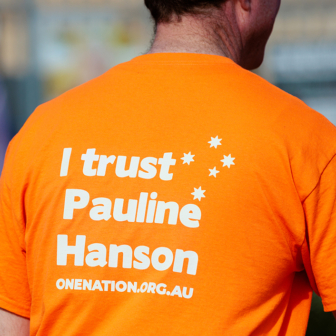
And in many ways, that is the story of the Liberals between 2013 and 2022. It is still the story today. The Twilight of Exceptionalism offers many clues about the bleak future awaiting the Liberals following the 2022 election, and even more so after the landslide of 2025. Future historians will probably debate what mixture of structural determinants and personal follies turned Australia’s most successful national political party since the second world war, the party of Menzies, Fraser and Howard, into a rabble unable to compete with Labor and in danger of being replaced as the major party of the right by One Nation.
When they do they will find much in these pages to help lead them to sensible answers. The book, and the larger body of work of which it forms a part, is an exceptional contribution to the history of modern Australian politics. •
The Twilight of Exceptionalism: The Liberal and Conservative Era
By Paul Kelly | Melbourne University Press | $59.99 | 792 pages