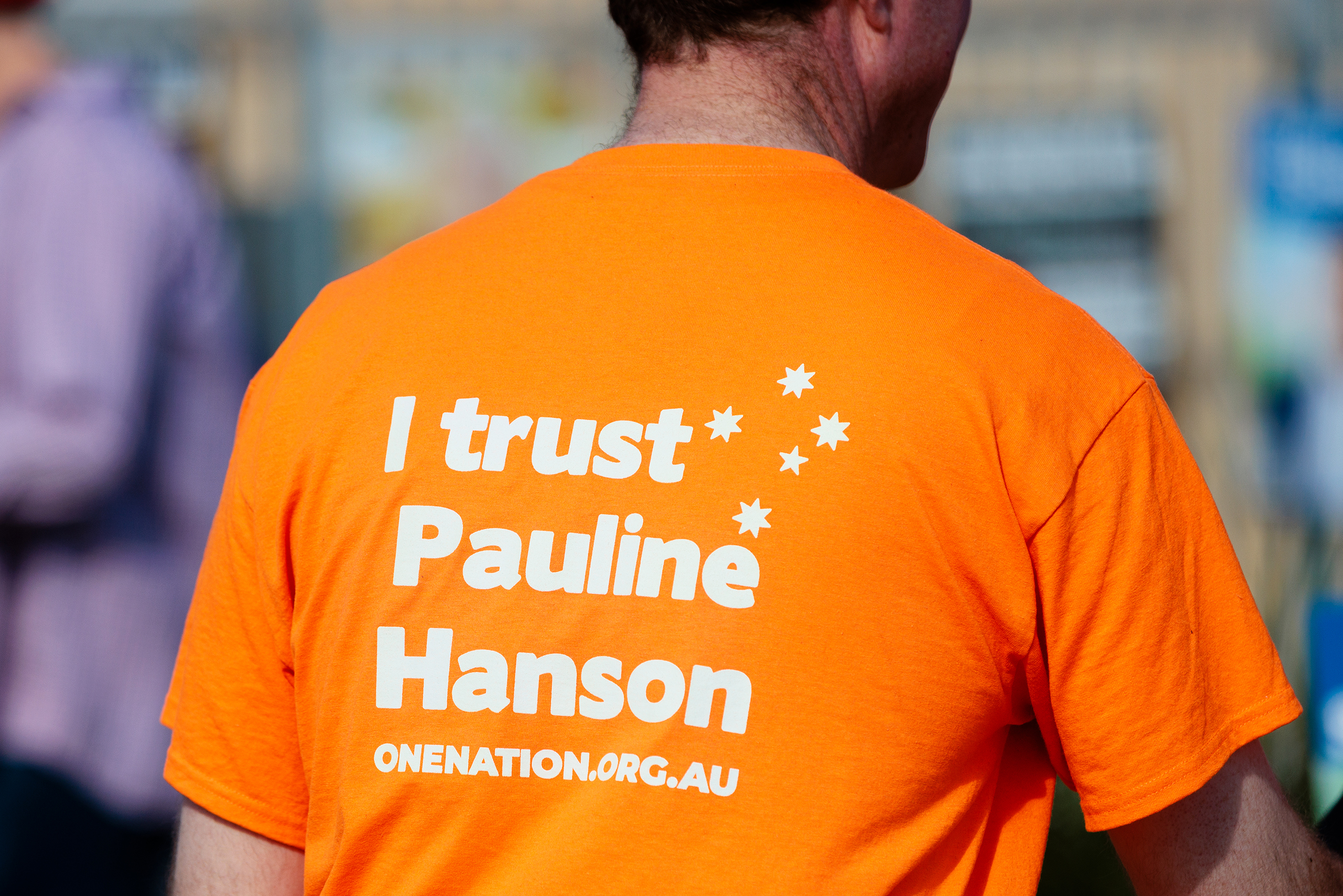
What does One Nation’s victory in Saturday’s Secret Harbour by-election tell us we didn’t already know? I can’t think of anything. We know from opinion polls that the party is riding high, and from South Australia’s general election that its surveyed support can have staying power through to the ballot box.
It was a state by-election. Because nothing is up for grabs at by-elections, lots of things come into play, which makes them unpredictable. As with the federal one in Farrer in May, One Nation’s candidate will retrospectively be deemed “quality” but (as in Farrer) we all know deep down the party’s win was due to its national leader, Pauline Hanson.
And, also like Farrer, the question of whether the Coalition’s favouring of One Nation on its how-to-vote cards affected the outcome can be answered: in theory yes, but not under any reasonable assumption about the flow if they’d put Labor ahead of Hanson’s party. Not to mention the hostility such a decision would have created among the rank and file.
The preference flows, when they’re published, will be interesting. Booth-by-booth analysis can be fun. An informal vote of 3.6 per cent (on current counting) is low considering the large number (sixteen) of candidates — a lower rate, in fact, than at last year’s federal election, when there were only seven. Because it’s a by-election, the final turnout figure will be low.
Does the result reflect in any way on the Albanese government? Of course! The rapid growth in support for One Nation over the last year and a bit is a nationwide phenomenon and happened on its watch. Key drivers are the cost of living and immigration, both within its purview. How many Secret Harbour One Nation voters were chiefly motivated by disapproval or loathing of the federal government? Who knows? Most importantly, voters knew there was no chance their actions would result in a One Nation (or Liberal) state government, let alone a federal one.
And as with all by-election results, Saturday’s vote tells us nothing about the likely outcome in 2028, or even in Victoria in a couple of months.
Speaking to party faithful in Brisbane on Sunday morning, Anthony Albanese and Jim Chalmers dialled up the rhetoric on the ascendent minor party, with the prime minister declaring: “We simply must defeat them. We owe it to history. We owe it to the nation.”
Strong words! But how — through their powers of persuasion? (Stop laughing.)
The immigration genie is out of the bottle, with opinion polls overseas and here showing discontent at levels unaffected by real and meaningful intake drops in recent years. That post-Covid catch-up surge in migrant numbers can’t be undone, and even if it could, we don’t know how much difference it would have made.
The core driver is the cost of living, which is at least exacerbated by the disastrous (and, for the casualties, tragic) decisions of Vladimir Putin (Ukraine) and Donald Trump (Iran). Most comparable countries have suffered falling living standards, Australia more than most.
There’s another way of looking at One Nation’s rise. Declining support for the major parties has been observable for decades: their combined House of Representatives primary support has dropped at every federal election since 2007 (when it rose a little from 2004). The votes have to go somewhere. There’s a chicken-and-egg question in there somewhere.
The latest Newspoll has One Nation back in front on primaries: 30 per cent to Labor’s 29, with the Coalition on 19 and Greens 13. My estimates from these figures put the national Labor two-party-preferred at around 53 per cent against both the Coalition and One Nation. (Psephologist Kevin Bonham partly agrees.) How the seats would fall is anyone’s guess, with not unreasonable possibilities ranging from a minority Labor government through a minority Coalition with One Nation support to One Nation winning a slight majority.
One Nation will almost certainly win lower house seats at the next federal election, probably dozens of them.
It’s true that polls are not great predictors eighteen months out from an election. But taken together they are infinitely more useful than some state by-election in some faraway plot of land you’ve never heard of that’s not particularly secret and doesn’t even have a harbour. •