When I reviewed You Don’t Belong Here, Elizabeth Becker’s group biography of three women who reported on what the Vietnamese call the American war, I wondered why no one had written a biography of the third of its subjects, the Australian journalist Kate Webb. Hers was a story of astounding bravery, and she was also one of our own, exhibiting all the grit and daring we’ve come to associate with trailblazing Australian women. But I also wondered why writers embark on group biographies like that one. Are archetypal threesomes — three women, three fates — somehow imbedded in our psyches?
Julia Cooke’s newly released Starry and Restless brings us another group of three women writers, all of whom came into prominence in the middle of the twentieth century. Rebecca West and Martha Gellhorn would be known to most readers; Emily Hahn is the outlier, and possibly the most interesting.
All three were fearsome as they were fearless, and each of them belies Becker’s assumption that female war correspondents only came into their own in Vietnam. Not only were women covering the Spanish civil war and the second world war, they also were prone to breaking other rules. According to Cooke, the onslaught against “objectivity,” for instance, occurred much earlier than 1970s New Journalism, and from the start women were a critical factor:
Cracks in the firmament of American journalism had widened enough to make space for a new approach to reporting. Two decades earlier, closer to the turn of the century, an emphasis on “objectivity” had attempted to establish guardrails around sensationalist, openly partisan journalism… But objectivity slipped and skated when it hit certain subjects, like the suffrage movement or racial violence or global conflicts.
As for reporting on wars, it took perseverance and ingenuity for women to get into war zones, let alone deal with unbelievable hardships in covering them, hardships often far more difficult and dangerous than those their male colleagues experienced.
The eldest of Cooke’s trio was Rebecca West (born Cicely Isabel Fairfield, a name she discarded for the one we know her by). She began her career writing for suffragist papers but by her forties, Cooke writes, “she had aged into stature as one of Britain’s best-known literary celebrities.” Her son was fathered by H.G. Wells, twenty years older, but she broke off altogether with him once she was making enough to support the child herself. By the time she married the bankrupt Henry Andrews she was earning enough to support him too. Then Andrews came into an inheritance that further enhanced their lifestyle. The couple stayed together until Andrews died, with West surviving him by another fifteen years.
Most readers would know of Martha Gellhorn, if sadly more for her liaison with Ernest Hemingway — just as West is too often remembered for hers with Wells — than for her own remarkable career. But Emily “Mickey” Hahn is another matter. The first female to get a degree in mining engineering, she gave it up for writing. Despite producing more than fifty books, she is relatively unknown today.
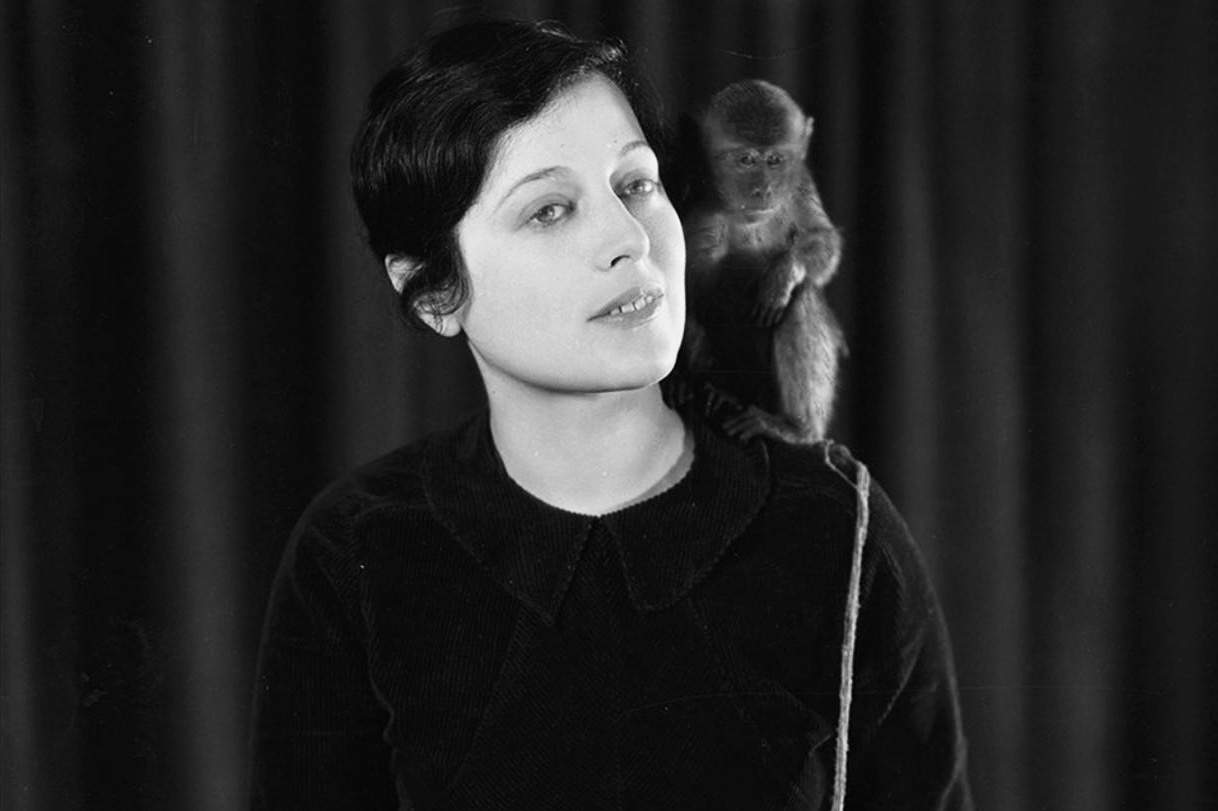
In 1930, on the first of her many adventures, Hahn took a third-class berth on a steamer to the Belgian Congo. It was 1930, America had sunk into the Depression and, unemployed and freelancing, she was seeking a place cheap enough to live, think and write in. Five years later she was in Shanghai, feted as “one of the cleverest of America’s youngest writers.” There, a nightclub regular, she acquired a reputation, a pet gibbon, and eventually an aristocratic Chinese poet, who, among much else, married her and introduced her to opium.
Shanghai’s bombing by the Japanese was Hahn’s segue into war reporting. Her male colleagues, considering Europe more important, had left to cover the war threatening there. Her pieces in the New Yorker focused on the lives of civilians, depicting “the subtleties of people of different cultures and national allegiances.” When things got too grim she fled to Hong Kong, interviewing Chiang Kai-Shek’s wife and her two sisters in Chongqing on the way. It was in Hong Kong that the war would finally catch up with her.
It caught up with Martha Gellhorn too, who was in Europe making good money for her bulletins to Colliers magazine. Before Czechoslovakia, she had been writing from France and England, but unlike the English, which she found in denial, the Czechs were hiding anti-aircraft guns in haystacks in preparation for a German invasion. As the war gathered pace she went with Hemingway to his beloved Cuba, where she sought a stabler home than his rough Havana headquarters. It’s hard to dismiss the feeling that Finca Vigia, the rundown farm they rented and restored, represented Gellhorn’s hopes for a permanent relationship with a man already noted for his serial monogamy.
Settling in a country property in England, Rebecca West might also have been hankering for permanence. In 1939, she and Andrews bought Ibstone House, halfway between London and Oxford. Like Finca Vigia, it was in disrepair, but they did what they could to restore it. They were safe from the Blitz there, but West could hear “the thrum of German bombers worrying their way past her home” as she worked on Black Lamb and Grey Falcon, her magisterial study of Yugoslavia. The couple ended up sheltering a retinue of Yugoslav refugees from the war.
For some, permanence would prove an illusion. Gellhorn and Hemingway married in 1940 but that didn’t quell Gellhorn’s need to write and travel. When Colliers asked her to cover events in Asia she couldn’t subdue her wanderlust, nor Hemingway his machismo. He insisted on accompanying her but, true to form, propositioned other women along the way. It turned out “a horror journey,” a defining step towards their marriage’s eventual dissolution.
Gellhorn sought her own agency for the rest of her life, yet the price was a restless impermanency. On France’s Omaha Beach for D-Day in June 1944, and later in Italy “sleeping in fields and foraging for food,” she was the war correspondent once more. At war’s end she bought a small bombed house, co-authored a play with Virginia Cowles — another correspondent — and then wrote a book about the Dachau concentration camp. She continued moving, adopting an Italian orphan whom she took with her to Cuernavaca.
Yet the lure of reporting still called, despite the contradictions in chronicling the pain of others and the prizes that time and again went to the men. In 1954 she married Tom Andrews, a former Time editor. On the cusp of cold war conservatism consigning women to the home, the marriage ended with her discovery of his five-year affair with another woman.
Like West before her, Hahn bore a child out of wedlock in occupied Hong Kong. A woman full of surprises, she was a remarkably tenacious mother, and the little girl, the daughter of British prisoner of war Charles Boxer, survived. Boxer also survived, and was released when Japan surrendered. The couple married, Hahn continued to write, and they had another daughter. Of the three woman, hers seemed to be the happiest marriage; their difficulties eased when Boxer was offered an academic position at Kings College London, though eventually she lived separately from him.
Friends and rivals as writers go, the three women moved in and out of each other’s lives. West was a mentor to Hahn; Gellhorn and Hemingway turned up in Hahn’s Hong Kong apartment. Their knowing each other is the glue that holds together the stories, not to mention the reader’s attention. They wrote to each other, and some kept diaries or extensive notes in which the others were mentioned. That said, Starry and Restless is so full of incident it’s sometimes hard to keep up. Fortunately there’s an excellent index and pages and pages of endnotes. It is indeed a scholarly achievement, a historical treatment of the changes in women’s journalism and how women in turn have changed the profession.
Cooke has already made her own name as a writer with The Other Side of Paradise: Life in the New Cuba, a young woman’s travel book published when she was in her twenties. She first visited Cuba in 2003, fell in love with the place and in 2008 went to live there, studying at the University of Havana and interviewing Cubans from various parts of the island.
Then came her Come Fly the World: The Jet-Age Story of the Women of Pan Am, a book about nine women stewardesses (the word was still in use then) who crewed the Pan America flights to and from Vietnam during that American war. Neither it nor The Other Side of Paradise was concerned with the politics per se; Cooke’s interest, as she’s described it, lay in how the geopolitics affected each of her interviewees’ lives. The same can be said about this latest book.
But why a multiple biography? Previous biographies of Cooke’s subjects tend to be out of print; surprisingly, Hahn published the only memoir. All good biographies embed their subjects in their times, but it’s possible that the attraction of dealing with a group has it the other way around, with their subjects turned historical characters, acting out the chance and flux experienced by differing generations, dismantling the stereotypes that have grown around them. •
Starry and Restless: Three Women Who Changed Work, Writing and the World
By Julia Cooke | Farrer, Strauss & Giroux | $49.99 | 448 pages