Ian McEwan’s novel What We Can Know is set a hundred years from now in an authoritarian world devastated by nuclear war and rising sea levels. In particular, the British Isles, where the book is set, have multiplied as the seas have claimed all the low-lying land in what is known as the “Inundation,” leaving behind an archipelago of hills and mountains. So far, so dystopian.
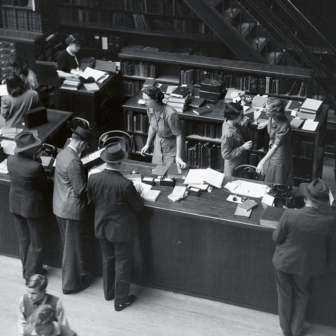
Hope springs in the form of literary scholarship. At the University of the South Downs, Tom, an academic, is researching the early-twenty-first-century poet Francis Blundy, making regular visits by boat and “water-and-gravity powered funicular” to the Bodleian Library, no longer located in Oxford (which doesn’t exist) but on a mountain in North Wales. The fact that life — even academic life — goes on in such times is reassuring, and as readers of McEwan’s book we need all the reassurance we can get.
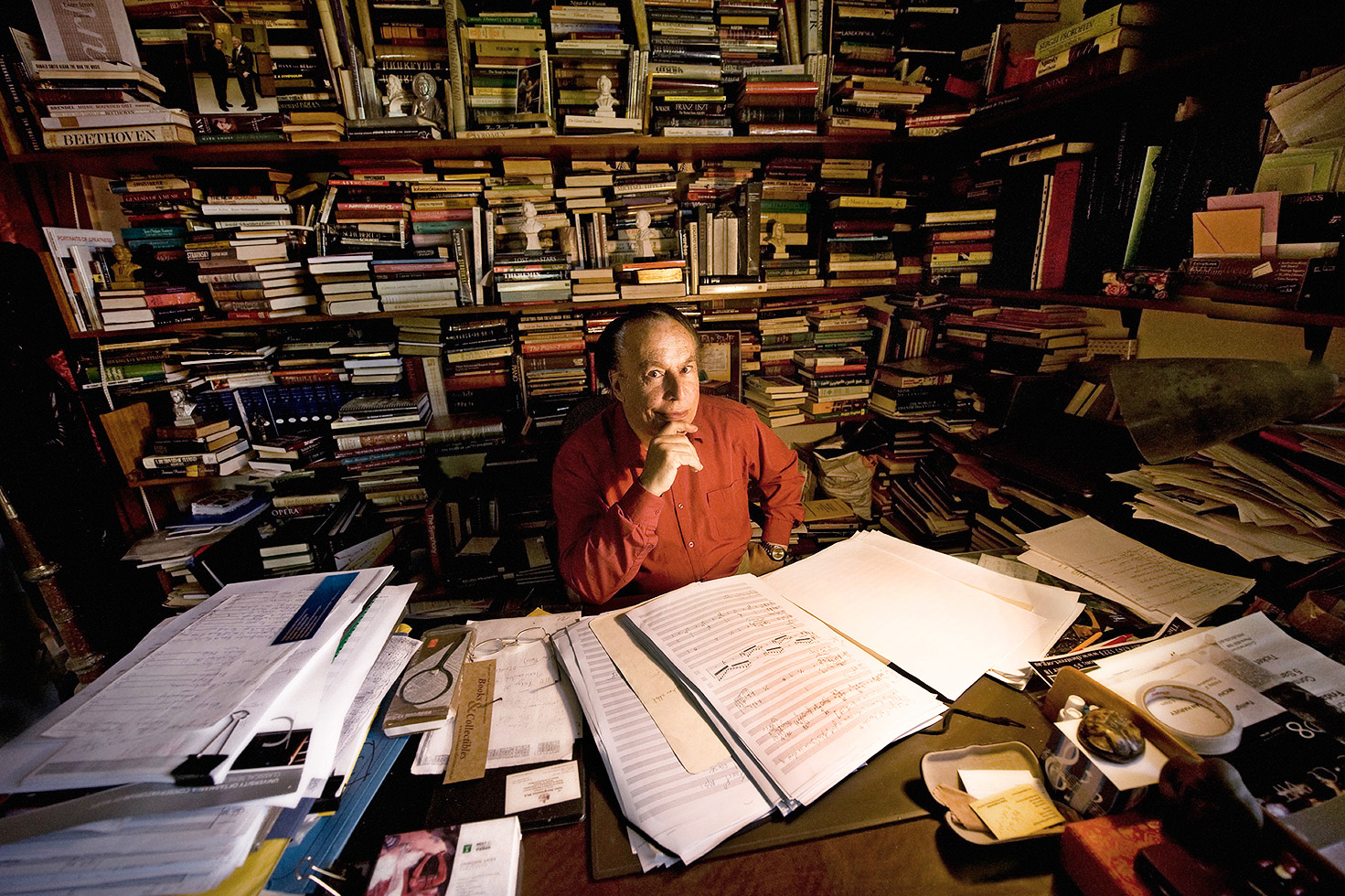
I’ve been clinging to the image of Tom in the Bodleian for the past week as I sort through a decade’s worth of papers — sketches and manuscripts, diaries and notebooks — packing them into archive and manuscript boxes for the National Library of Australia.
I’m not, by instinct, a hoarder, and once would have thrown most of this stuff away. Indeed, the last time I wrote about my old manuscripts was about thirty-five years ago in a slightly smug piece about decluttering. I was living in a tiny terrace in inner-city Sydney and had made more room by leaving out great piles of unwanted items for the garbage collectors. These included sketches and handwritten scores, among them the manuscript of my first opera — some three hundred-plus pages — and I wrote of my relief at getting it all out of the house. Marie Kondo would have been pleased with me. Not everyone was.
A short time after the article ran, I was in Canberra at some sort of reception. I forget the occasion but remember the intense stare of a woman in the room. Every time I glanced in her direction, she was eyeballing me. Eventually, she came over.
“Stop throwing your manuscripts away,” she said (in my memory, she also pushed me in the chest). “We’ll take them and you’ll get a tax deduction.” This was Prue Neidorf, the founding music librarian of the National Library, and I told her I couldn’t believe anyone would be interested in what I regarded as garbage. “It is not for you to decide,” she said, very firmly.
While a forceful person, Prue turned out not to be as intimidating as she at first seemed. In fact, she was good company, quite funny, and I’d bump into her semi-regularly over the following years. She would always ask if I was still hanging on to my papers.
Because I’d chucked everything out, it took me another ten years to accumulate enough boxes of scores and sketches to make my first donation, by which time Prue had retired and Robyn Holmes was senior curator at the NLA. She was every bit as passionate about the library’s collection of papers as Prue had been and offered to take me on a tour of the archives. The Canberra-based composer Larry Sitsky came, too.
On the face of it, the archive rooms at the NLA are much like the stacks behind the scenes at any library: row after row of shelf after metal shelf; but in place of the books you would normally see, there are cardboard archive boxes. The names on these boxes are for conjuring with. I remember Patrick White, Manning Clark and Mary Gilmore. (I will leave you to imagine my acute outbreak of imposter syndrome.) Larry Sitsky’s papers were there, too.
As we left the archive via an adjoining reading room, something extraordinary happened. A teenage boy in a school uniform was seated at a carrel with one of Larry’s boxes and he was reading Larry’s letters. It is hard to say who was more astonished: the student, looking up to see the subject of his research walking towards him; or the composer, realising that, beyond all doubt, the first part of his life was now history. I felt a similar realisation when the Library dispatched a London agent to my mother’s house to pick up the scrapbooks she had kept, since the mid 1970s, of my letters and concert ephemera.
Collecting papers is not as easy as it once was. Today, it’s rare to receive a handwritten letter. We correspond by email and text. Emails are already considered old hat by people under forty, and lately there’s a tendency for texts to self-destruct. Composers who use notation work mostly with software programs, their mistakes and first thoughts consigned to the trash with the click of a mouse. Prue, who died in 2023, would have been horrified.
Even as one of the remaining “long-hand” composers, I rub out more than she’d have liked, leaving little trace of those first thoughts, although sometimes I catch myself and reach instead for a fresh sheet of paper, putting the rejected bars of music in a drawer. I often write words longhand, too. These words, for instance, are being written in a notebook, which one day may end up in a box at the NLA, enabling a student of the future to see how I initially misspelt “carrel.”
Not that I can imagine who that student might be, and this is not false modesty. I loved McEwan’s novel, happy to suspend disbelief when it came to the quixotic Tom and his literary research. But in the twenty-second century, as the waters rise, will anyone really be interested in the jottings of a twenty-first-century composer?
Prue Neidorf would have said it is not for me to decide. At least Canberra is on high ground. •