At the end of Australia Fair?, James Walter and Carolyn Holbrook’s monumental, sprawling and somewhat disheartening history of social policy in Australia over the past eighty years, we are left with a stark choice.
The authors tell us we can, as a democracy, continue to indulge disastrously in the politics of grievance, exploiting the resentment of those who feel left behind without doing anything to deal with their grievances. Or we can learn to work together, mobilising a collective enterprise to promote fairness, foster equality of opportunity and bridge what they characterise as the “great divide” between the policy elite and the community.
Walter and Holbrook stud their narrative with examples of the former course being taken: divisive arguments about asylum seeking; the anxieties deliberately provoked during the Voice referendum; partisan jostling over housing affordability.
But examples of the latter, more challenging option, do exist — postwar reconstruction, mass migration and Whitlam-era urban planning among them — and Walter and Holbrook insist they should not be forgotten. How we can get there again forms the underlying ambition of this book, though at the end of this long journey the ambition remains, I fear, largely unfulfilled.
The strength of this book lies in its detailed history of three areas of social policy — immigration, Indigenous affairs and housing — since the second world war. These long-term comparative case studies are a tour de force of research: Walter and Holbrook appear to have read every finding of every panel and government inquiry and interviewed many of the players, and provide a delightful if dense read for anyone with an interest in policy.
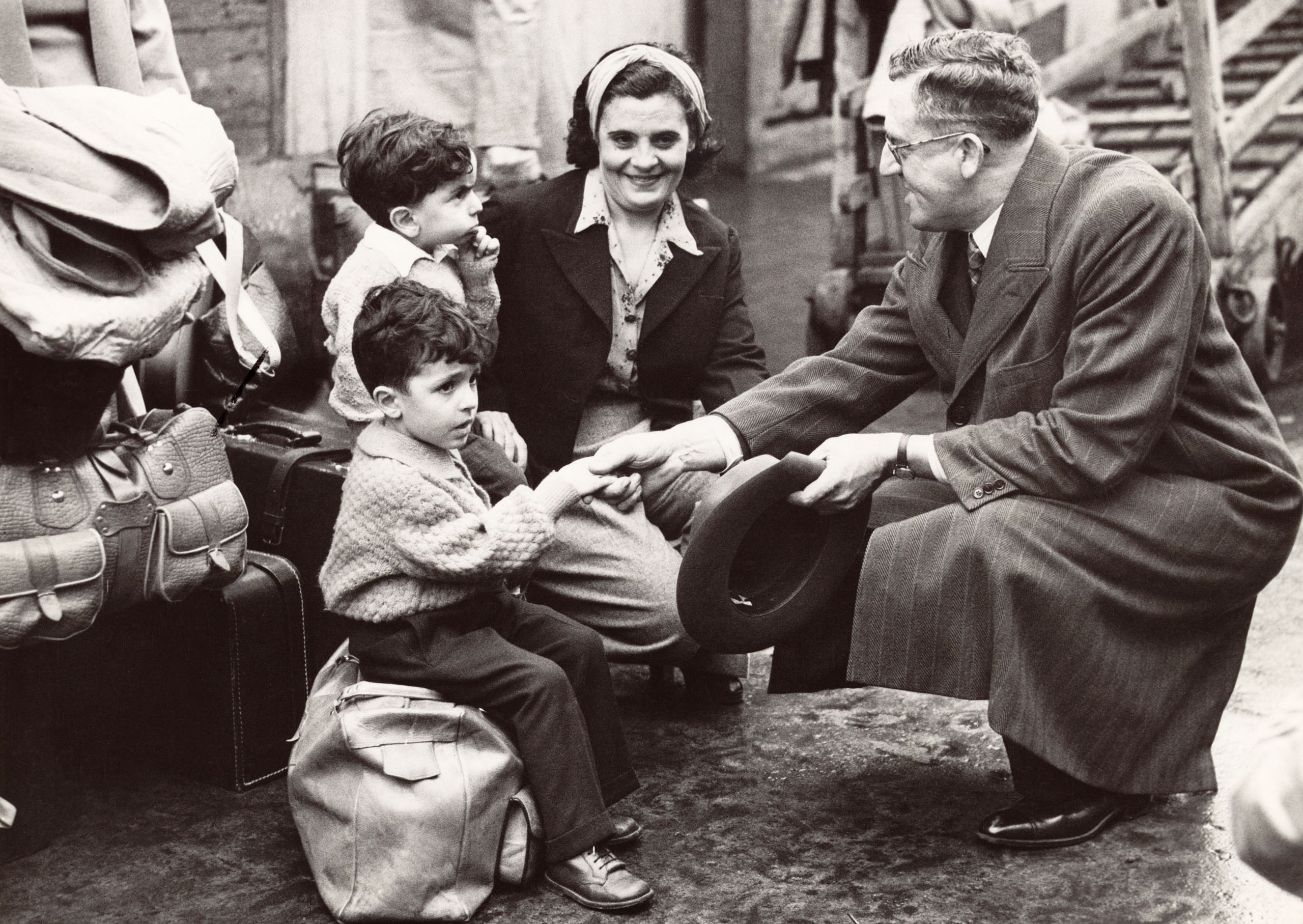
Devoting three chapters to each issue area, they weave new narratives and deliver fresh insights. The immigration section traverses the successful postwar mass migration program, the emergence of multiculturalism, and the advent of border closure and mandatory detention. In Indigenous affairs, truly a depressing read, we range from assimilation to Mabo, the Northern Territory intervention and the Voice. In housing, we see an ebb and flow of policy involving housing commissions, DURD (the visionary Whitlam-era mega-department of urban and regional development) and the more recent housing affordability crisis.
And — here is the disheartening bit — the authors make the obvious point that, despite the decades of change, “the challenges of population management, housing supply and affordability, and Indigenous disadvantage recur.” Today’s policy challenges, in other words, have long histories and deep roots. Progress, if it happens at all, tends to cyclical rather than linear.
Walter and Holbrook’s narrative reveals a macro-cycle of policymaking that begins with the people, whose lived experience and knowledge of place gives them an understanding of policy dysfunction, injustices and inequalities that they express through grievance (amplified by polling). This creates a demand for innovation identified and articulated by professional experts, commentators, academics and other outsiders — which is then embraced by entrepreneurial politicians, endorsed at elections and implemented by public servants skilled in design and delivery. But over time the innovations become dominant paradigms, which generate, from poor design, inadequate implementation or under-resourcing, new dysfunctions and grievances; and the cycle returns.
Thus patterns and linkages are revealed, spanning electoral cycles, governments and decades. The same problems reappear in new clothing. The pendulum swings from left to right, from state intervention to market liberalism, leaving institutional wreckage, dashed hopes, unmet targets, remorseful reflection and recurrent public grievance.
Walter and Holbrook declare that the focus of their research is not the policies themselves but the “behind-the-scenes network” of policymakers, including “political colleagues, experts, personal staff, lobbyists, advisers, consultants, pollsters and public servants.” In fact, we barely glimpse the minders and pollsters (or the think tanks), while private sector consultants appear only for a ritual flogging for depleting public sector expertise and experience. The stars of this show are the public servants.
H.C. “Nugget” Coombs worked with Labor leaders Ben Chifley and Arthur Calwell through postwar reconstruction and the advent of mass migration; Patrick Troy inspired and nagged Gough Whitlam and Tom Uren in urban planning. Loyalty to the elected government’s agenda is the trump card, as we see in Allen Brown’s partnering with Chifley and then Menzies, Michael Pezzullo transitioning Peter Dutton’s immigration department “from nation building and population management as a civic responsibility to the new world of border control and national security,” and Peter Shergold ably serving Bob Hawke, Paul Keating and John Howard.
Walter and Holbrook also highlight the role of public intellectuals, whose ideas and advocacy from outside the bureaucracy form the headwaters of policy reform. Architect Robin Boyd and historian Hugh Stretton used books, radio and newspapers to reshape the debate about housing in the late 1960s. Asylum seeker Behrouz Boochani used his mobile phone in Nauru, then a documentary film and a book, to document the rigours of detention in Manus Island. And a long line of Indigenous activists and experts — Lowitja O’Donoghue, Marcia Langton, Noel Pearson, Megan Davies, Pat Dodson, Galarrwuy Yunupingu and others — provided persistent advocacy from the Tent Embassy’s beginnings in the 1970s to Mabo to the Voice referendum.
With such quality input, one might ask, why are policy outcomes in these three areas so mixed? Part of the answer lies — thank you Max Weber —in the inevitable and irreversible oligarchic tendencies of bureaucrats. Despite operating within democratic institutions and systems, they are transformed by meritocratic training and insider knowledge into an impenetrable elite.
This is the “great divide” Walter and Holbrook perceive as the most intractable of policymaking problems and the most likely source of policy failure. It runs like a faultline through each of the case studies they present. The divide has the professional policy elite on one side and, on the other, the people. In this account, the people are the legitimate but greatly underutilised resource when it comes to policymaking. Underutilised for good reason, of course. Most people lack the language, time or inclination to get involved, and don’t have access to the information or systems that are the prerogative of the professional elite. They are living their own lives. They get to elect the politicians but these, too, tend to drift up into the elite and their exercise of power is constrained by institutional norms — as, of course, are the public servants.
Walter and Holbrook demonstrate many of the different ways in which the policy elite has tried to remedy this problem by engaging popular engagement and consent. A spectrum of methods emerges — winning over the people with advertising (a “conditioning campaign” was recommended to promote postwar immigration) through all manner of expert panels, advisory councils and consultation mechanisms, up to contemporary visions of “deliberative bureaucracy.”
They argue that no amount of collaboration within the policy elite substitutes for “street-level participation as equals of those affected by decisions taken.” The ideal, they suggest, is “a bureaucracy committed to what the people want, given to experimentation and with a capacity to articulate possibilities when parties are deadlocked or have run out of ideas.”
A high aspiration indeed. Unfortunately Walter and Holbrook fail to identify sufficient ways in which it could be achieved. They could fruitfully have made more of a place-based policy approach, both to promote community engagement and as a focus for service delivery. But the tragedy of the Voice, as they clearly demonstrate, is that of a carefully formulated reform that foundered at precisely the point where policy-making was to be shared with street-level communities. It served in the end not to alleviate but to fuel grievance.
Carolyn Holbrook is the widely published director of Australian Policy and History at Deakin University and Jim Walter is emeritus professor of political science at Monash. Walter brings a lifetime of research and publication in policy, leadership and political ideas to this summative project. Acknowledging the support of the Australian Research Council, he points out that he is delivering a double bang for the ARC’s buck since this book draws on his previously-funded interviews and archival research.
Walter acknowledges, too, the authors’ debt to Alan “Foo” Davies, the primordial scholar of Australian bureaucracy, leadership and political attitudes. It is striking that an academic who didn’t live to see the 1990s still casts a shadow in the 2020s. Yet Davies’s identification of Australians’ “characteristic talent for bureaucracy” remains as valid today as when he made it in 1958.
And his 1972 study of political styles in Australian suburbia is quoted here to good effect: “Questions shelved, unanswered, have a way of returning.” Davies went on to remark that some of the suburbanites he studied were people who “have a sense of grievance, whose patience is sorely tried… [and who] feel totally cut off from the levers of power and decision.” Later that year those aggrieved suburbanites swung hard to Whitlam and Labor. Indigenous voices expressed a more profound sense of isolation, neglect and weariness in the lead up to the Voice. Today, similar sentiments fuel the drive to One Nation. Whose grievances, then, are to be attended to? •
Australia Fair? Democracy, Bureaucracy & the Making of Modern Australia
By James Walter and Carolyn Holbrook | Melbourne University Press | $39.99 | 393 pages