Let’s start with a quiz question. Which political party was described as being so pristine a specimen “of true democratic control and liberal outlook that suspicious-minded people feel that it is too good to be true”? The answer might surprise you. It was the Liberal Party — its Victorian division to be precise, back in 1947 when its president, William Hewson Anderson, could still unabashedly celebrate leadership by the grassroots.
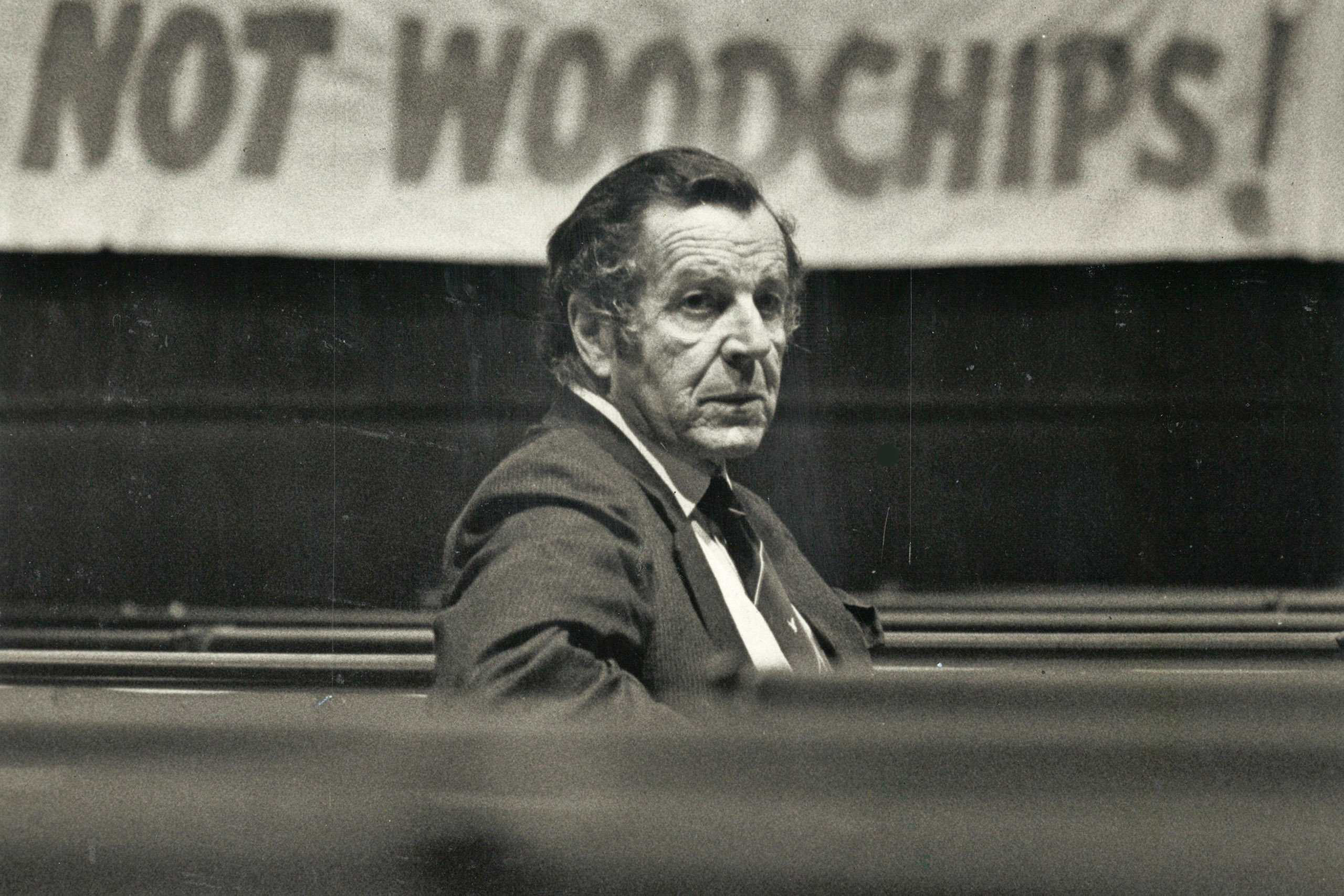
I bet many readers thought I had the Australian Democrats in mind. Which would just go to show how successfully Don Chipp, the party’s first leader, promoted his party as the epitome of participatory democracy. By which he meant that policies and even parliamentary leadership positions were decided by a vote of the entire party membership.
Chipp, a former Liberal, was central to the founding of the Democrats in 1977 when he was still on the rebound from being cast out from the ministry by Malcolm Fraser following the December 1975 election. And, yes, we are now at the half-century mark of the advent of Fraser’s prime ministership, the unfashionable flipside of the Dismissal anniversary.
That Chipp and his new party proceeded to win two Senate seats at the 1977 election was a shock to the Liberals. Fraser’s ditching of the popular minister was a political misjudgement second only to his terminal mistake of calling an early election in 1983 before discovering he was facing Bob Hawke as opposition leader. The rise of Chipp’s gentle juggernaut tells us much about Australian political culture and just might provide a lesson or two for today’s struggling Liberals.
Chipp under each of Liberal prime ministers Harold Holt, John Gorton and William McMahon received far more publicity than the more typical junior minister. As customs minister overseeing the importation of some hitherto banned books he became the shining epitome of trendy liberalism, while Fraser was wrongly seen as firmly lodged in the party’s far right.
Even decades later, Fraser didn’t make clear why he expelled Chipp from his ministry. The antipathy looks to have been more personal than policy-based, not helped by Chipp having supported two Fraser enemies, Gorton and Billy Snedden. Patrick Weller noted in Malcolm Fraser PM that Fraser invariably stuck to his opinions of individuals.
It must be said that Chipp was widely admired outside his former party, and seems to have been an entirely sincere individual. Labor senator John Button thought him “a very likable larrikin.” Snedden detected a more complex mixture of “altruism, egoism and anger” motivated by “an enormous conscience.”
Chipp’s eponymous memoir Don Chipp: The Third Man (co-authored with John Larkin) is a rich source of anecdotes about other parliamentarians. He once nearly punched young Fraser for amusing himself by depositing pickled onions and ice cubes in colleagues’ jacket pockets. His book is studded with proclamations about the Democrats representing “the politics of hope” and suchlike, along with all-purpose denunciations of “greed and selfishness,” not to mention “apathy and indifference.”
Chipp’s writings also abound with references to popular seers of the ilk of Alvin Toffler, Margaret Mead, Hermann Kahn and Paul Ehrlich, to an extent that Michael Oakeshott, that great philosophic critic of rationalism in politics, would have found amusing. (Or perhaps just tiresome?) At least Chipp was even-handed, smiting both “the blue-singleted ocker” and “his more genteel counterpart.” His promise to “keep the bastards honest” — he was referring to the major parties, especially the Liberals under Fraser — became one of our most enduring political aphorisms.
Chipp’s departure didn’t amount to a split in the Liberal Party. His Democrats were instead based on dissatisfied and uncommitted voters, with an infusion of former members of other middle-of-the-road parties. He was not the sole creator of the Democrats but his exceptional public profile made him its catalyst.
Fraser’s worry was that the new party would channel votes to Labor via preferences. In the event, he won the 1977 election with ease. But there was now a viable alternative for those voters convinced he was a heartless ideologue. At the December 1980 election the Democrats won three more Senate seats, giving them the balance of power in the upper house as of the following July.
The Democrats happily followed their leader in seeing themselves as both pure and unique. They were, in fact, neither. The first was an impossible standard for any political entity to maintain, as shown by the Democrats’ very mixed history in the years following Chipp’s retirement in 1986. By 2008 they held no Senate seats at all. New parties invariably arrive on the political scene bearing an exaggerated moral vanity that is destined to slowly fizzle. Many might be puzzled to hear that the nascent Country Party was quite convinced of its own purity.
The early Democrats also showed little awareness that they were at heart the latest manifestation of Australia’s long, undistinguished and by no means unique history of producing minor parties that proudly reject major-party politics. (All roads lead to history, I say.) The Great Depression in particular generated what political historian Peter Loveday described as “anti-political political thought.” Its more extreme manifestations included the paramilitary New Guard in 1930s New South Wales and the extraordinary little gang of parliamentarians and others plotting the unilateral separation of New England from Jack Lang’s New South Wales.
The more moderate All for Australia League tasked itself merely with creating a unity of purpose among the entire citizenry that would supersede all sectoral interests. Meanwhile, the delightfully named Sane Democracy League had sufficient cred to persuade mainstream right-of-centre figures Richard Casey and Joe Lyons to address its meetings.
More seriously, when Robert Menzies and his confreres sought in 1944 to create a new anti-socialist party from the ruins of the United Australia Party they had a fine array of dissenting entities to draw on. In Victoria alone there was a Services and Citizens Party, an Australian Constitutional League, a Young Nationalist Organisation and, conveniently closer to home for Menzies, the Kooyong Citizens’ Association.
This legacy of anti-political dreaming helps explain why the Democrats did so remarkably well for a minor party that lacked a solid social or regional base. They successfully appealed to what Paul Kelly described as “a synthesis of radicals, lefties, greens, the disenchanted and the caring nice people.” They also owed much to their very mixed post-Chipp leadership having included the capable Janine Haines and Meg Lees. They peaked at a remarkable nine senators following the election of 1998 before going into a slow, painful decline. I am surprised to have discovered they still linger as an entity registered with the Australian Electoral Commission.
The Democrats’ other big achievement was unintended. They convincingly demonstrated that participatory democracy, the antithesis of Edmund Burke’s representative democracy, simply does not work. Their initial party model had ordinary members being invited to vote on policy and the leadership using mind-bogglingly complex ballot papers. The efficacy of this process was predicated on a high level of engagement that proved unforthcoming.
More positively, the Democrats helped sustain popular faith in the virtues of seeking alternatives to the major parties. Neil Brown, another former Liberal colleague of Chipp’s, spotted as early as 1993 how the Democrats “gave a new respectability to minority parties and consequently to independent members of parliament.” They encouraged the idea held by today’s Greens, One Nation and teals that they have a special moral authority to impose on majority elected governments, despite their not being responsible for the consequences of what might ensue. The teals have the convenient added advantage of not being impeded by a formal party structure.
The Chipp affair was a bit of a one-off for the Liberals. Chipp was blessed with such an unusually strong personal following that he provides only the broadest of lessons about the desirability, where possible, of corralling dissenters safely within the party tent and perhaps benefitting from their honest feedback and popular appeal. Anyone thinking of splitting off to establish a new political entity should ponder the short history of most minor parties. Such departures don’t magically banish intractable policy challenges.
Big established parties might seem decidedly unfashionable nowadays but they offer some unique advantages. These include providing the most demanding of training grounds for potential national leaders, giving voters a clear choice between comprehensive, ideologically differing programs, and, being aware they may have to bear the consequences, having every incentive to think carefully about the practicalities of what they preach.
So, please, don’t ask who I happened to vote for so wantonly the first couple of times I went to the polls. By now you should be able to tell. •