My father called me Horace. He was not a classicist, rather someone who, like most of his generation, grew up listening to the radio. In the 1930s, as a child in England, he had listened to an impersonator named Harry Hemsley, whose act involved an imaginary family of four children. Hemsley played all the parts himself — quite convincingly, you can find him online — and among the children was Winnie, who was three-and-a-half years old, and Horace, who was a baby. Hemsley’s catch phrase, when Horace burbled something unintelligible, was “What did Horace say, Winnie?” My father, in his turn, would ask this of my mother when I was a baby. So, in my first year, I became Horace; and I stayed Horace for the next fifty-five years until Dad died. No one else has ever called me by that name. I miss it.
The official names we are given are generally a matter of tradition — cultural or familial — and the look of a name, including the choice of its spelling, can seem as important as the sound. But really, from day to day, the sound will be of greater importance. Occasionally, you meet people whose first and last names are so poorly matched you wonder if they were ever spoken together before the decision was made. When I was a student, the headmistress of the neighbouring girls’ school was a rather prim Miss Heaven. Her parents, with either a peculiar sense of humour or scant attention to detail, had plumped for Helen as a suitable first name. Perhaps that’s why she was prim. She was daring people to snigger, like Johnny Cash in Shel Silverstein’s song “A Boy Named Sue.”
Anne Ridler, a poetry editor at Faber and Faber alongside T.S. Eliot, was herself a fine poet. In “Choosing a Name,” she addresses her baby son, admitting that she is bestowing upon him “The history and power of a name” while at the same time, because he’s only just been born, “ignorant for whom.” The point is that a sort of chemical exchange is bound to occur. As Ridler writes, the name’s “history is changed, becoming yours, / And yours by this: who calls this, calls you.”
So, the name becomes you and you the name, and if you don’t like it, you’ll have to decide what to do about that. But most of us put up with the names we are given and the nicknames we acquire. Horace aside, my family has always called me Andrew, yet I am Andy to my friends and have been since schooldays — I forget if there was a moment when that came about. If I’m in a shop, say, and I hear “Andy,” I instinctively turn around; if it’s “Andrew” I wonder, for a second, what I’ve done wrong.
“Andy” is better to call than “Andrew” — the final syllable of the former is easier to extend than final syllable of the latter and it carries better; and as Ridler reminds us in her poem, it is the calling of a name that helps attach it to its owner: “who calls this, calls you.”
It’s interesting that in English we use this word “call” to mean both the allocation of a name — I am called Andrew — and also to mean crying out. When we call a name over a distance (this is true almost universally), we sing the falling interval of a minor third — two notes — so one- or two-syllable names are easier to call than names of three or more syllables. For this reason, nicknames tend to be short. It’s the same with dogs. Some people give elaborate names to their dogs, especially upper-class dogs with impressive pedigrees, but these must be shortened to call them. I was all for calling our border collie Stella. I thought it would be funny in the dog park to shout “Stel — lah!!”, like Marlon Brando in A Streetcar Named Desire. Fortunately, I was outvoted, because it turns out my idea was far from original. Half the dogs I meet (and Barnaby Joyce’s too) seem to be called Stella.
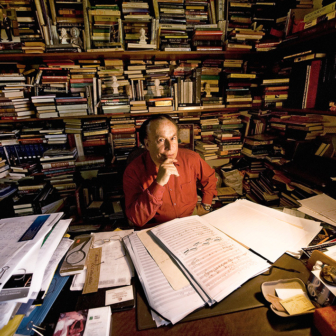
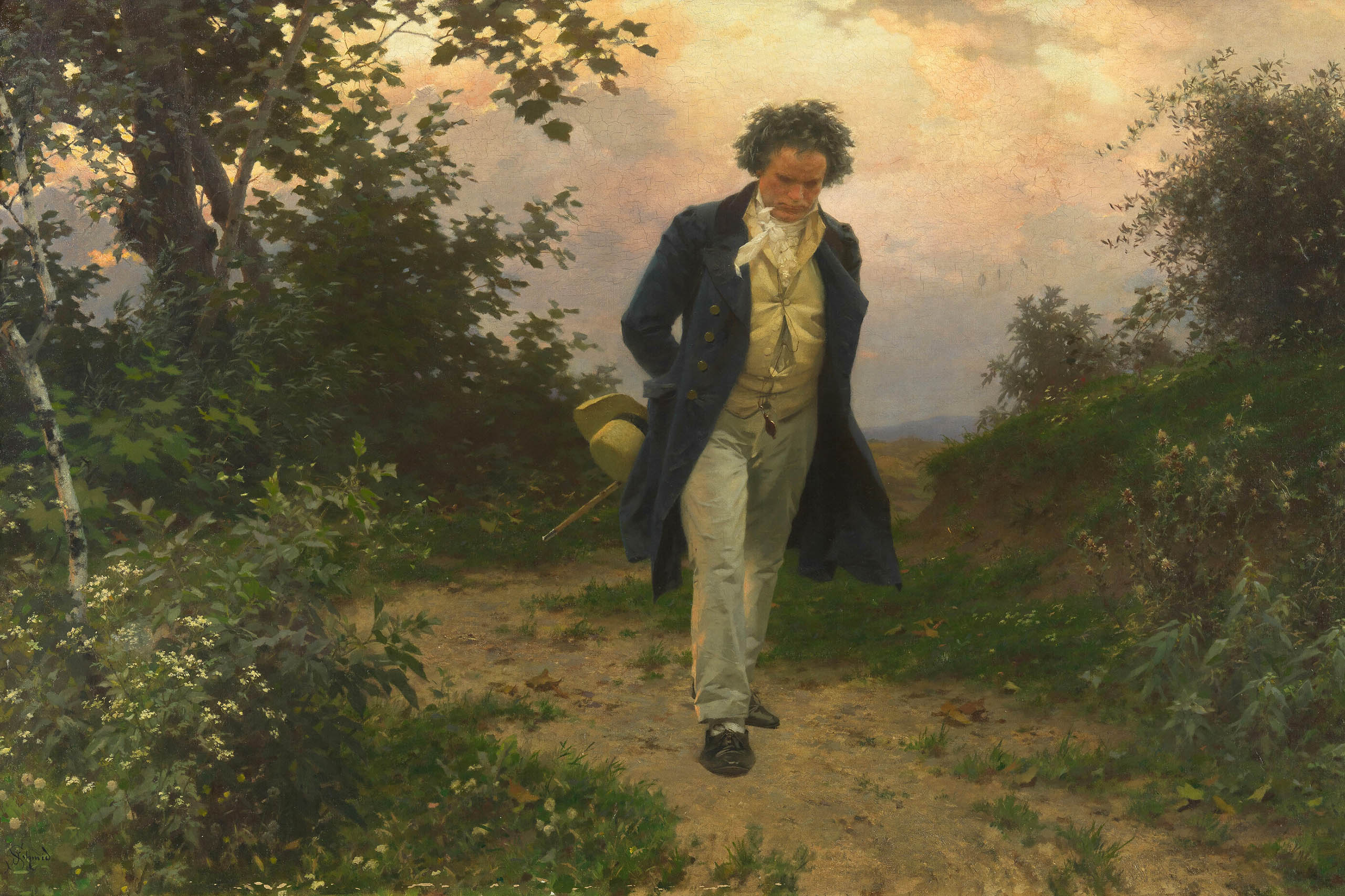
The one place in which names are no longer called is on headstones, yet sometimes the names are passed on. Ludwig van Beethoven was the second of seven children born to Johann and Maria Magdalena van Beethoven, and the second to be called Ludwig. His older brother, Ludwig, died at six days, and later the younger Beethoven would visit his brother’s grave. The same happened to another composer, Pierre Boulez, who, at five, was taken to see his own dead brother’s grave. According to his biographer, Joan Peyser, Boulez had not known his brother’s name until the moment he saw the headstone with his own name on it.
I wonder what that does to a person. Boulez told Peyser: “He was the sketch; I was the drawing.” A Freudian might say this is one reason Boulez seldom finished his pieces. Presumably, the second Pierre was happy enough to answer to that name when he was called.
My father, Alexander Ford, was always called Alec. He once told me that, as a child, living in a tiny Liverpool terrace — two up, two down, no bathroom or indoor toilet — he would hear his friends coming along the back alley calling, “Now, Alec!”, singing it to that falling minor third. This was Dad’s signal to go out and join them. In my opera, Peter Pan, Sue Smith wrote the words “Now Peter” when the stars in the night sky call Peter to Neverland: “Now Peter / Now / Now.” I don’t know if I ever told her about my dad, but when I first read her libretto and saw those words, I immediately thought of him and couldn’t help but write that minor third. So the chorus of stars in our opera call to Peter in the same way Alec’s friends called him out to play. •