In the twelve months since he was elected for a second term, Donald Trump has driven an agenda more damaging to American democracy, rights, freedoms and international reputation than could have been predicted by even the most far-sighted political analyst.
Where is the political opposition to citizens being snatched off the street and deported, the costs of health insurance skyrocketing, universities and media companies being forced to pay ransoms to keep operating, the breakdown of public health services, the summary dismissal of senior female and Black military leaders? Where are the voices speaking out strongly and persuasively against Trump’s autocratic behaviour, his kakistocratic cabinet, his kleptocratic family and associates, and his appalling and expensive taste in architecture and gilded trimmings?
The polls highlight Trump’s dramatic loss of support. Not just generally but even among his base and even on such touchstone issues as immigration and the economy. A recent CNN poll has 68 per cent of respondents saying the country is going pretty badly or very badly. Voter disaffection has been clear in recent state elections (where Democrats took twenty-five state Senate and House seats from Republicans) and at special elections in Florida, Virginia, Arizona and Tennessee. Yet Congressional Democrats seem unable to capitalise on the failures of the administration or Trump’s increasingly erratic behaviour and harness the community concern expressed in the No Kings rallies.
Yes, there have been a few standout moments: senator Cory Booker’s marathon speech on the Senate floor; rallies led by senator Bernie Sanders and representative Alexandria Ocasio-Cortez; representative Bennie Thompson accusing homeland security secretary Kristi Noem of abuses of power and demanding her immediate resignation; and Democrats holding town hall meetings in Republican-held districts.
But there has been no coherent, coordinated response. We rarely see House and Senate leaders take to the media to name the issues and how they would deal with them. Senate Democrats did take a stand on health insurance costs during the recent government shutdown; but then, amid fear they would be blamed for job losses and the hardships facing unpaid federal workers, enough of them folded to enable the Republican bill (which offered nothing on health insurance) to pass. After forty days, the Democrats were left with nothing.
While the margins are thin, Republicans’ control both chambers of Congress means they control which legislation comes to the floor and which issues are examined in committee. Coordinated, controlled and timely responses to announcements by Trump and Republicans are hampered further because the opposition has no designated leader — although that shouldn’t stop House minority leader Hakeem Jeffries and Senate minority leader Chuck Schumer from holding daily press conferences — and Trump eats up all the media airtime.
There is every reason to believe the Democrats can take back the House in the 2026 midterm elections: a November NPR/PBS News/Marist poll showed Democrats leading Republicans 55–41 per cent when people were asked who they would vote for if the election for Congress were held today. Taking the Senate will be more of a challenge, with the Democrats needing to flip four seats to take a fifty-one seat majority.
But the midterms are a year away and — as the past eleven months have shown — the Trump administration could do an enormous amount of damage in that time. Congressional Democrats can’t just sit passively, look optimistically at the polls and hope voters prefer them to the Republicans.
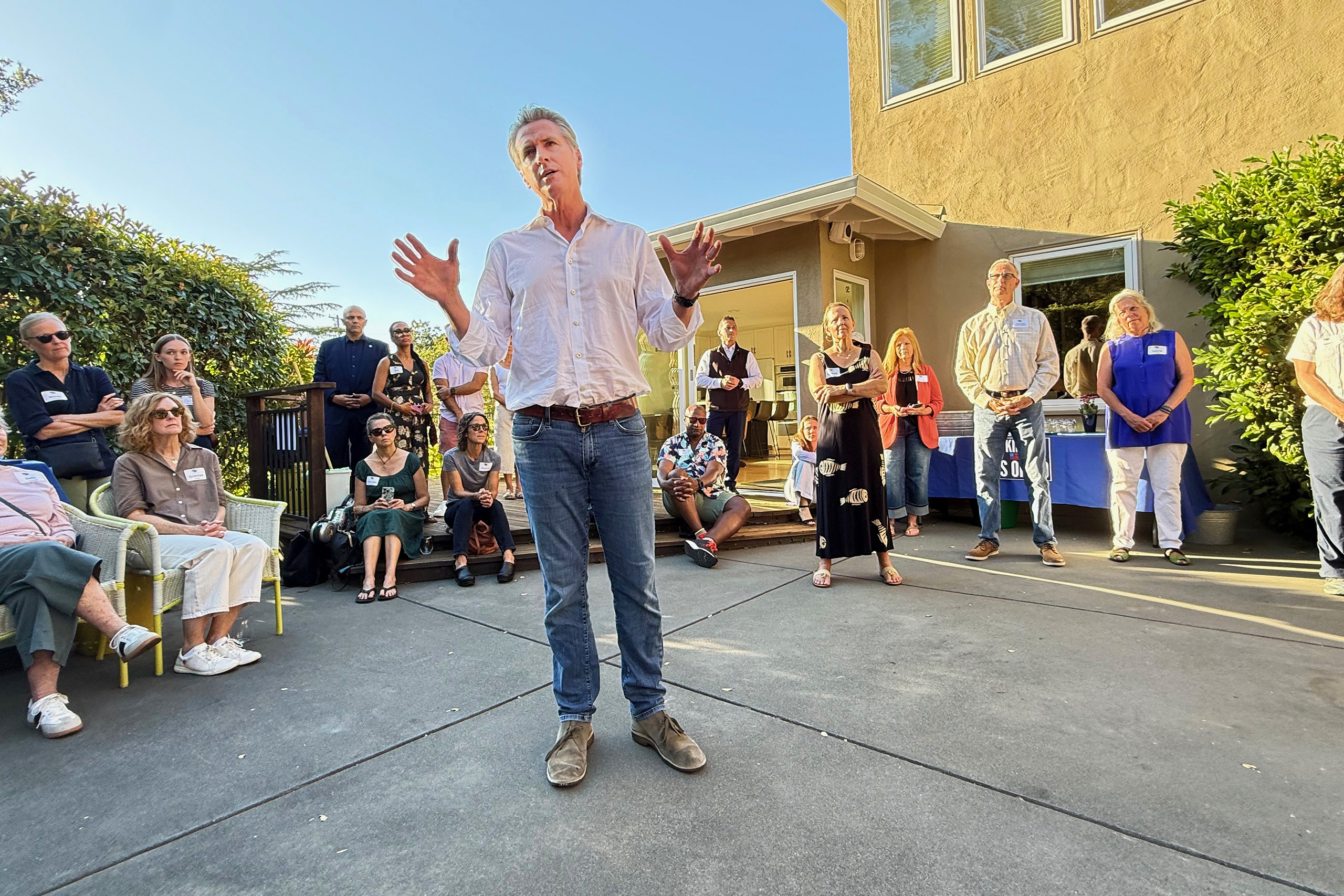
The most effective Democratic opposition so far has come from outside the Congress — from Democratic state governors, in particular Gavin Newsom (California), J.B. Pritzker (Illinois) and Josh Shapiro (Pennsylvania). These three are almost certainly looking to run as the Democratic nominee for president in 2028.
They will join what is predicted to be a sizeable lineup of Democrats. Senators Cory Booker and Chris Murphy, House members Joe Neguse and, possibly, Ocasio-Cortez are all likely to step forward for the nomination.
Given the appallingly low levels of public trust in Congress, candidates from elsewhere — with name recognition and demonstrable experience — will stand a better chance. To the list of governors above, add Gretchen Whitmer (Michigan), Wes Moore (Maryland), Andy Beshear (Kentucky) and Tim Walz (Minnesota). Of these, Newsom clearly fancies himself as a winner, but he needs more than the ability to hilariously troll Trump, and he is carrying personal and political baggage. There are some also-rans to add to the list of candidates — most notably Kamala Harris and Pete Buttigieg.
If past experience is any guide however, the likely final candidate is a name not yet mentioned.
Two key factors should guide the Democrats in selecting a presidential candidate.
The first is that Americans, especially younger voters and people of colour, appear to be looking for a different type of politician and a different style of campaigning. This is most obviously demonstrated in the recent upstart victory of Zohran Mamdani in the New York City mayoral race.
The win was a surprise not so much because he was relatively young, a Muslim and a Democratic socialist proficient on social media, but rather because he ran a campaign based on listening and then responding to what he heard about voters’ needs.
Mamdani has described the need to change “a political impulse of lecturing” to a commitment to “listening.” When he conducted an in-person survey, asking life-long Democrats why they had voted for Trump or failed to vote at all, what he learned is that “many did so because they remembered having more money in their pocket four years ago,” and that they craved from Democrats “a relentless focus on an economic agenda.”
That is how he ran his mayoral bid. He spent the entire campaign mainly talking about affordability. Instead of the political message, so often heard in difficult times, about undeserving welfare dependents and working-class people missing out to recent immigrants, he talked about working together to provide everyone with a better life.
This focus on affordability also helped Democrats Mikie Sherrill and Abigail Spanberger win their governors’ races in New Jersey and Virginia respectively.
To win in 2028, Democrats will need to woo back a lot of working-class voters, including some of those blue-collar workers who voted for Trump. Recognising the very real financial issues confronting many American families, and offering realistic solutions, will win them over in ways that talking about civil rights will not.
Meanwhile the presidential candidate who vowed to lower prices, Donald Trump — even as he spruiks the state of the US economy (which is hardly booming) — is calling affordability concerns a “hoax” perpetrated by Democrats. As pollster Frank Luntz says, he runs a grave risk of appearing out of touch when Americans not only feel like they’re paying more but actually are.
The second factor Democrats must consider in choosing a presidential candidate is: who will they need to beat?
Given the craven state of the Republican party, the choice is Trump’s to make. The frontrunner might appear to be vice-president J.D. Vance, but Trump has already invoked secretary of state Marco Rubio’s name as well. The man with the most appeal beyond hardcore MAGA voters might be senator Tim Scott from South Carolina, although he was forced to withdraw from the 2023 Republican presidential primary due to lack of support.
The two most politically ambitious members of the Trump administration, the ones most likely to throw their hats in the ring, are health and human services secretary Robert F. Kennedy Jr. and White House deputy chief of staff Stephen Miller.
Of course the elephant in the room is whether Trump will attempt to run a third time. Constitutionally it’s impossible, but that might not stop him trying something nefarious. It’s clearly on his mind in more ways than his Trump 2028 baseball cap. “There are methods which you could do it,” he said in an interview with NBC News in March. More recently, in October, he said cryptically: “Based on what I read, I guess I’m not allowed to run. So we’ll see what happens.”
If a member of the Trump family were elected president, Trump senior could retain his power and influence. Both his older sons Donald Jr. and Eric have indicated they might “one day” run for president. Trump himself has suggested that a dynasty “could” be established, and he certainly regards his name as a political brand.
The 2028 election is still three years away, although campaigning will start in earnest as soon as the midterms are over. At this stage there are just two certainties: it will be about how voters perceive the state of the economy, and it will reflect voter disgust with the current political establishment. If the Democrats gain control of at least one chamber of the Congress in the midterms and begin to act more aggressively against unpopular and undemocratic Trump initiatives, the political dynamics could change dramatically, especially as — we hope! — Trump himself will not be on the ballot. •