Diplomats spend their careers writing “cables” that report, record, recommend and instruct. This lifetime habit of writing has fed a minor Australian tradition of foreign affairs books by retired diplomats
The Oz-diplomat genre offers views of Australia from overseas posts and from inside the unusual city that is Canberra. The domestic and international merge, giving a slight exotic tinge to the DFATers who toil in the Department of Foreign Affairs and Trade.
DFAT’s original title, External Affairs, gives you all history you need for the “outsider” treatment the Canberra bureaucracy inflicts on the “foreign affairies.” The diplomatic skills needed to navigate power politics and tough personalities matter as much in Australia’s capital as they do on post.
The tension between a distinct Oz foreign policy and loyalty to the great-and-powerful ally is a recurring motif of the genre. The mixture of influences means Australia can be relied on to be assertive, even when not effective.
Drawing on these traditions, Oz-diplomat books run on two tracks: offering personal memoir and an account of the big policy issues involved in crafting Australian foreign policy both to “write the record” and to “let off steam.”
The model for the twin tracks was set in two books by a pioneer, Alan Watt, who joined External Affairs in its infancy in 1937, eventually producing a memoir of his twenty-five-year career, Australian Diplomat, and a history, The Evolution of Australian Foreign Policy: 1938–1965.
Watt offers a great steam vent in the final paragraph of the memoir’s preface, taking aim at the diplomatic damage caused by the spouses of political leaders travelling overseas, who would “do well to realise that they are not themselves ministers of the Crown, and that interests and activities natural and permissible at home are not inevitably appropriate abroad.” This vent rendered as hiss is only marred by Watt’s discretion in failing to offer names and examples.
One of Watt’s successors as head of foreign affairs, Alan Renouf, repeated the two-book recipe. A memorable scene in his light-hearted memoir, The Champagne Trail, is a dinner party where two chairs collapse, unseating an American ambassador and a French finance minister.
Renouf’s big 1979 policy book, The Frightened Country, has plenty of vents: “For all its talent, the Foreign Affairs and Department is on the whole time-serving and complacent, especially at its top levels… As well, Australia has never had the government machinery necessary to formulate an adequate foreign policy.”
These themes — the lack of money and muscle in the foreign affairs department and the dearth of international nous in the political class — recur in discussions of Oz diplomacy in the eighty years since the second world war, when Australia stopped relying on Britain to do our global thinking.
Following the Renouf example, one of his successors, Richard Woolcott, wrote both a memoir–policy book and a book of champagne anecdotes. In the memoir, The Hot Seat, he recalls walking into the department as a newly appointed secretary with foreign minister Gareth Evans, who asked, “How many people work here?” “About half,” joked Renouf. “But we can change that.”
Woolcott’s champagne effort, Undiplomatic Activities, recounts the advice of an old Oz mandarin who was adept at letting pesky ministerial requests moulder in his commodious “pending” file: “you should always remember ‘inactivity is a policy’ you can often count on when all else fails.” This fed into a rule for diplomacy Woolcott once offered this reviewer: “a decision not to make a decision is definitely a decision.”
A few of the Oz-diplomat books are straight policy history, such as Allan Gyngell’s magnificent 2017 work on the fearful pragmatism of Oz diplomacy, Fear of Abandonment (echoing Renouf’s Frightened title) and Rawdon Dalrymple’s 2003 Continental Drift: Australia’s Search for a Regional Identity.
More often, though, policy is refracted through memoir, and recently the writing diplomats have been delivering gems.
Bob Bowker’s love of the Arab world produced Tomorrow There Will Be Apricots (taken from a Syrian saying similar to the scoffing English expression, “Pigs might fly.”) Heading to his first overseas post as a third secretary only seven months after joining the department, Bowker records the advice given him in the conversation that amounted to his consular training: “Never take possession of a corpse. Never take possession of a mad woman. Use your common sense. And that was it.”
At his second post in Jeddah, Saudi Arabia, Bowker’s struggle to learn Arabic is illustrated by his regular visit to a roadside stall: “I later realised that when I thought I was asking, in terrible Arabic, for a freshly cooked chicken, I was actually asking for a fresh wife. The stall owner didn’t seem to mind.”
Ian Kemish’s The Consul offers the personal dramas that arrive every day at the front door of foreign posts when travelling Australians “run out of money, lose their passports, are unable to cover their medical costs, have been arrested or just want the embassy to help them hire a car” — as well as the ridiculous travellers who “show up in embassy foyers seeking help buying tickets for the opera or the metro.”
The heart of Kemish’s book is three finely grained chapters detailing how the consular system went into high gear when the 2002 Bali bombings killed eighty-eight Australians. This illustrates Kemish’s belief that helping Australians overseas can feel like “supporting members of your own extended family.” As Bali breaks, prime minister John Howard rings with an empowering message for Kemish and his Canberra team: “There is nothing more important than this right now.” A few days later, a three-star Australian general complains that Kemish is a relatively junior DFATer (equivalent of a one-star brigadier) to be chairing Canberra’s daily task force meeting on the Bali response. Putting the general back in his box, the DFAT secretary replies that Kemish has the confidence of the department and backing of the prime minister.
A rollicking reflection on “an Australian woman’s journey through international affairs” is Sue Boyd’s Not Always Diplomatic. Giving a speech in Funafuti, ambassador Boyd confided, “I was single, because I found that men were like parking meters, either occupied or defective… I was told later that for the next few days the men of Tuvalu had gone around asking each other, ‘Are you a parking meter?’”
Come back with Boyd to 1988 when Australia had only four women serving as heads of mission. Making a program on the emerging female side of Oz diplomacy, 60 Minutes is interviewing one of those women, Australia’s high commissioner to Bangladesh.
Question: “Is there anything a male ambassador can do that a woman ambassador can’t?”
Sue Boyd: “Yes — pee standing up.”
Classic Boyd — sharp and smart, and doing the business in every sense!
At 616 pages, the newest addition to the Oz-diplomat book tradition — Lachlan Strahan’s The Curious Diplomat: A Memoir from the Frontlines of Diplomacy — might be the biggest.
Breezing past the theory that writers refine their work by what they leave out, Strahan has the love of detail to be expected from a historian who aims to “offer something illuminating about the profession and practice of diplomacy.” This reviewer, a foreign affairs tragic, skimmed along in parts while enjoying the journey. Strahan has the sure hand of an experienced writer: along with all those cables, he has penned books on Australia–China relations, on Papua New Guinea after the second world war, and on his great-great-grandfather, a policeman who hunted Ned Kelly.
The Curious Diplomat traces Strahan’s thirty years in DFAT from 1993 until 2023. He was a “generalist” hire, lacking another language or the usual degree in law or economics, instead getting to Canberra with a PhD in history, “lots of curiosity” and a reference from a great former Oz diplomat, Garry Woodard (ambassador to Burma, China and Malaysia).
Part of Strahan’s induction was an etiquette course: “Our rigorous teacher, Selma, taught us how to balance a glass and a plate in one hand at the same time and how to pirouette out of a tiresome conversation.” Across his career, Strahan deployed Selma’s tips while doing the diplomat’s prowl a receptions “to soak up information if you bumped into the right people.”
As a generalist, Strahan worked in “an eclectic range” of posts — Germany, South Korea, India — and completed his career as high commissioner to Solomon Islands. Over his career, he writes, Australia’s foreign service shrank “in both absolute and relative terms compared to other developed countries.”
Dwindling funds for diplomacy forced “DFAT to sacrifice the important on the altar of the urgent. The budgets for defence, border security and intelligence, meanwhile, blossomed.” Scrimping on Oz diplomacy — the “scrooge” effect — has a hard fifty-year history. Strahan endorses the view that DFAT’s problem is that it lacks constituencies in Canberra to argue for more cash: “The department’s main client, the nation itself, was too amorphous and voiceless.”
The lucky country often ponders its place in the world and then happily chooses to rely on its luck. This reviewer’s aphorism attempt when giving evidence to parliament’s foreign affairs committee was: “There may be no big domestic constituency for good foreign policy — but the whole nation pays for bad foreign policy.”
John Howard’s government inflicted the most savage cuts on DFAT when it won power in 1996. Another discipline imposed on the diplomats was a demand that they not write negative/critical/dangerous cables on sensitive subjects such as climate change. “This state of affairs undermined a core duty of a diplomat: to provide accurate, honest and timely reports,” Strahan writes. “At times, the government seemed a bit like a child covering its ears to block out unwelcome admonishments.”
Strahan says he aimed to file “forthright and accurate, if carefully worded, cables” but many bureaucrats complied with the demand to self-censor:
This dynamic was not new, but it became more pronounced under Howard. Self-preservation is a powerful instinct. It became known that posts should not send cables that contained critical assessments of the government stance on climate change, even if those originated from other governments, think tanks or civil society. Such cables would be seen as inconvenient, even disloyal, undermining the government’s policies. Some officers in our missions self-censored, knowing that conveying certain feedback would be unwelcome… Missions that did send discordant communications sometimes received admonishing calls from Canberra.
In an article on this DFAT syndrome in 2003, I reported that “self-censorship has become an ambassadorial art form; well-understood protocols ensure ministers are not told what they don’t want to hear and professional discipline is reinforced by a ‘culture of compliance’.” The DFAT secretary, Ashton Calvert, rang me and threatened to sue for libel, but the writ never landed. Perhaps his hand was stayed by quotes in the piece from two former DFAT secretaries lamenting the phenomenon I described.
Strictures persist in DFAT. “By the time I finished up in 2023,” writes Strahan, “the department had become more top-heavy than it was earlier in my career and posts tended to have less autonomy. While it is important to have strong leadership and coordination, these trends have downsides… [T]he urge to exert tight control, especially by a ministerial office, can unnecessarily circumscribe a post’s ability to respond nimbly to developments on the ground.”
Chronicling his career, Strahan offers a rolling discussion of how to do diplomacy. Here he is on India, first as branch head in Canberra and then as deputy high commissioner in New Delhi.
“High profile issues can take on a life of their own once public,” he writes, reporting on the Rudd government’s differences with India over the first version of the Quad and sales of Australian uranium. Indian diplomats had been sanguine about changes Labor might make, but Indian commentators worried about Australia’s “lack of resolve or trustworthiness.”
A former Indian foreign secretary told Strahan in 2008 that “trust was a delicate thing, suggesting Australia had undermined confidence in Delhi.” Trust is a two-way street, Strahan replied, and some Indian commentary “didn’t acknowledge, even ignored, Australia’s political dynamics.”
Diplomatic relations are bigger than one issue and discussions shouldn’t be held hostage by vexed issues. Go for tangible outcomes by following “the political, strategic and economic logic of expanding bilateral relations across a broader front.” The balancing act is “juggling objectives that pull in different directions, even undercut one another.” Be patient and follow the long view, Strahan writes:
My time in Delhi had seen the bilateral relationship between India and Australia survive almost three tough years before experiencing an upswing. A big and complex relationship with a country that has its own distinct historical and cultural character is likely to fluctuate. The trick is to look beyond periodic shifts to see the relationship more broadly over the long haul, with an eye to its strengths and weaknesses. I had seen Australia’s interaction with China swing like a pendulum between excessive optimism and excessive negativity. At times, I saw a similar pattern in relations with India.
Strahan delivers kicks to Canberra’s political class while praising the ministers he names. He gives a fitting tribute to trade minister Tim Fischer as down-to-earth and authentic. The mangled sentences and occasional faux pas were just Tim, an “unfailingly decent” man.
Australia’s longest-serving foreign minister, Alexander Downer, would tackle difficult issues, “took his job seriously and worked hard.” Downer held firm views and was tribal in his Liberal Party loyalties.
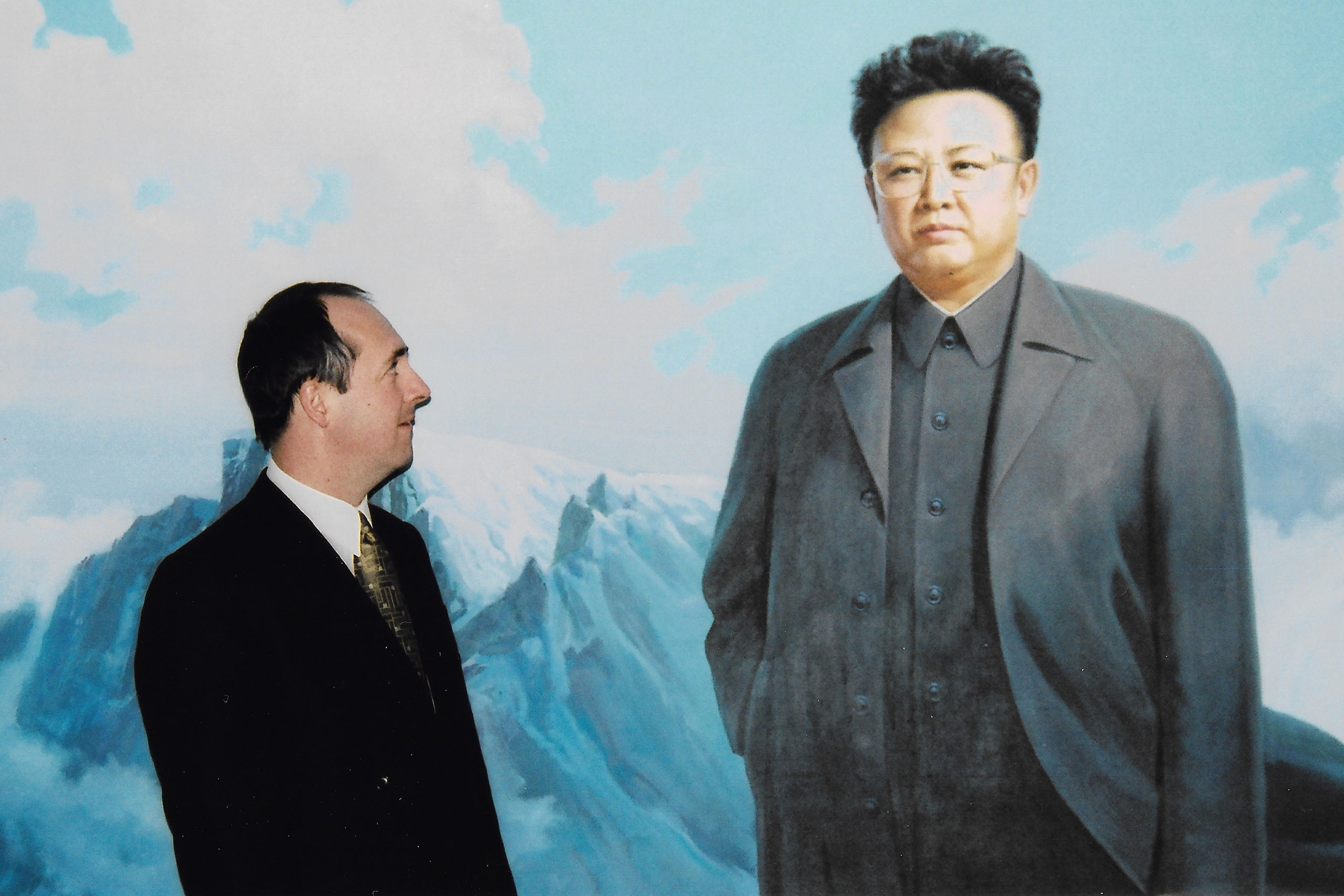
A common view in the press gallery in my time was that if Downer ever crashed, he’d be brought down by his sense of humour rather than his competence. Strahan touches on Downer’s capacity to find the droll in the dour in his dealings with North Korea: “Showing his irreverent sense of humour, for a time he used Kim Jong Il’s song in the 2004 satirical film Team America, ‘I’m so Ronery,’ as the ringtone on his mobile phone.” Downer swung between engagement with North Korea and taking a tough approach; a leaked US diplomatic cable quoted his wishing in 2005 that the horrible Pyongyang regime would just crumble: “Let the whole place go to shit, that’s the best thing that could happen.”
Kevin Rudd was “smart, expansive and charming,” yet on a visit to New Delhi he “met almost every idea proposed by one of the Indian ministers with the same refrain: ‘Yes, I know’ or ‘Yes, I’m aware.’ It felt as though no one else could come up with an original thought. This seemed unnecessary when ‘I agree’ or, even better, ‘good idea,’ would have hit the mark. Here, I thought, was a talented but self-thwarting politician.”
The kicks at unnamed politicians are for timidity and evasion — their focus on the upbeat to “avoid difficult meetings or skip discussions of problematic topics… It was dispiriting as a diplomat to see a politician avoid a hard issue, especially after I had assembled a brief highlighting the need to raise something or had already prosecuted the same problem through official channels. Such behaviour damages our diplomacy.”
In his final post, as high commissioner to Solomon Islands, Strahan confronts Honiara’s switch in diplomatic recognition from Taiwan to China, the Covid-19 pandemic and Manasseh Sogavare. With four terms as prime minister, the formidable Sogavare is as mercurial as he is masterful.
Strahan quotes a “fire-and-brimstone” speech by Sogavare attacking Australians who treat Solomon Islanders “as kindergarten students” who “need to be supervised.” One section from that speech is a pungent statement of why Australian leaders should never refer to the South Pacific as “our backyard.” Sogavare blasted “backyard” as ignorant and condescending: “That term is offensive to us… In kastom the backyard is where the toilet is. It is a place where pigs and chickens are located. It is where rubbish is collected and burned.” Truly, in diplomacy, words are bullets. And Sogavare knows how to aim and fire.
Rather than “backyard,” Australia is safer using “region,” “neighbourhood” or the new favourite “Pacific family,” adopted notably by Scott Morrison… and by Penny Wong, who says Australians “feel a profound sense of kinship with the Pacific, of wanting to connect with the Pacific as part of one family.” Family sits at the people and values end of Australia’s offer to the Islands, while ideas of economic and security integration lean towards power, interests and influence.
In his Honiara reflection, Strahan gives thanks at managing to avoid both malaria and dengue, noting that his three years in the Solomons “were the most testing in my career, personally and professionally.” The posting was also “the most rewarding and intellectually stimulating assignment I had ever undertaken,” going to the heart of Australia’s interests in the region.
Strahan judges that Australia must be resolute but calm in confronting China’s “unavoidable challenge” in the Pacific. This reviewer’s line is that Australia has a strong hand in the Islands, and would have to play very badly to stuff it up. When Australia speaks of being the region’s partner of choice — economically, politically and strategically — it defines a lesser role for China. Australia’s offer to Pacific peoples is different to what China wants from Pacific governments.
Surveying what Penny Wong has described as a “permanent contest” with China in the Islands, Strahan muses: “People who insist that there is nothing to worry about are failing to appreciate how major powers often operate, and especially how China operates under Xi Jinping.” Xi has “ushered in a China that is more dictatorial at home and more muscular internationally. He seems determined to assert China’s pre-eminence in the Indo-Pacific and is ready to use direct and indirect pressure to coerce other countries.”
Donald Trump’s second term, meanwhile, is “highlighting and complicating perhaps the strongest defining feature of Australia’s approach to the world” — alignment with a great and powerful friend. While the US will remain a formidable country for decades to come, Strahan writes, “its relative overall decline in global power relations will not reverse.” Australia can no longer take US engagement in the Indo-Pacific for granted: “It will not quit the region, but it will likely have to accept some kind of power-sharing arrangement with China.”
Perhaps Trump is doing us an unintended favour, he says, by “pushing us into adopting a more distinctly Australian foreign policy.” A more multipolar world will call for a nimble, self-reliant Australia, “able to work with different configurations of partners.” Strahan judges that Canberra will “not have the same scope as we did in the 1980s and 1990s to achieve big things. The international scene is now so much more crowded and intense, meaning even a capable and ambitious foreign minister is more constrained than in the past.”
Facing what may be a “predominant” Chinese presence in the eastern Indo-Pacific, Australia will have to work hard to maintain a secure role in Southeast Asia and the South Pacific.
Summing up his life in DFAT, Strahan says several things in the department have changed for the better. “The old DFAT was known for its at times hypercompetitive internal culture,” he says, and “the old shouty management style mostly disappeared, as the department adopted stronger anti-bullying procedures.”
The “curious diplomat” reflects on whether there’s a distinctive Australian style of diplomacy. He quotes a British friend who found Australian diplomats more formal than expected, but the best were “ruthlessly focused on the national interest and not afraid to pursue it,” even to the extent of “occasionally pissing off an ally.”
Although some people have encountered “boorish, prejudiced or shifty Australian diplomats,” Strahan concedes, he goes on to offer the traits that he and other DFATers aspire to:
Australian diplomats typically do not beat around the bush, do not like bullshit and do not thump tables. We are often straight-talking and unlikely to play games. Other people usually know where they stand with us. When we can, many of us like to be good-humoured, even irreverent. One Asian diplomat told me he found his Australian counterparts plain-speaking to the point of being blunt, “calling a spade a ‘bloody shovel’ and belabouring a point.” He added, though, that he found Australians were loyal. My New Zealand opposite number during one posting observed that Australians were much brasher than Kiwis, which is true enough.
Despite the relative informality, Australian diplomats do not take the job lightly. We pride ourselves on being well-prepared, methodical and practical, thinking laterally and flexibly. One colleague from another service said Australian diplomats were usually informed and plugged in to the wider implications of an issue. We have a strong sense of ethics, but proceed with a good dose of pragmatism as well. We usually come to the table to find a solution and solve a problem. Not all countries do so. Some cause trouble, almost with relish.
Even if Australia’s diplomats aren’t distinctive, Strahan notes, we must have a robust and adept foreign service to deal with a less reliable United States, surging xenophobic populism, rising geopolitical tensions and vicious wars.
The curious diplomat, always ready to “have a go,” goes abroad to give it a red-hot go for Oz. •
The Curious Diplomat: A Memoir from the Frontlines of Diplomacy
By Lachlan Strahan | Monash University Publishing | $39.99 | 616 pages