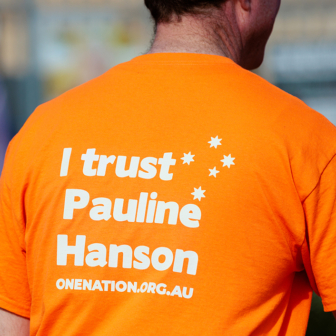
If the biggest political surprise in 2025 was the Albanese government’s emphatic re-election, the second has been the gradual surge in One Nation support since then.
From a disappointing election result of 6.4 per cent (disappointing thanks to the pollsters who routinely overstate the party’s numbers by a point or two in their final campaign polls) its support has more than doubled, and almost tripled.
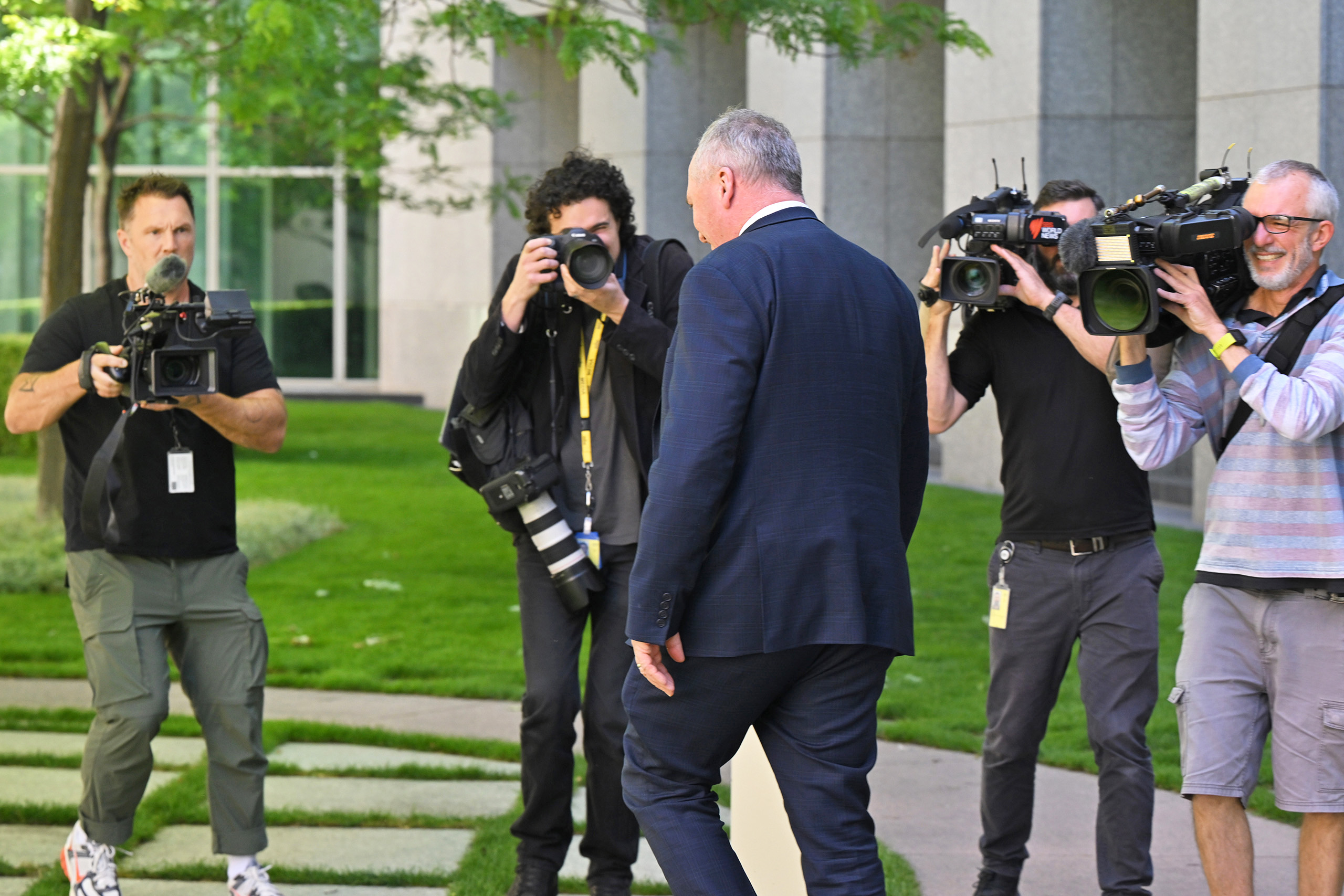
The popular explanation is a perceived move to the left in the Liberal leadership — if not in actual policy, then in the presentation — since Sussan Ley took the charge. For one thing, she’s a woman, and in the past has taken some rather moderate policy positions. Instability sure doesn’t help, either, with Barnaby Joyce’s One Nation flirtation, finally consummated this week, surely beneficial for the minor party, in the short term at least.
The defection delivers leader Pauline Hanson a huge pay rise and perhaps more staff. It might even open a floodgate. (One Nation is spinning it that way, but we should believe that only when we see it.) Being rid of Barnaby will disappoint many Nationals supporters, but its impact at elite level is yet to play out. Most Liberal MPs, on the other hand, will be happy to see the back of him — particularly aspiring candidates in former blue-ribbon city electorates, where Joyce’s unpopularity peaks.
But let’s not get ahead of ourselves. The track record of One Nation’s MPs is not one of picking and sticking. The supposed plan is for Barnaby to get elected to the Senate in 2028 and take over as leader, but that’s almost three years away. There’s plenty of time for a party implosion before then.
The decision to contest the Senate rather than New England presumably reflects an assessment of likelihoods. Voting evidence suggests Joyce is extremely popular in his electorate, and even if the odds of re-election under the One Nation banner in New England are better than even, the chances of succeeding in election to the Senate are even better — and might boost the vote to bring another senator with him.
Is Barnaby the articulate leader that can take the far-right party to the next level? There’s no doubting his communication skills, his word-picture creating, even if it’s getting a bit old and was never everyone’s cup of tea. His former Nationals colleague Bridget McKenzie said recently that “he’s not a racist,” and it’s true his repertoire over two decades in parliament hasn’t included “dog-whistling” of the kind favoured by John Howard in his time and enthusiastically embraced by Peter Dutton.
Watchers of an ABC 7.30 interview on Monday were treated to quite a lot of squirming and dissembling when Joyce was quizzed about some of Hanson’s utterances, including recent ones. He just couldn’t bring himself to agree with some of her nastier comments. Yet the leaders of successful far-right parties around the democratic world — the parties he claims are, like One Nation, the future of politics — aren’t so bashful. Immigrant bashing is a crucial part of the formula; it’s not enough simply to say immigration is too high. Will a hardening be forced on Barnaby’s rhetoric in the new year?
Australia also lacks the plentiful uncontrolled immigration that causes friction in the US and Europe. By comparison with other countries, though, we have long had a very high level of controlled immigration. And there’s also the abundant rorting of bridging visas.
Recent polls have the far-right party on between 14 and 18 per cent. Such support would see its numbers mushroom in the Senate, but what about the House, where government is formed? How would those figures translate into seats? That would depend on two factors.
Pollster Demos recently released a national voting intentions survey of a little under 7000 respondents. It used “multilevel regression with post stratification,” or MRP, which tightens the seat-by-seat margin of error. Demos’s national primary votes gave One Nation 17 per cent with Labor on 33, the Coalition on 24 and Greens 13. Its estimated national two-party-preferred vote is 56 for Labor and 44 for the Coalition. Seat by seat One Nation swings were somewhat proportional to 2025 support: the bigger the One Nation vote in May, the larger the swing its way in this poll.
That’s splendid for the minor party. And, as might be expected, most of the support is coming directly from the Coalition. Demos has the 18 per cent translating into twelve seats. That would make One Nation happy. But this is where the caveats come in.
Demos uses 2025 election preference flows to arrive at each electorate’s two-candidate-preferred results. That’s fine — so they should — but it assumes the Coalition’s how-to-vote cards will again recommend One Nation ahead of Labor everywhere. Is that a certainty in 2028? It seems likely, but it will largely depend on who the Liberal leader is, how much authority they enjoy and whatever in-vogue ideas decree to be the best way forward.
Under Dutton, the pro–One Nation preference strategy was justified by his prioritisation of the outer suburbs and regions. But a Liberal Party that wished to regain territory from the teals and protect itself from further losses in the inner city might put as much distance as possible between itself and One Nation.
Andrew Hastie and very likely Angus Taylor would happily do deals with the minor party. But Sussan Ley or some other “moderate,” trying to reclaim capital city support, might not.
I’m not suggesting Ley will last until the next election — she won’t — but her right-wing replacement next year might not either; and if that person crashes it would likely be interpreted as showing the hard-right experiment was a dud. Then, in typical Liberal leadership fashion, the pendulum would swing back to a “moderate” or at least “compromise” individual. That could even be Ley.
The second condition for maximum One Nation seat success is not just a rock-bottom Coalition primary vote but also a reasonably healthy Labor one. Of Demos’s twelve projected One Nation wins, the strongest seven come from two-candidate-preferred counts against the ALP. This is where its best chances are, because Labor “preferences” the Coalition over One Nation everywhere, which makes the former difficult to beat in a final count.
If we hold Demos’s One Nation, Greens and “Others” primary votes constant and move three percentage points from Labor to the Coalition in all electorates, four or five seats shift from One Nation to the Coalition. Make it a six-point movement (which would mean a 50–50 national two-party-preferred result) and One Nation is left with just one electorate.
So Labor doing well is also good for One Nation. The 2028 election might see a repeat of 2025, but to assume it will is to succumb to the tyranny of the present. In fact, across federal election history, big wins are nearly always followed by notable corrections.
The other, most important variable, of course, is the One Nation vote itself. Who knows, this time next year it might even, à la Reform UK, be leading the pack with support of around 30 per cent.
There is no reason to believe One Nation’s surge has peaked. •