Consumer sentiment, which fell off a cliff in 2022, has declined further under Trump II. Indeed, according to the venerable Michigan Survey, it is at the lowest level ever recorded. Other measures, like the index of consumer confidence produced by the Conference Board, are somewhat less dismal but also show that Americans feel worse now than they did during the Biden years. And 53 per cent of Americans — a crucial segment of whom voted for Trump because they believed his fabulist promises to bring prices down “on Day One” — are now saying the Biden economy was better than the Trump II economy.
The question of why Americans are so negative about the economy is important, but here it want to dispel some widespread misperceptions — misperceptions that were especially acute during the Biden years. So today I’ll talk about what actually happened to ordinary Americans under Biden.
Let me address three issues in particular: purchasing power, inequality, and the labour market.
Purchasing power: Biden had the misfortune of being president when there was a large jump in prices, a jump that was out of his control and happened around the world. This came as a shock to Americans after decades of low, stable inflation: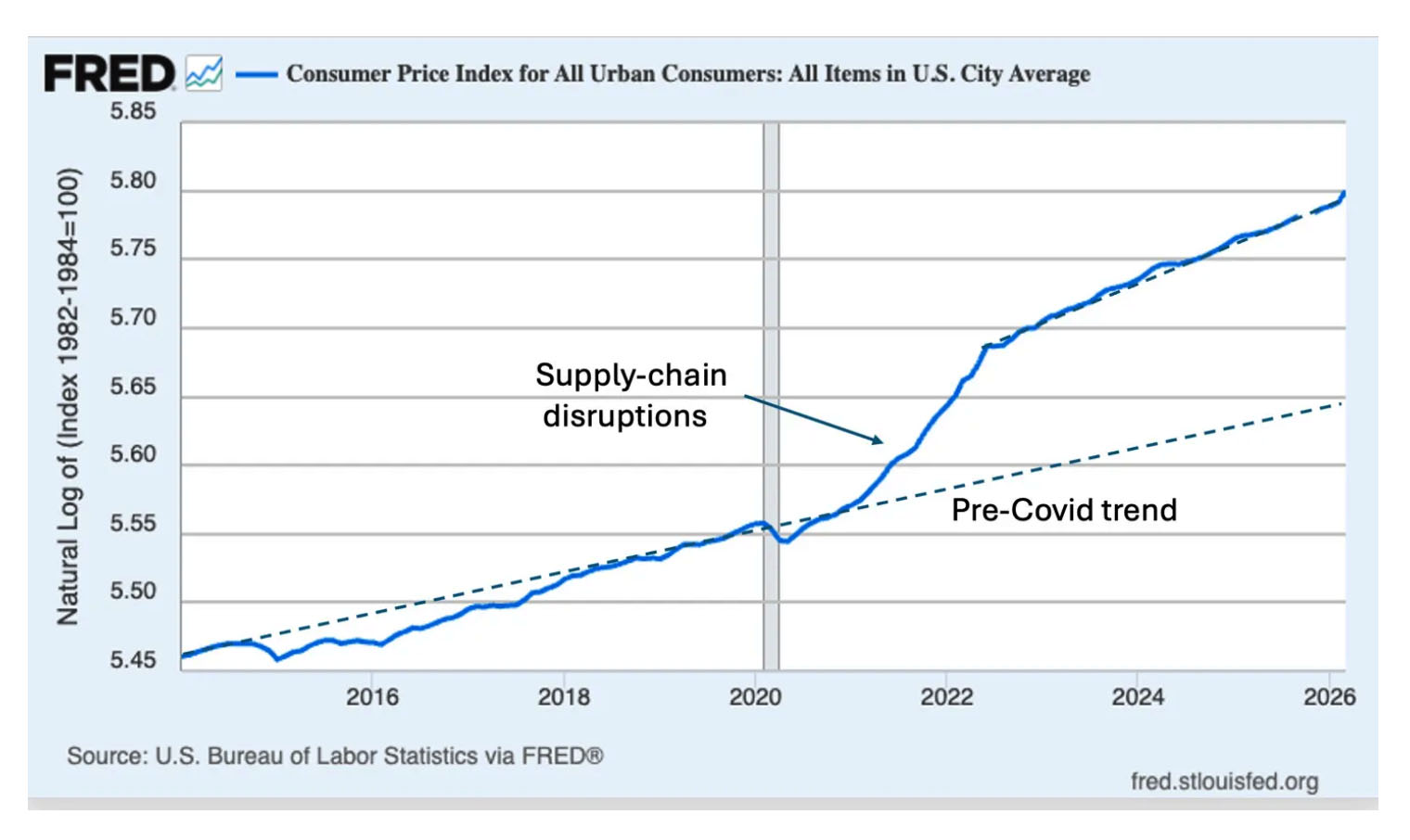
This price jump clearly depressed consumer sentiment. It’s also often asserted that the jump in prices from 2021 through 2022 left most Americans substantially poorer. And that just isn’t true.
The next chart compares the rise in consumer prices to what has happened to the wages of ordinary workers since late 2019. Why start in 2019? Because average wage data in 2020 and much of 2021 were distorted by the pandemic, during which low-wage workers were disproportionately laid off. Using the eve of the pandemic as a baseline, we see that large increases in consumer prices were more than matched by large increases in wages:
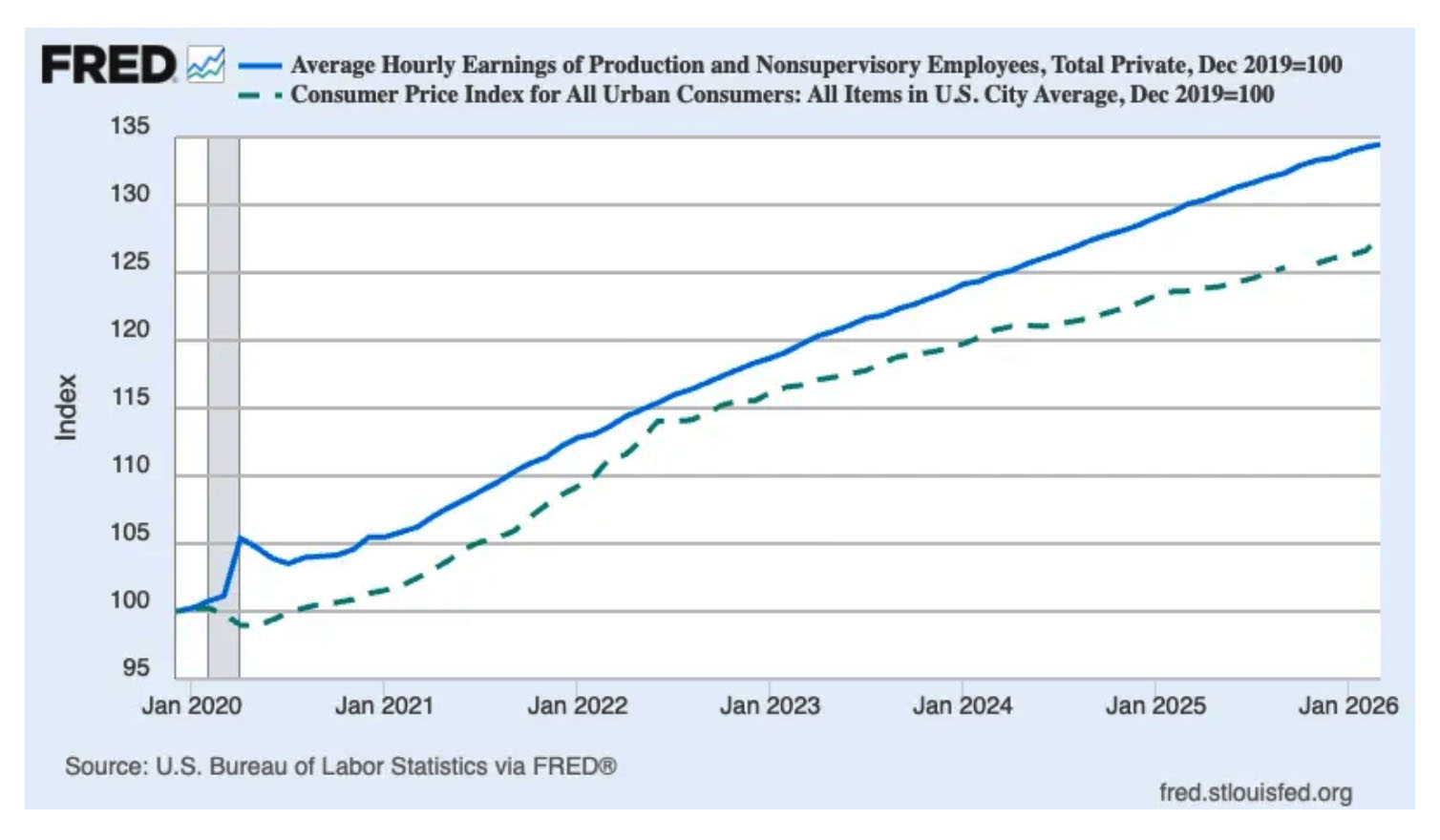
Now, many people have the sense that prices are up more than the official numbers say. But the Bureau of Labor Statistics, which produces these numbers, is careful and scrupulous. And independent measures of prices, for example for groceries and rents, have generally been consistent with BLS estimates.
What is true is that the Consumer Price Index doesn’t take account of rising interest rates. In particular, monthly mortgage payments for new home buyers have risen much more than average wages, and the chart above doesn’t reflect that. But while this is a real issue, it isn’t consistent with complaints about huge, widespread declines in overall purchasing power.
Okay, I can safely predict many hostile comments, not just from Trump supporters sure that the Biden economy was terrible but from people insisting that to point to rising real wages is to deny the struggles of working families. So let me say that throughout the past five years many millions of Americans have had a hard time making ends meet. But this is always true, in good times and bad. It was actually less true than usual during the Biden years, a period in which wages at the bottom rose more rapidly than wages at the top.
Which brings me to the question of inequality.
Inequality: The economist Peter Atwater coined the term “K-shaped economy” in 2020 to describe an economy in which those at the top get ahead while those at the bottom fall behind. The phrase has stuck, as has the narrative.
But what actually happened during the Biden years, at least in terms of wages, was the opposite. In 2023 and in subsequent work, David Autor, Arindrajit Dube and Annie McGrew documented that there had in fact been an “unexpected compression,” in which the wage gap between the highly paid and the less well paid suddenly narrowed.
Dube has a terrific new book out, The Wage Standard: What’s Wrong in the Labor Market and How to Fix It, which is a manifesto on how to improve the state of workers. I will lift a couple of charts relevant to the tale of inequality during the Biden years to illustrate my point.
The chart below plots annual real wage growth across the wage distribution for two periods in time. On the horizontal axis is the wage distribution. For example, a person at the tenth percentile is considered low income: they earn a wage that is at or below 90 per cent of other Americans. Someone at the ninetieth percentile is high income: only 10 per cent of Americans earn a wage higher than theirs.
The solid line shows annual real wage growth across the wage distribution for the years 1979 to 2019. The dashed line shows it for the years 2019 to 2024, the Biden years.
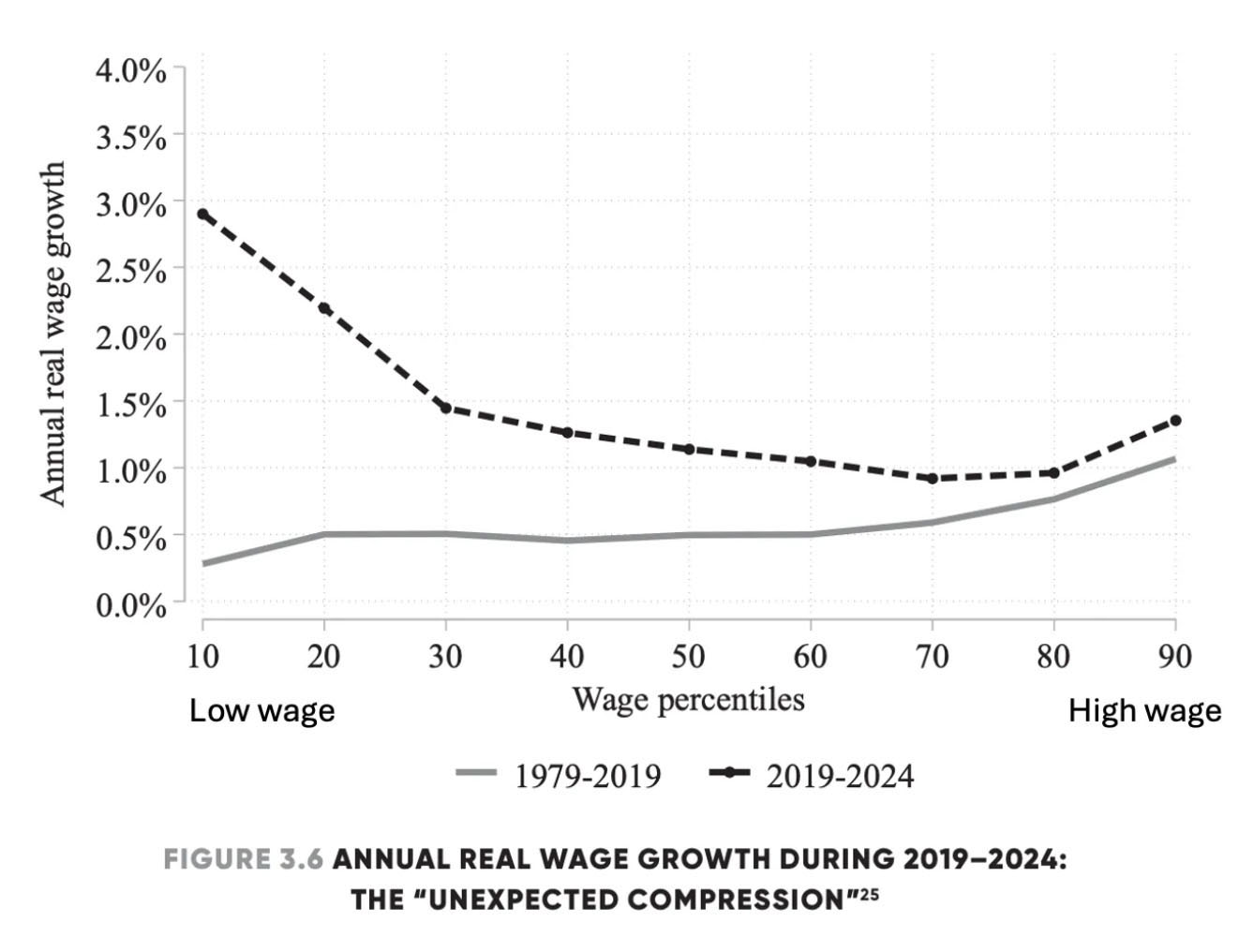
This chart shows that real wages for the bottom 80 percent of workers grew substantially faster during the Biden years than they had over the previous forty years. Moreover, growth was especially high at the very bottom of the wage distribution. This was the “unexpected compression”: because low-earning workers experienced faster wage growth than those with higher pay, the wage gap between low income workers and high income workers was squeezed during the Biden years.
Second, let’s look at a direct measure of wage inequality, the ratio of wages at the ninetieth percentile to wages at the tenth percentile:
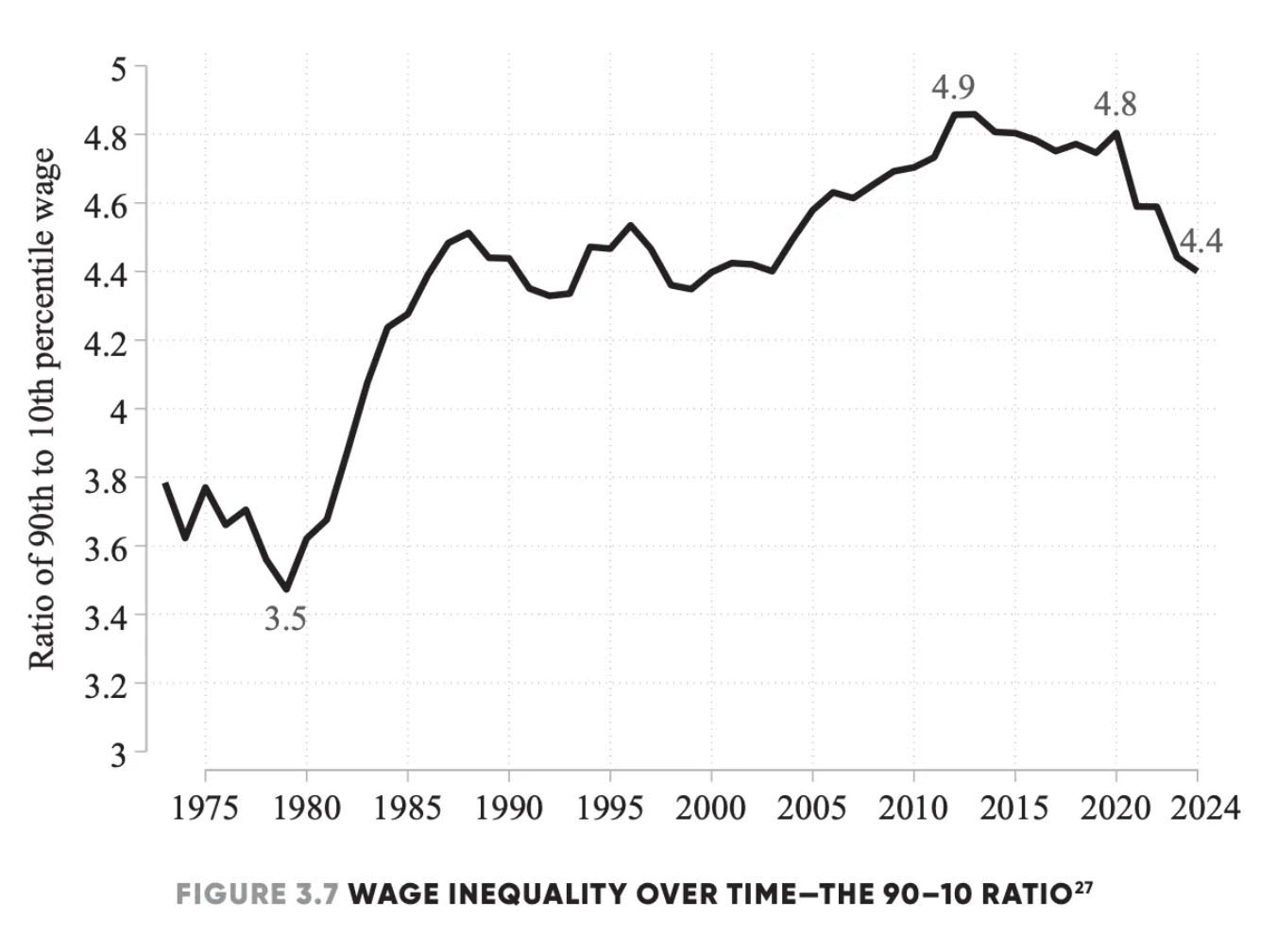
This ratio began rising under Ronald Reagan and was still near its peak, at 4.8, on the eve of the pandemic. But from 2020 to 2024 it declined substantially. America at the end of the Biden years was still a hugely unequal society, but less so than it had been for a generation.
Granted, stock prices rose substantially under Biden, and stock ownership is highly concentrated at the top. So the Biden economy was K-shaped in that sense. But if you think about it, it’s hard to see how rising prices for stocks, which are both bought and sold mainly by the richest 10 per cent of the population, hurt those below.
So wage inequality fell dramatically during the Biden years. Is income inequality now rising again under Trump? There are faint hints in the data to that effect, but no more than that so far. One thing we do know, however, is that the force Dube identifies as the strongest driver of wage compression — a “tight” labour market — has largely disappeared.
The labour market: Dube’s thesis is that a tight labour market — one in which workers find it easy to get jobs and employers find it hard to get workers — is essential to wage growth, especially among the low paid.
And for much of the Biden era the US job market was very tight. For evidence, look at the Conference Board’s “labour market differential” — the difference between the percentage of people saying that jobs are plentiful and those saying that jobs are hard to get. That number is usually positive — we are an optimistic nation — but it was exceptionally positive during the Biden years:
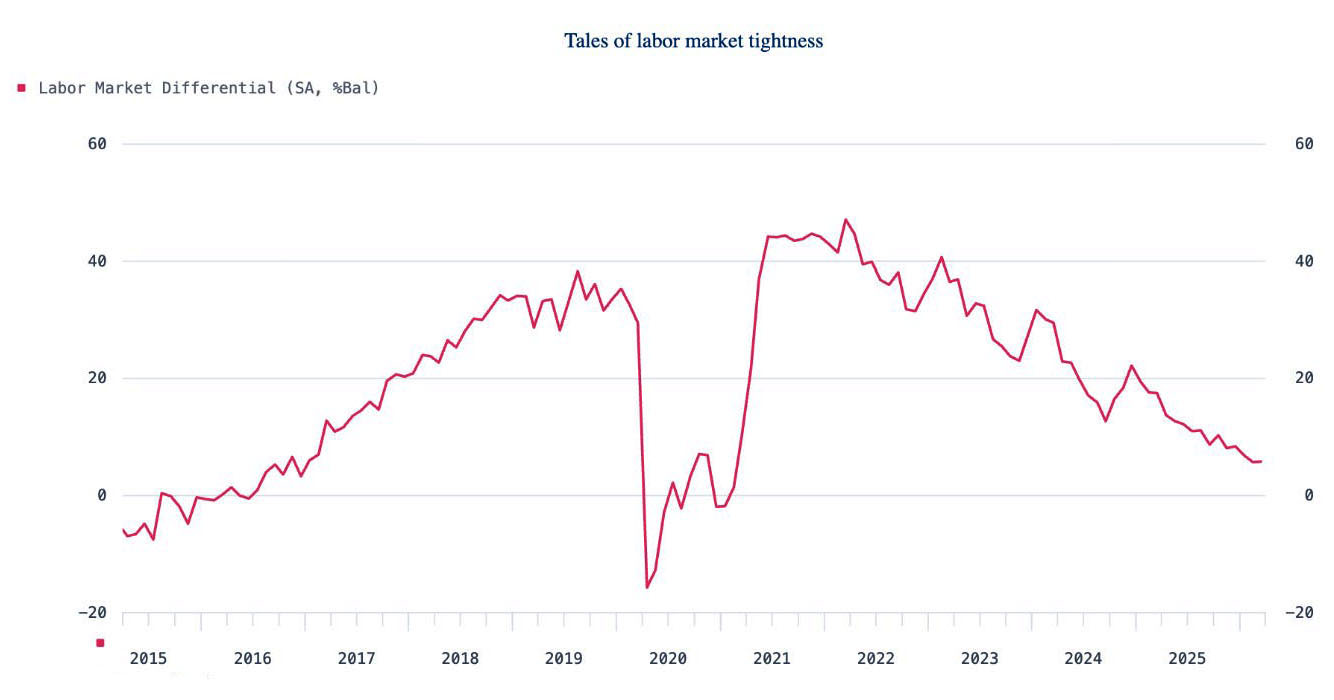
Source: The Conference Board via Haver Analytics
So, why is it important to set the record straight about the Biden economy? We can’t rerun the 2024 election (although if we could, Kamala Harris would win.) But misperceptions about that economy may prevent us from appreciating policies — especially the strong response to the pandemic — that were actually very good, and which we should be prepared to emulate in future crises.
And understanding economic reality when consumer sentiment plunged is crucial to making sense of the vibecession debate, about which I’ve written in this follow-up piece. •
This article first appeared in Paul Krugman’s Substack newsletter.