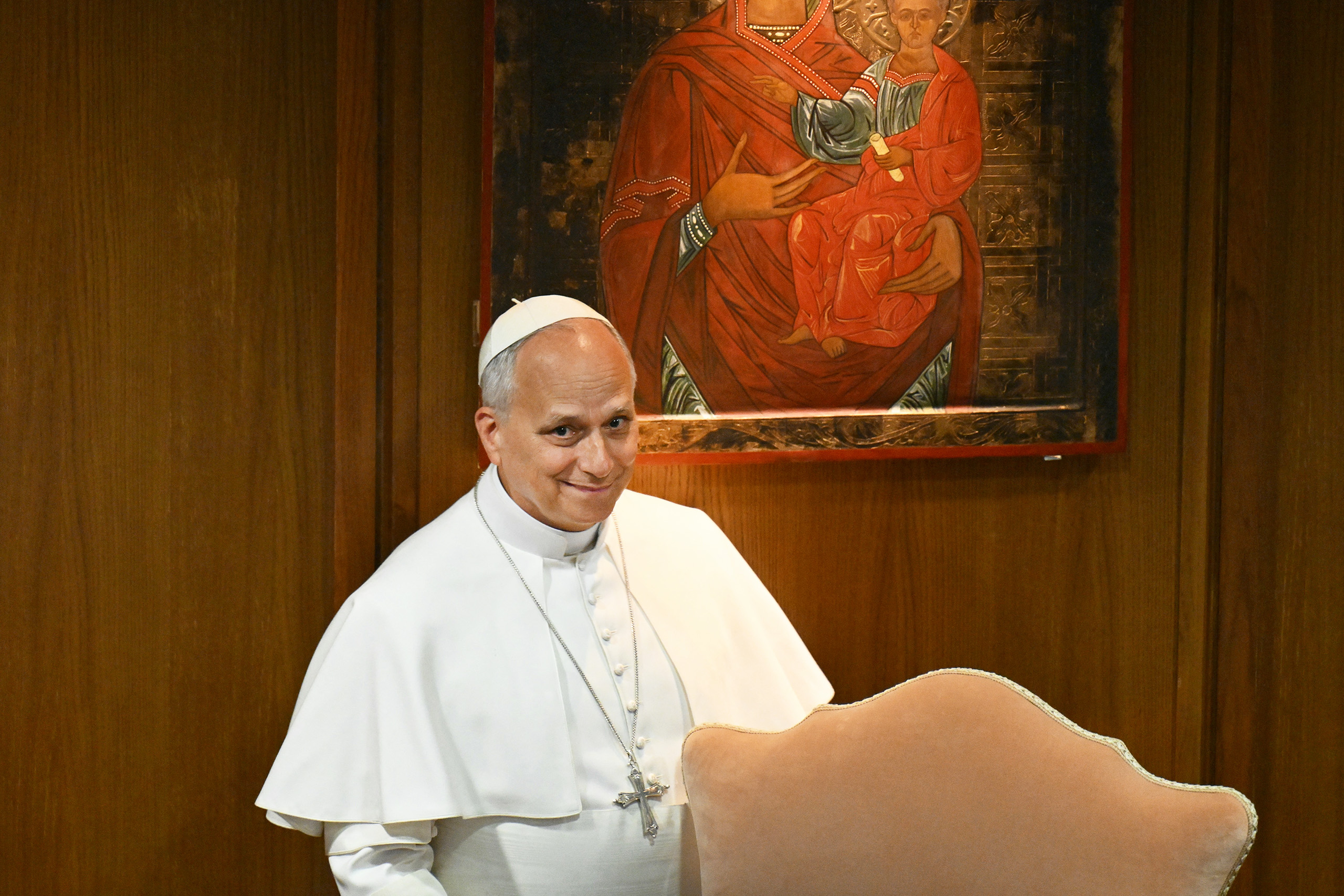
When the current Pope Leo XIV ascended to office, he took his Papal name in homage to Pope Leo XIII, who presided over the Catholic Church in another time of great economic and social disruption at the end of the nineteenth century. Automation and rapidly changing social roles made it difficult for Catholics, or anyone for that matter, to know where to stand. Power no longer felt stable; the facts of everyday life had become divorced from what people had been taught to expect.
This new Pope Leo faces another such moment, this time fuelled by artificial intelligence, the subject of his first church encyclical. These documents are reserved for the most important facets of modern society, the very topics requiring the appearance of direct communion with the Almighty to resolve.
In the first generation of the digital age, the technology being created by the new geniuses was transformative. It could destroy the boundaries of time and place to allow people to find community alongside one another. A revolutionary act, it created a new form of political power.
For a long time, we understand that power to be held by citizens themselves, managed only in trust by the technology companies that facilitated (with search engines and social media platforms) but did not intervene. The internet was a sort of benevolent but absent God.
The AI age came with a renegotiation of that bargain. Power was no longer held in trust but actively managed by a small group of individuals and corporations who suddenly had the capability to decide what the rest of the world could understand to be true. At first, they were protected by a broadly shared acceptance of the value that they brought to the democratic world. Laws could be carefully interpreted to their benefit because it was in the public interest that a counterweight to political power be not just available but cultivated.
That logic has now flipped. The power these platforms have gained has surmounted the very institutions that they once held in check.
There have been small but meaningful reflections of this reality. Earlier this year two court cases in the United States reinterpreted the very laws that once protected Silicon Valley from liability for user-generated content. Now, the courts found, the companies have a responsibility to monitor content for its potential to cause harm.
But Pope Leo’s encyclical is the most important and substantial acknowledgement of the challenge. While it holds no legal weight — no tech company is headquartered in Vatican City — it reflects the opinion of one of the most powerful institutions on earth. These old regulatory institutions must come back to life, says the encyclical, to protect the human dignity being put at risk by a new technology that understands people as data points primed for optimisation.
Leo takes as his object both the technology and the people behind it. Of the technology, he is concerned by its ability to trick people, to remove the very idea of truth from human society. Of the people involved, he believes the concentration of a new form of power in the hands of a very few is as great a threat as any authoritarian regime. He nods to this parallel in his citation of Hannah Arendt’s On the Origins of Totalitarianism.
In both instances, citizens have been reduced to instruments of efficiency, revoking the agency that offers people their humanity. The Pope writes of a “crisis” in our relationship with life itself. That the limits of human life are now “seen primarily as a defect to be corrected, rather than as a reality through which our humanity matures and opens itself.” When a society pushes itself relentlessly toward optimisation, we lose the good and necessary possibility of humanity.
Institutions like the Church and many courts are beginning to acknowledge this new reality. The assumptions that underwrote the arrival of the AI revolution are changing, with moral authority and the law moving in the same direction.
And yet the Pope stands as the sole global figure to offer a meaningful perspective on the regulation of AI. In the United States, the Democratic Party has not bothered to put forward an agenda to counter the Republicans’ inclination to let these companies run amok, their profit motive being more important than any social or ecological disaster they may summon.
Europe has chosen the predictable path of bureaucratic nightmare, stifling the possibility of innovation in the name of endless red tape. The experience of European modernity is to permanently be stuck in the shallow end of the pool. Safe, but never able to grow. All the while, China’s model of AI acceleration operates in lockstep with its authoritarian regime, no daylight possible between its technological development and the anxiety of the state.
This has left countries like Australia waiting. It is clear that letting Silicon Valley run wild will only hasten economic and social crises, but there has yet to coalesce a vision for a future that sees a harnessed AI, one that can help power the future without destroying it entirely.
The Pope’s offering won’t directly cause any immediate changes. No technology company will fire its chief executive because of the commands of the Pontiff. And yet the very existence of the encyclical says a great deal about the moment we are in.
The governments that once cultivated the fruit of Silicon Valley as a democratic counterweight have found themselves impotent in the face of their own creation. The US administration has decided to leave the AI industry to regulate itself, and Europe is drowning itself in process. Everyone else is left watching, hoping to not be found wanting in the end.
Leo chose his name to invoke a moment when the Church stepped into a void and spoke about power and human dignity. But this encyclical is an act of moral authority, not political power. For that, we are still waiting. •