Politics has no pity. On Wednesday this week Keir Starmer was at the G7 Summit in the French Alps, discussing options to keep open the Strait of Hormuz with Donald Trump and Emmanuel Macron and announcing new sanctions on Russia. This weekend he is on the verge of being forced out as leader of the Labour Party and prime minister.
The immediate cause is Thursday’s parliamentary by-election in northwest England. But the roots of Starmer’s demise go back to his election as party leader six years ago.
This week’s by-election was one of the most remarkable to have taken place in a century of British parliamentary democracy. It was called after the Labour MP in the little-known Makerfield constituency stood down to allow Starmer’s chief Labour critic, Greater Manchester mayor Andy Burnham, to return to Westminster as an MP and challenge for the party leadership.
The result was by no means a foregone conclusion. Makerfield, a former mining district, is typical of many parts of small-town England: it lost its economic purpose and prosperity under Margaret Thatcher’s deindustrialisation and has never recovered. A solid Labour seat up until the Brexit referendum in 2016, it voted overwhelmingly to leave the European Union; since then its Labour majority has declined in successive elections under pressure from far-right parties led by Brexiteer-in-chief Nigel Farage. Just last month, Labour was wiped out in the local council elections, with more than 50 per cent of voters choosing Farage’s latest party, Reform UK.
Andy Burnham hails from the area, and — having served in Gordon Brown’s cabinet between 2007 and 2010 — has been a successful and popular mayor. But Makerfield’s recent voting history meant he was by no means bound to win. It was a brave place from which to launch his challenge to Starmer.
But the result was not even close. On a higher turnout than in the general election of 2024, Burnham stormed to victory with 54 per cent of the vote. His Reform UK opponent managed just 35 per cent, and Restore Britain, a splinter party with an even further right anti-immigrant platform, won 7 per cent. The Conservatives, Liberal Democrats and Greens got a mere 3 per cent between them.
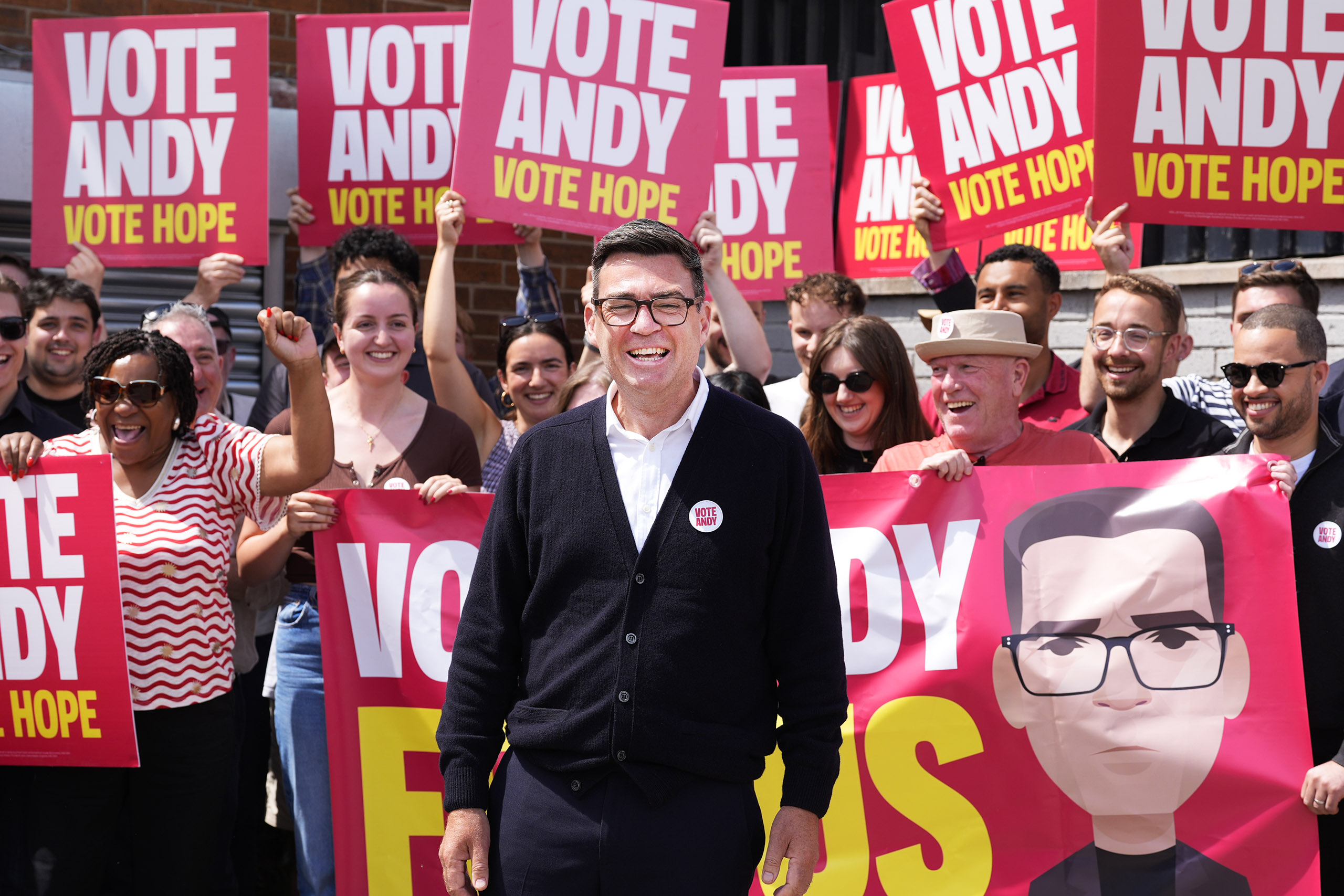
The result is a personal triumph for Andy Burnham. Canvassers on the doorstep reported what the polls had already suggested: Labour is deeply unpopular and few people were prepared to vote for the party. It was Burnham himself people were supporting, often precisely because they wanted to get rid of Starmer. Burnham’s “Vote Andy” election leaflets didn’t even mention the party; any other Labour candidate would undoubtedly have lost.
If Burnham’s popularity is remarkable — he has been mayor for nine years and his approval ratings have risen the longer he has been in the job — Labour’s unpopularity isn’t hard to fathom. Under Keir Starmer it has squandered the opportunity that he himself had created to reverse the public’s growing disillusionment with politics.
Starmer was elected to the Labour leadership in 2020 after his predecessor, left-winger Jeremy Corbyn, lost his second general election to the Conservatives. Though not as radical as Corbyn, Starmer promised his party he would govern from the left. But since winning a remarkable victory in the 2024 election — taking the party to a huge majority of 174 seats over all other parties in parliament — he has abandoned almost all his pre-election promises. Having campaigned on the basis of “change,” he is widely perceived as having delivered very little of it.
Starmer only became an MP in 2015. Having previously been a human rights lawyer and director of public prosecutions (for which he was awarded a career service knighthood) he had almost no background in politics or political activism. What his parliamentary colleagues and party members have since discovered was that he also has few political ideas or values.
His rapid rise to a shadow cabinet position in 2016 was largely due to the refusal of many leading Labour MPs to serve under Corbyn. But when Corbyn stood down in 2019 Starmer’s calm, even dull demeanour and technocratic experience looked appealing, and he was comfortably elected leader. When he took the party from the depths of defeat to a landslide victory in 2024, party members’ choice appeared to have been triumphantly vindicated.
His two years at 10 Downing Street, however, have been a disaster for himself and for the party. The tone was set early on. Inheriting an alarming fiscal position from the outgoing Conservative government, his first policy announcement was not to, say, raise taxes on the wealthy, but to cut a welfare benefit given to pensioners to help them heat their homes in winter. It caused an uproar, and Starmer eventually had to (partially) reverse it. But his approval ratings never recovered. Later he tried to balance the books with a £5 billion cut to welfare spending, mainly targeted at disabled people, which was defeated by his own backbenchers.
In all, Starmer has been forced to retreat no fewer than thirteen times from policies he has announced — not because of anything the Tories have done (they have far too few seats to make a difference) but because of public opposition and anger. He has increasingly been seen as simultaneously unprincipled and incompetent.
That impression has been exacerbated by his apparent inability to communicate any principles that might define his or his government’s purpose. Starmer has insisted that he is a pragmatist — that there will never be such a thing as “Starmerism” — but the result is that opinion polls consistently say the public no longer knows what Labour stands for. When Starmer made a hardline speech on immigration last year whose language evoked that of an infamous racist of the 1960s, calls for him to be replaced as leader started gaining ground.
This is not to say there have been no achievements. Starmer’s government has instituted a new set of workers’ rights, especially for those in the ultra-flexible gig economy. It has limited private landlords’ rights to evict tenants for no reason. Health service waiting lists are falling. Starmer has personally managed a difficult relationship with Donald Trump, leaving Britain with lower American tariffs than its European peers.
But such wins have barely cut through to the public. Starmer’s approval ratings have declined month on month and now stand at nearly minus 50 per cent. Labour fell behind Reform UK in the opinion polls in early 2025 and has been languishing ever since. In the elections to the Scottish and Welsh parliaments and English local councils last month Labour suffered huge defeats, both to Reform on its right and the Greens on its left. At national level Labour is now on 17 per cent, half its 2024 election vote share, with Reform on 26 per cent and the Conservatives 18 per cent.
If this situation were sustained to the general election in 2028 or 2029, Nigel Farage would be the next British prime minister. It is this prospect that has led Andy Burnham to declare his desire to challenge Starmer for the Labour leadership.
So what happens now? There are three possibilities. One is that Keir Starmer refuses to give up his position and says he will fight Burnham in a leadership contest among Labour’s members. In those circumstances another candidate, former health minister Wes Streeting, would almost certainly join the race too. It is hard to see either of them beating Burnham, however, which would mean Burnham becoming Labour leader, and prime minister, at the end of such a contest in September.
A second possibility is that Starmer acknowledges his unpopularity and says he will stand down, but Streeting refuses to pull out. Again, there would be a leadership contest Burnham would almost certainly win.
Burnham’s own favoured option, unsurprisingly, is for there to be no such contest, with both Starmer and Streeting acknowledging the inevitable and standing aside (in Streeting’s case presumably in return for a senior job in a Burnham cabinet). In that case he would ask Starmer to conduct an “orderly transition” over the next three months, which would allow Burnham to appoint a team and prepare new policies and then to take over at 10 Downing Street in mid-September.
You may have noticed that all of these possibilities have the same end result. But if it is now more or less certain that Andy Burnham will soon be entering the famous front door, the political conversation will quickly turn to what he will do when he gets there. He has promised more radical policies to reduce the cost of living, bring the privatised energy and water industries under control public control and “reindustrialise” forgotten areas like Makerfield. He has also pledged reform of the electoral system. Most of all he has promised to restore “hope” to an increasingly disillusioned and fractious British public.
But there are plenty of cynical commentators who point to Britain’s struggling post-Brexit economy, constrained public finances and divided public opinion and, electoral miracle-worker though he may be, doubt Burnham can do any of it.
It is not as if others haven’t tried, they point out. When Andy Burnham in due course replaces Keir Starmer at Number 10, he will become the UK’s seventh prime minister in ten years. •