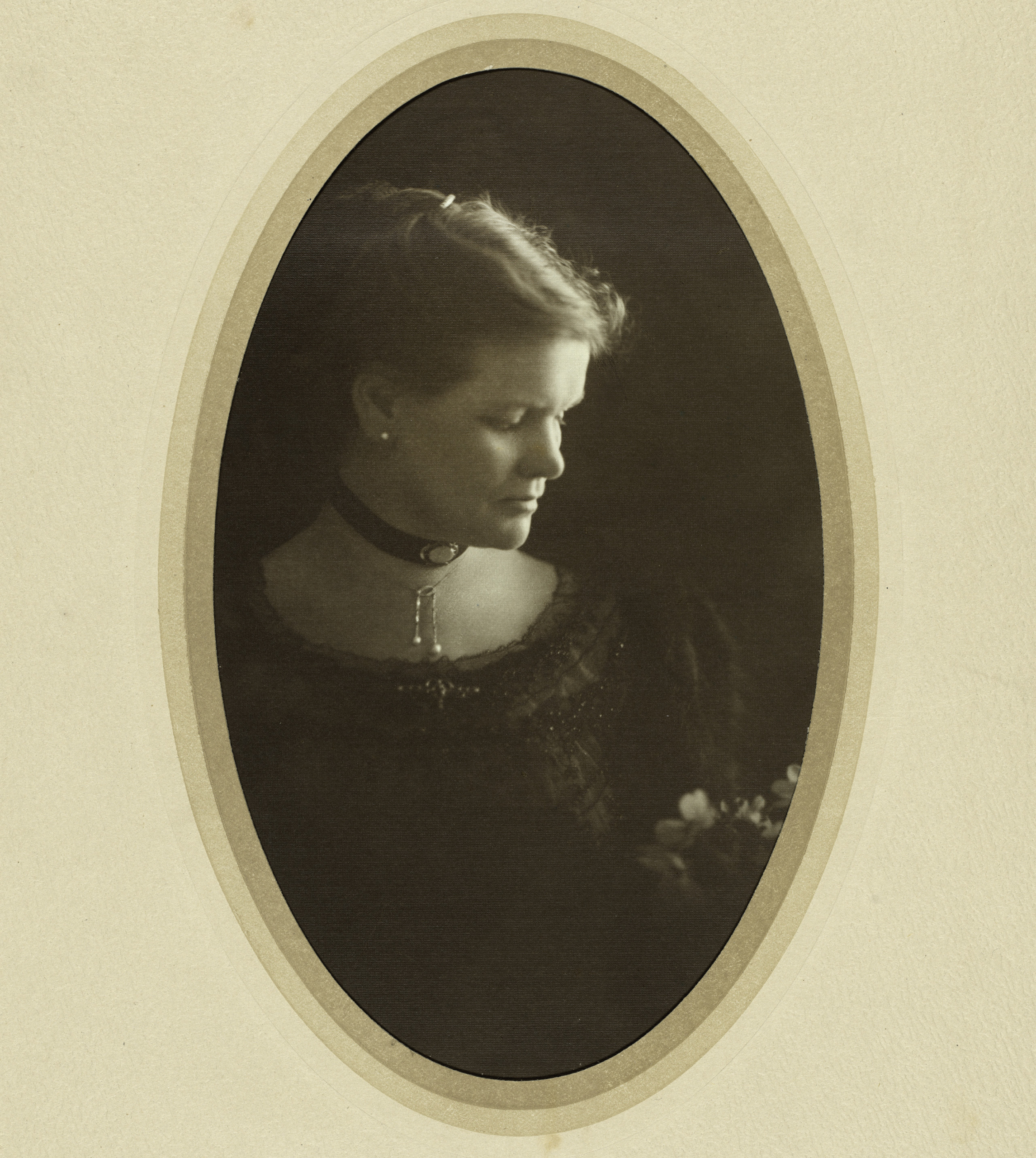
Recently I came by chance upon some photographs of Mary Cook, wife of Joseph Cook, prime minister of Australia for fifteen months in 1913 and 1914. Sir Joseph is one of Australia’s least-known prime ministers so it follows that Lady (later Dame) Mary is one of Australia’s least-known prime ministerial partners, and in this moment of discovery I knew nothing at all about her. I was just amazed at the beauty and strength of character in her face.
I wheeled away from the screen and looked at her for a long minute. A colleague was passing and I called her into my office. “That,” she declared, peering over my shoulder, “Is someone I’d want to know more about. She is a real person.”
What does that mean — a “real” person? To begin with, I think, Mary (as I’ll call her from now on) presents a face quite unlike the idealised female faces we see in magazines, movies, the media, advertising and, regrettably, AI-generated images. She had dark hair, sloping deep-set eyes, a wide mouth, and a broad forehead tapering to a small chin. This foreshortening of her face meant those ridiculous hats of her era were entirely wrong for her.
The little there is to know about Mary suggests she was intelligent, energetic, determined and practical. She and husband Joe (as he was widely known) were English, both having been born in Staffordshire. Mary (then Mary Turner) was a schoolteacher before their marriage in 1885. Joe came from a mining family that had known poverty and distress — his father’s death in a mining accident left Joe the main family breadwinner at just twelve. Mary’s brother William had emigrated to New South Wales and settled in Lithgow, and his letters home persuaded Mary and Joe that they too might have better prospects in Australia.
With Mary pregnant, Joe went first, in December 1885, following his brother-in-law to Lithgow where he quickly found work as a miner and built a four-room timber house for his family. Mary eventually arrived in 1887, having made the journey alone with baby George Sydney (known as Syd), the first of the couple’s nine children. All their children survived infancy, which has to be a testament to Joe’s ability to provide and Mary’s skilled parenting and management of the household.
Joe was elected to the NSW parliament in 1891 and to federal parliament in 1901. And so, for thirty years until he left politics in 1921, he was constantly away from home for parliamentary sittings, either in Sydney when the family was in Lithgow, or in Melbourne after the family had moved to Sydney. The rearing of their quiver-full of children fell mainly to Mary.
Mary and Joe must have corresponded during their separations but none of their letters appear to have survived. But among the scattering of records preserved in the National Archives of Australia and the National Library of Australia are many photographs of Mary, more than you might expect. (For comparison, no photograph appears to have survived of Ada Watson, prime minister Chris Watson’s first wife.)
I’ve studied them all, for it turns out that Mary Cook is one of those women, like Mary Gilmore, Kathleen Fitzpatrick and Margaret Walkom, with whom I long to spend time. I don’t go searching for these ghosts, they find me. Mary Cook looked me directly in the eye with the gentle but firm expectation that her story is important and worth sharing.
And so, if the textual evidence is slender but the photographic evidence is plentiful, let’s go with the latter. I’ve selected the three photographic portraits that seem to me to offer the richest insights into her life.
The photograph at the top of this essay was taken by renowned Sydney photographer May Moore. She and her photographer-sister Mina, based in Melbourne, were both known for their skill in creating dramatic effects with light and shadow, and May’s portrait of Mary Cook is a beautiful example.
I never tire of observing how the light gathers at the top of Mary’s head and slides down through the parting of her hair. The photographer has permitted the light to define the merest sliver of the sitter’s profile — her forehead, cheeks, nose, lips, even the eyelashes of her left eye. It pools softly on her shoulder to illuminate the pearls at her ears and throat, and to touch the lace on her dress and the posy of flowers Mary has inclined her head to examine.
The archival description dates the photograph to 1918, when Mary would have been fifty-five, but she looks much younger. It can’t have been taken any earlier than 1910 because that was when May Moore established her Sydney studio, but it’s possible that it was taken in 1913 to mark Joe becoming prime minister. (He was the leader of a recent fusion of several non-Labor groups calling itself the Liberal Party, only distantly related to today’s Liberal Party.) It was the high point thus far in Mary and Joe’s long, upwardly mobile journey from the coal-mining towns of Staffordshire.
As a young man, Joe had become a follower of Primitive Methodism, a sect of Methodism that aimed to “uplift” the working classes and advocated the right of everyone, by self-improvement, to use their own talents to improve their station in life. This exactly what Joe had done. Although opposed to gambling and the consumption of alcohol, he had no objection to the display of worldly success and, according to his principal biographer John Murdoch, was vain of his personal appearance and loved to mix with rich, distinguished people.
Possibly, then, the photograph reveals as much about Joe as Mary: that Joe was proud of his life and proud of his wife, proud of the jewels he could give her and proud that he could afford such a fashionable studio. The sweet moment of repose captured in May Moore’s photograph renders it unlike the style of Mary’s later portraits and I wonder whether she saw herself in it or felt she was being assigned a part to play. The Moore sisters did, after all, specialise in portraying performers and writers.
With nine children swarming around her Mary certainly had little time for sitting about staring at flowers, though by then, fortunately, Joe had sufficient means to pay for domestic help for her. His burgeoning career had enabled the Cooks to move from their original cottage in Lithgow into a large, two-storey house on the main street. When they sold up in Lithgow in 1901 the inventory of their possessions shows how quickly they had covered themselves with the comforts and conveniences of Victorian middle-class existence. Their ever-increasing social status can be tracked from their subsequent moves through some of Sydney’s more salubrious suburbs: Marrickville, Baulkham Hills, Summer Hill and finally, in retirement, Bellevue Hill.
The Bellevue Hill house had expansive views over Sydney Harbour and was large enough to contain the lavish furniture the couple had accumulated over the years after they left Lithgow. They named it “Silchester” in memory of their Staffordshire home towns: Silverdale (Joe); Chesterton (Mary). Then they alighted upon a canny approach to downsizing. They demolished the house, built a block of luxury flats on the site, selected the best one for themselves, and rented out the rest.
If this woman was standing for prime minister you’d be interested, right? You want someone competent, experienced, trustworthy, tough but also empathetic? Yes you do, and that’s what I see in Mary here, but unfortunately it was still many years before women were elected to the Australian federal parliament, and in the meantime the talents of many were confined to the domestic sphere.
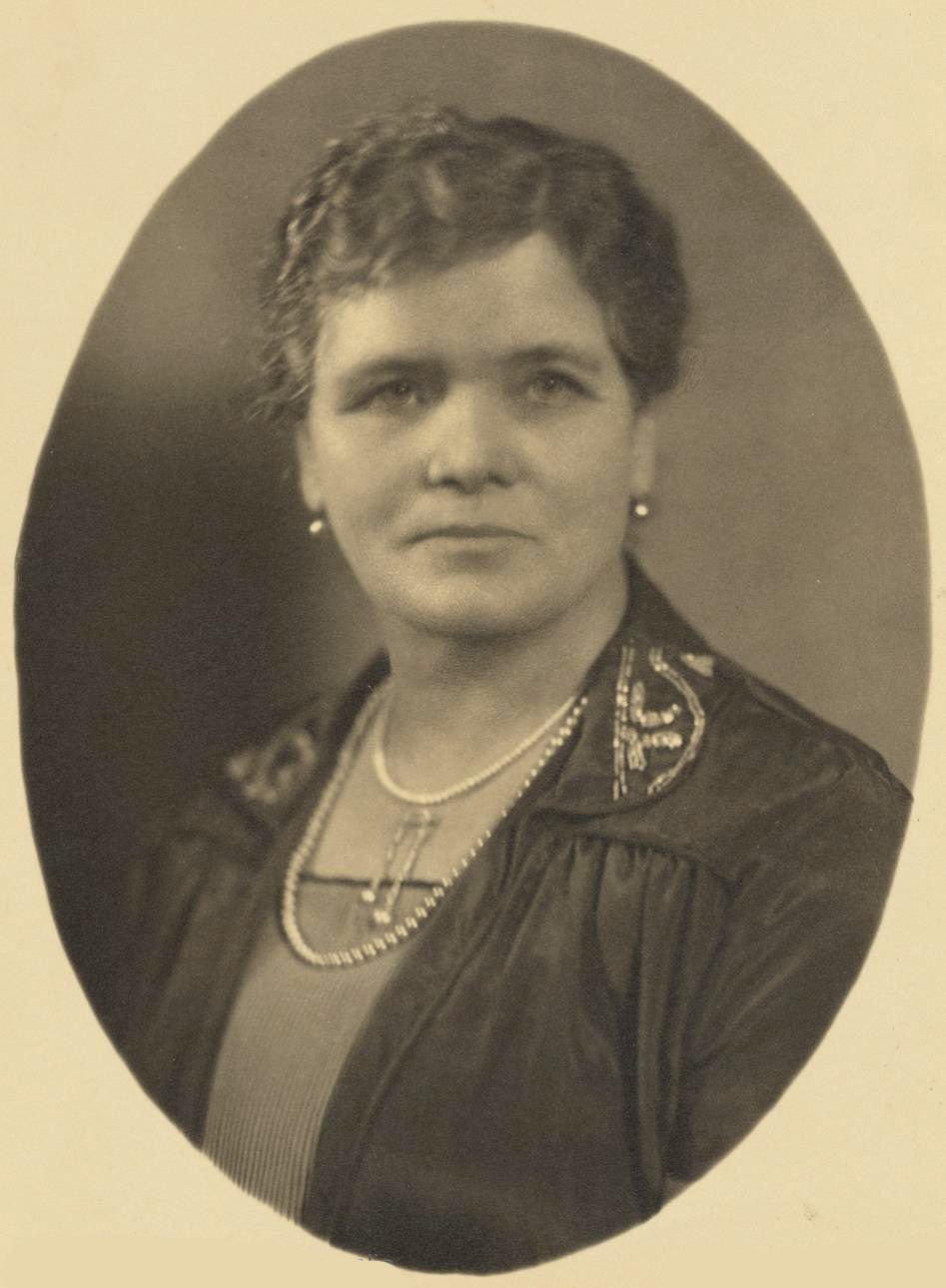
Lady Mary Cook, mid-1920s. National Archives of Australia M3606, 16
The photograph of Mary was taken between 1922 and 1927. Joe had left politics and accepted an appointment as Australia’s high commissioner in London. It was taken at Angus Faith’s studio in Hanover Square, and for the occasion Mary has had her hair waved (it was naturally straight) and has selected a silk blouse embellished with sequins, with her customary pearls. One necklace, which she also wore for the May Moore portrait, has two extra pearls suspended by what appear to be tiny strings of seed pearls. The viewer is drawn to Mary’s deep, thoughtful eyes (blue, according to her passport), but although she declines to meet our gaze, I feel comfortable with her.
The challenges Mary faced went further than providing a domestic haven for nine children and a busy husband. The defining feature of Joe’s political life was a complete shift in his principles and allegiances from Labor to conservative, from Free Trade to Protectionism, and from republicanism to ardent support for monarchy and Empire. Cook began public life as a trade unionist, and he was an obvious choice of local candidate in Lithgow when an infant Labor Party was being formed in New South Wales after the failed strikes of 1890. He became one of thirty-five new, inexperienced Labor men to take a seat in parliament in 1891.
Three years later Cook refused to commit to a pledge of caucus solidarity because, he said, he wanted to be free to represent the people in his electorate who had voted for him. In the election that year he stood as an “independent” Labor candidate and easily held his seat. Free Trader George Reid, needing Labor support to form government, offered Cook the post of postmaster-general on a salary of £1500 per year, and Cook accepted. This was what enabled the family to move to their fine new house and fill it with undreamed-of luxuries.
Cook’s political detractors were vicious in their condemnation of his apparent opportunism and surrender to self-interest, and from Labor there could never be any forgiveness: Cook was branded and is still remembered as a traitor, the original “Labor rat.” His most recent biographer, David Headon, notices that a significant absentee from Cook’s funeral in 1947 was the then-prime minister and undisputed hero of the labour movement, Ben Chifley. Never would Chifley’s “light on the hill” wrap its warmth around the reputation of Joe Cook.
How was Mary affected by her husband’s abandonment of all his early political beliefs and allegiances? Did she lose friends of her own? What was Joe like at home as he gradually became more irascible and virulent in his opinions? Did the children scatter to the back garden when he was in a temper?
None of Cook’s biographers — John Murdoch, Frank Crowley, Graham Bebbington, John Rickard, Zachary Gorman and David Headon — have bothered much with these questions. They nod respectfully to Mary by noting how, as a former teacher, she had greatly assisted her young, poorly educated husband by spending her evenings correcting his compound arithmetic and reading to him so he could practice his shorthand. But after that the biographers (Headon is an exception) have little further use for Mary.
John Murdoch does acknowledge that the linked decisions to marry Mary and emigrate to New South Wales “immeasurably enriched” Joe’s life. Mary created a home atmosphere of “rest and contentment,” he says, which was important to Joe who was often “tired” after prolonged work. She was a woman of “energy and resource” and the “ideal wife” for him throughout the sixty-two years of their marriage.
Murdoch will not allow that a mother of nine might also be “tired” and doesn’t pause to wonder if Joe was the “ideal” husband for Mary. And consider this: sixty-two years of marriage by itself signifies nothing in an era when divorce was difficult for everyone, and unthinkable for a man in Cook’s position. Some of those periods of “rest and contentment” no doubt resulted in the arrival of the nine children, but did Mary actually want to be nine times a mother? As with most women of her era, her choices were few. If there had been a divorce, what could she have done? Returned to teaching?
Interestingly, before Mary left Staffordshire in 1886 she obtained references from the education authority under which she had trained as a teacher, presumably to give her something to fall back on should she need it. One official noted that in her final year of training Mary had gained a pass rate of 96 per cent. None of Cook’s biographers have noticed this. Why would they? You don’t go looking if you haven’t asked the right questions.
This third photo shows Mary Cook in court dress. The photograph is dated 1926 but other evidence suggests it was taken for a court held at Buckingham Palace in the English summer of 1927. Joe’s appointment as High Commissioner is about to end. The Cooks have been living at 36 Queen’s Gate in Kensington, near the Royal Albert Hall, and mightily enjoying themselves by all accounts. Joe’s biographers have judged his performance in the diplomatic aspects of the role competent rather than distinguished, but he did work hard and successfully at promoting immigration and investment in Australia, and he and Mary relished the social side.
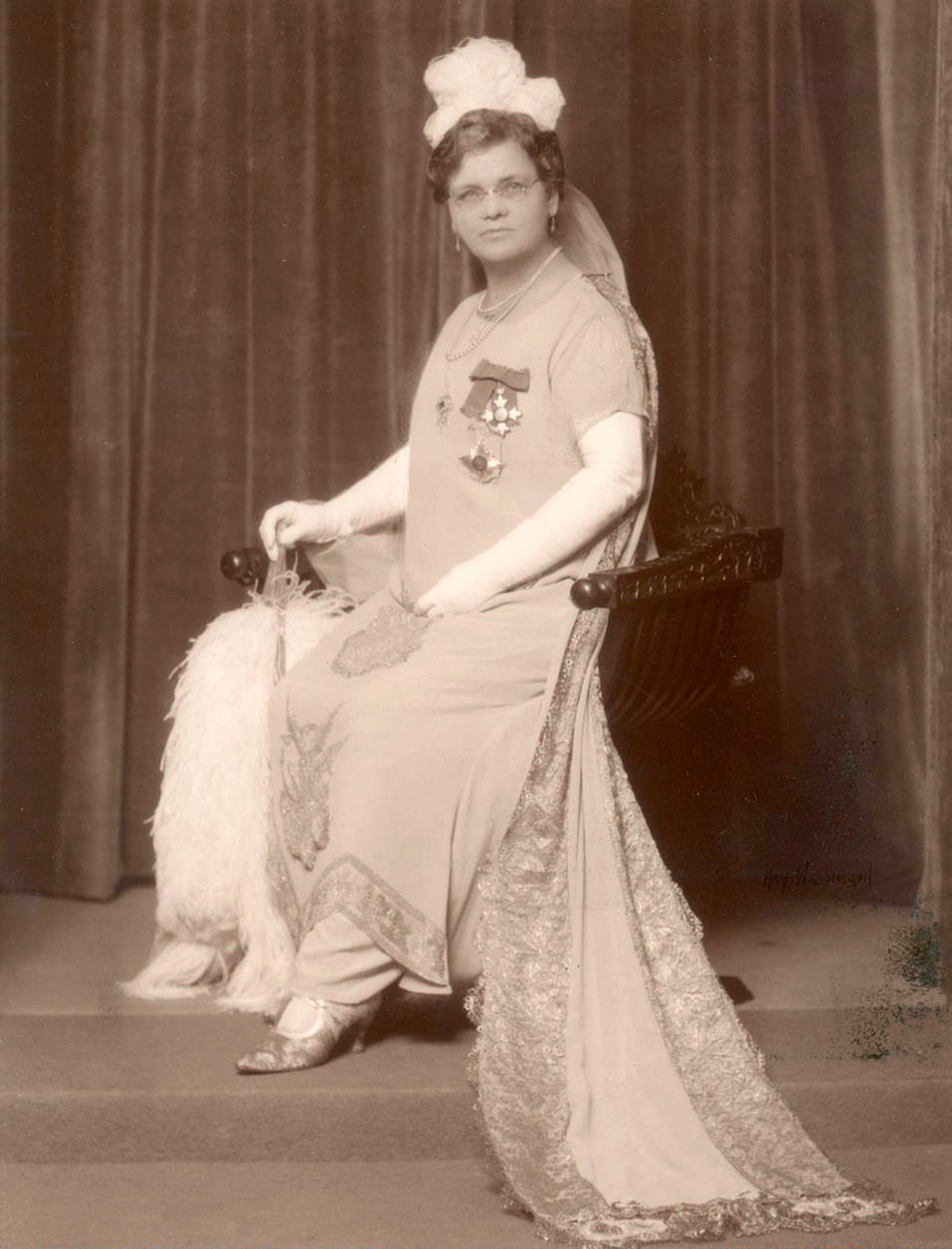
Dame Mary Cook, 1927. National Archives of Australia M3606, 16
Joe had developed a taste for high society during sixteen months he spent with prime minister Billy Hughes representing Australia at the Imperial War Conference in London in 1918, and in Paris for the peace conference in 1919. He was appointed Knight Grand Cross in the Order of St Michael and St George in 1918 and became Sir Joseph Cook. Mary and the family stayed home during that trip, but now, as Lady Mary Cook, she and various of their children went with him.
Joe’s new position meant hosting and attending numerous luncheons, receptions and dinners. He and Mary attended royal garden parties, launches of ships and planes, lunch with Mrs Winston Churchill, “At Homes” with Mrs Neville Chamberlain, Mrs Stanley Baldwin and the Archbishop of Canterbury, and society weddings, notably that of the Duke of York (the future King George VI) to the Lady Elizabeth Bowes-Lyon.
The absolute pinnacle of social prestige was an invitation (“command”) to attend court, where young, unmarried women from the upper crust would make their social debut by being “presented” to the monarch. Married women such as Mary could also be presented.
It was a highly ritualised event but fortunately for outsiders like Mary and Joe, the Lord Chamberlain’s Office issued a guidebook on court dress. Included were advertisements from specialist tailors and outfitters who could supply all the clobber one needed and advice on how to wear it. The 1921 edition instructed that for ladies, feathers, veils and trains had been abolished, but in Mary’s 1927 photograph she is certainly wearing “Court Dress with feathers and train,” as stipulated on her invitation card. The previous instruction has obviously been reversed.
Unmarried women had to wear white, and their headdress was to consist of two ostrich feathers only. Married women could wear colour, as Mary seems to have done, but their headdress had to be a “Prince of Wales” plume consisting of three feathers, the central feather being higher than the rest. The length of the dress’s train was also prescribed. Mary wears the decorations of a Dame Commander of the British Empire, an honour she’d been awarded the previous year. To celebrate their attendance at court women often had their photographs taken at one of London’s prestigious studios, and Mary chose Hay Wrightson in New Bond Street. Lafayette was another popular choice.
For me there are two striking features of this portrait. First, Mary again wears that favourite necklace with the suspended pearls that was obviously so meaningful for her, surely a gift from Joe from way back although not as far back as Staffordshire, I think. This was not a trinket bought at a country fair by a poor young man. (That I would like to see.)
Second, Mary wears glasses for her court photograph. How many women would do that? For an occasion as important as this most would surely leave their glasses in their handbag, and indeed I’ve studied many court photographs and in none of them are the women wearing glasses. One’s character and personality (and weaknesses) were not to be on show. It was all subsumed into the ritual.
And yet here is Mary Cook, just being herself, a real person. She attended at least two other courts during her London years and wore glasses in all her photographs. (Joe, on the other hand, needed glasses for reading but rarely wore them in public, and certainly not for photographs.) It’s possible that Mary was shortsighted and needed her glasses during the formal proceedings to help her manage her train and to perform the tricky act of walking backwards when required. (It was a terrible breach of etiquette to turn one’s back on the monarch.) The glasses also suggest that here was someone who had not forgotten that she had begun married life scrubbing her own floors and stirring the family’s washing in a copper with a stick.
Mary’s DBE recognised “her services in connection with visitors to London from the Commonwealth of Australia” and was not solely for her work with the Red Cross, as John Murdoch believed. (It was mistake repeated by Frank Crowley; Zachary Gorman doesn’t mention Mary’s DBE at all.) Dame Mary, as she was known thereafter, supported a variety of causes and was as active as Joe in promoting immigration to Australia (he and she being perfect exemplars, of course). Most of the biographers fall short of mentioning that Joe’s social prominence could not have been achieved without her.
Or indeed his career success in general. Joe was able enough and certainly hard working, but although he acted the part of a statesman, he lacked a statesman’s vision and capacity to inspire others. Perhaps it was Mary who had the greater talent and ambition? She who plotted and planned, dreamed of and schemed? Biographer Graham Bebbington concedes (where the other biographers do not) that she was a formidable person who did dominate her husband in some things. Shrewdly, Mary could have assessed the marriageable men in her community and thrown in her lot with Joe Cook because he offered the best prospects and seemed the most biddable.
Without Mary, Joe’s highest achievement might have been a job as an accountant to some firm in Stoke-on-Trent, and the closest he would get to Buckingham Palace a day trip to watch the changing of the guard.
Mary was unable to attend Joe’s funeral in 1947 because she was suffering from dementia. She died in September 1950 and her ashes placed next to Joe’s at the Northern Suburbs Crematorium in Sydney.
On balance, the evidence does suggest that Mary and Joe shared the same aspirations. My point is that, as so often happens, women’s compliance is assumed, not interrogated. If, for the sake of the exercise, we flip the power in the relationship from him to her, we notice niggling, ragged little ends: questions unasked, facts unchecked, assumptions untested, alternative perspectives unexplored.
In 1992 Diane Langmore published a study of ten Australian prime ministerial wives (ending with Hazel Hawke) and was struck by how little had typically been said about them. Her book is a fascinating and successful attempt at filling that gap. However, of the six pre-first world war wives — Jane (Jeanie) Barton, Pattie Deakin, Ada Watson, Florence Reid, Margaret Fisher and Mary Cook — Langmore selected only Pattie Deakin for her book.
The lives of the rest are largely unknown beyond glimpses in their husbands’ biographies. There has been little exploration of these six women as individuals, and no consideration of them as a cohort. No one has wondered how well acquainted they were with each other, and what advice and encouragement might have been shared among them, across political boundaries, as they attempted to fulfill a role they may never have sought or expected. Their support for their husbands constitutes an entirely unrecognised contribution to the making of the Australian Commonwealth. •