Did it all begin with the “carbon tax”: the Gillard government’s emissions trading scheme announced in 2011? It was more of a “tax” than Kevin Rudd’s 2009–10 carbon pollution reduction scheme only because its initial fixed-price period was three years instead of one. But the term sure stuck.
Until 2011, any mention of a “carbon tax” invariably meant a consumption tax on specific goods. John Howard swore off a “carbon tax” before he lost government in 2007 but promised an “emissions trading scheme,” as did Labor. Like “carbon pollution reduction scheme,” it sounded like a cure for insomnia. But shorten it and add the “t” word, and you’ve got a potentially powerful stress inducer. Ferociously attacked by Tony Abbott’s opposition, Gillard’s scheme was indeed widely loathed and feared — until it came into operation in mid-2012 and not much changed for most people.
In 2014 the Labor opposition attempted to return the favour by labelling the Abbott government’s proposed-but-never-legislated general practitioner co-payment a “GP tax.” It didn’t catch on. The trick to getting the media to adopt these terms is to make them shorter and snappier than the official name. Abbott’s 2010 “great big new tax on everything!” (Rudd’s CPRS) didn’t become media shorthand; and four years later, “GP co-payment” was already short enough.
Bill Shorten learnt to appreciate the power of tax slogans: most powerfully when his 2019 franking credits policy was labelled the “retiree tax.” (There was also his “death tax,” which was as fictional as Labor’s “the Turnbull government will privatise Medicare!” messaging in 2016.) The “retiree tax” phrasing was parroted not just by the usual suspects at News Corp and 2GB radio but also, with little apparent thought, by the ABC and other straight news outlets.
These short, sharp labels just “work” for the news practitioners, and then can be devastatingly effective because many, perhaps most, Australians really don’t understand the policy but retain the shorthand — especially when it contains the “t” word. What sort of party wants to levy a tax on people simply because they are old and no longer able to work!
So it’s no surprise the Coalition has rolled out a couple of “taxes” since the May budget. First the “death tax” was resurrected, but this time rooted somewhat in reality: the planned changes to trusts would indeed affect some inheritances. The government wisely dropped the idea last month, and while most commentators correctly noted the potential toxicity of the opposition’s framing, they missed another crucial element: the timing of the plan’s introduction.
The headline changes — to the capital gains tax and negative gearing — come into effect this time next year. But the ones affecting trusts begin on 1 July 2028 — that is, after the next federal election. So the government would effectively have been taking the “death tax” to the election.
Labor’s capital gains and negative gearing changes, by contrast, will be in operation by the time we vote and (at least on their current stated intentions) the Coalition (and perhaps One Nation) will be one under scrutiny for their promises to reverse them and to index income-tax thresholds. All of which would cost the budget a lot of money.
It’s one thing for an opposition to promise to kill a government proposal before it’s enacted; it’s another to promise to unscramble a policy already in operation.
The other, more recent post-budget label is the “widows tax!” — in reality, the plan to end the “grandfathering” of joint ownership of property in cases of death or divorce, which would deprive people who co-owned investment properties before 12 May this year of the right to continue negative gearing after 1 July 2027. A splendid bit of creative communication, “widow’s tax” rapidly did the rounds of the media.
The government backflipped pretty quickly on this one as well, either to avoid being seen as picking on widows or because they decided it was undesirable, or a bit of both. They’ve acknowledged quite a few errors and unintended consequences in their bill and hopefully will change some more.
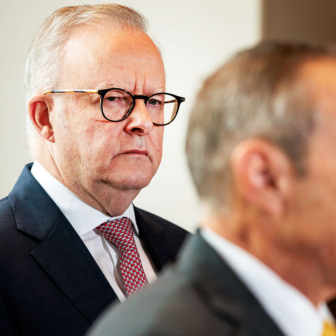
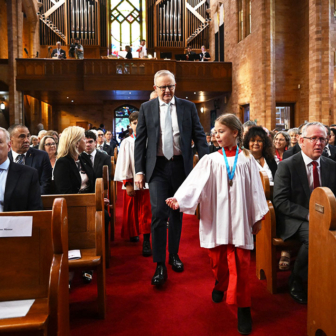
Reports suggest that Anthony Albanese believes the government’s vulnerability to fear and loathing will die down now the main budget bill has been passed (with more amending legislation to come later in the year). I don’t agree. The crucial date will be 1 July 2027, when the changes become reality and the sky doesn’t fall.
Still, there’s a remote chance of animal spirits raining on the parade. While experts say the capital gains and negative gearing changes, in themselves, should have only a modest impact on house prices, the reaction of would-be buyers so far has been to sit on their hands in case prices drop, which has naturally caused just that to happen. It’s a kind of “nothing to fear but fear itself” spiral the government must at least be a tiny bit worried about. A housing crash would be terrible in many ways, including for the government’s standing.
But the most substantial criticism of the budget measures, as opposed to point-scoring, goes to what they will mean for non-housing investments. Applying the capital gains changes to all investments does go against the government’s purported aim of making housing less attractive than other investments. The negative gearing changes at least do that.
What will all this mean when the next election is held in a little under two years? All our crystal balls are too foggy to anticipate the pleasures Australian politics will be inflicting on us (or perhaps voters will be inflicting on Australian politics). This time last year no one dreamed One Nation would be riding so high.
But one thing is close to certain: Angus Taylor won’t be Liberal leader. Andrew Hastie, whose policy preferences and even rhetoric very much resemble One Nation’s, would trigger a leap in the Coalition’s polled numbers, mostly the expense of the far-right party. But eventually, as the date with the ballot box approaches, his intentions could induce stress in the more progressive end of the Liberal Party, its (remaining) supporters and even the politically uninterested middle. Opposition leaders who set themselves up as “conviction politicians” tend to worry voters.
Still, if most of the electorate reviles an incumbent enough they’ll kick them out regardless.
Times are hard across the developed world, at least by past standards, with Australia among the lagging countries in per-capita performance.
The opposition parties will blame bad economic times on the 2026 budget — along with reliable old Labor economic incompetence — while trying not to explain how they will pay for their promises to undo it all and index income tax thresholds (if those promises are still Coalition policy). They’ll warn of the future, that deep down Labor still wants to levy a tax on death — and perhaps even “widows.”
But the government’s capital gains tax and negative gearing changes as big issues as the next election? Nah, they’ll be in place and part of the furniture. •