The great footballers are like artists. Out of the inchoate, they create beauty.
An opportunity lands at their feet in the shape of a ball. They guide it through space and time, avoiding obstacles with inexplicable grace. From their boot, the ball describes a magnificent arc to a teammate. Miraculously, the Beauty of the Second Touch is now enacted: the ball glides back to its original master. In seconds, a triangle has been formed that would delight Pythagoras. Then, with the precision of a Japanese sushi knife, the ball passes just out of the goalkeeper’s frantic reach and is welcomed by the net.
In the British director Asif Kapadia’s new documentary Kenny Dalglish, the eponymous hero, the great Celtic, Liverpool and Scotland player, is shown scoring goal after goal with this kind of preternatural skill. Each successful strike is followed by two unvarying rituals: Dalglish runs towards his adoring fans with his trademark sign of victory, both arms raised above his head; in the background, a crest fallen goalie looks on in abject bewilderment. Though literally made up on the run, every goal looks uncannily preordained.
If you love football — or just love seeing something done at its highest level of skill — these sequences would be worth the price of admission alone. (And I say that as someone who doesn’t even like soccer that much.) But if this were all that happened in Kenny Dalglish, it wouldn’t work as a film.
In Kapadia’s telling of the story, football is important, but it’s not at the heart of the film’s narrative. Kapadia clearly thinks Dalglish is a great man, and not just because he can kick a ball. When, in the latter half of the film, tragedy strikes, Kapadia has structured his film so Dalglish’s rising to the occasion looks as inevitable as one of his famous goals.
Kenny Dalglish was born in Glasgow in 1951. His family supported Rangers, the club of choice for Protestants in this famously sectarian city. That he went on to play for Celtic, the city’s Catholic club, and marry Marina Harkins, a local Catholic woman, tells you a lot about him. Dalglish and Marina have four children and are still married today.
Kapadia paints Dalglish as a supremely down-to-earth man; funny and cheerful; in touch with ordinary life despite his success. When he moved from Celtic to Liverpool for a huge transfer fee, he was asked by a journalist: “Do you think you’re worth all that money?’ Dalglish disarmingly replied: “I never paid it, I don’t know.”
Kapadia also wants you to understand Dalglish’s innate sense of loyalty: for his family, his team, and his community. For Dalglish, tribalism is not based on something as ephemeral as mere religion; it’s about who you’re related to, who you play for, and who you support.
Dalglish loved playing for Liverpool. After years of unparalleled success with the club as a player, in 1985 he became that rarest of football animals: the player-manager. Under his benign rule Liverpool continued on its winning ways. Then tragedy struck.
On 15 April 1989 Liverpool was playing Nottingham Forest at Hillsborough in Sheffield. Soon after the game began, overcrowding in one of the stands led to fatal crowd crush. In the end, ninety-seven people — all Liverpool fans — died of the injuries they received.
Merseyside went into mourning. In the days following the tragedy, Liverpool’s home ground, Anfield, became a shrine for the city’s grieving public. The pitch was covered with bouquets of flowers, Liverpool scarves, and other tributes. And then, completely without evidence, the Liverpool fans themselves were blamed by the police and parts of the media for inciting the disaster. Rupert Murdoch’s Sun newspaper ran a now notorious headline, “The Truth,” above an article full of lies. It alleged, for example, that Liverpool fans urinated on the police, that they picked the pockets of victims.
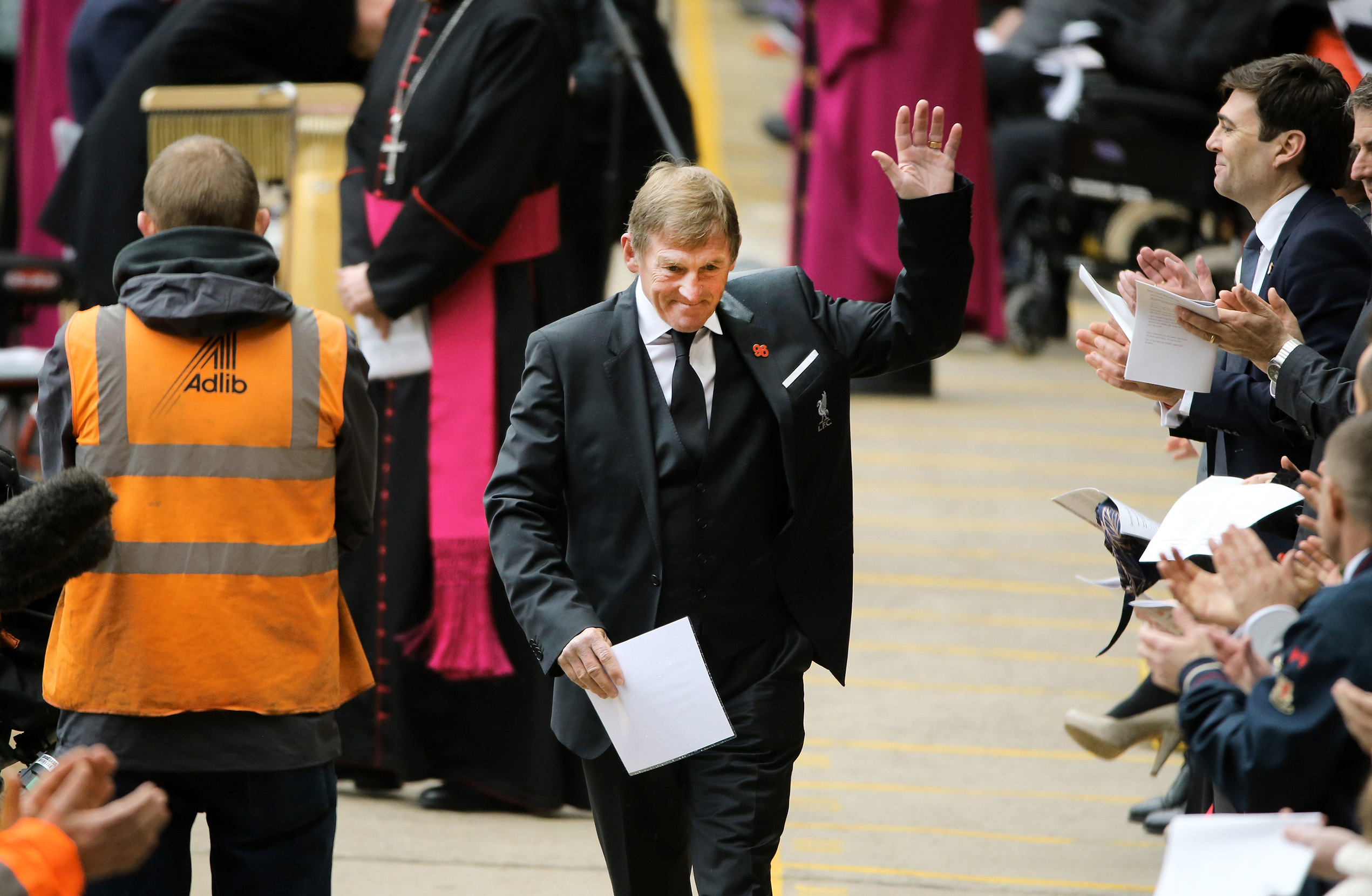
Dalglish immediately defended the Liverpool fans from this libel. When Kelvin Mackenzie, the rag’s powerful editor, rang him to make amends for the coverage, Dalglish suggested he run another headline: “We Lied.” Mackenzie refused, so Dalglish hung up on him.
The documentary reports that Dalglish attended every funeral of every killed fan, including four on one day. Many years later, and after many inquiries, the Liverpool supporters were completely exonerated. It is now accepted that the South Yorkshire Police were culpable for mishandling the situation.
Asif Kapadia is best known for documentaries that explore the notorious flameouts of famous and talented people. Senna (2010) is about the doomed Brazilian Formula One driver Ayrton Senna; Amy (2015), which won the Oscar for best documentary, is about the doomed singer-songwriter Amy Winehouse; and Diego Maradona tells the story of another footballer, but one whose genius on the pitch was never going to protect him from himself.
In Kenny Dalglish, he has found a new story to tell. It’s the story of a good man tested; a man who comes through for his community by never losing sight of the values he was brought up with. As a football fan, Kapadia wants you to appreciate Dalglish’s excess of playing skill, but primarily he wants you to recognise the man’s decency and humanity. By design, Kapadia has made Kenny Dalglish into a film about good leadership at a time when good leadership is often hard to find. •
Kenny Dalglish is available on the streaming service DocPlay and via Amazon Prime.