It might have got a little lost in the soaring emotions generated by the World Cup, but America has been celebrating the 250th anniversary of the signing of the Declaration of Independence this month. It has been a strained and strange time, with the focus on Donald Trump and his grievance-ridden bragging rather than the amazing, if damaged, experiment in democracy that is today’s United States.
To echo the Washington Post columnist David Ignatious, America is a nation both glowing and showing unmistakable signs of decline. “Our social cohesion has unravelled so much,” he writes, that “we often feel like two nations rather than one.” Trump and his administration presented one of those nations to the world using the commemoration as a vehicle for divisive propaganda and political gain.
The contrast with the celebrations for the bicentennial back in 1976 is stark. America was emerging from the traumas of the Vietnam war and Watergate; the economy, foreign policy and race were all cause for concern. Yet there was also a sense — as Gerald Ford said when he became president in August 1974 following Richard Nixon’s resignation — that America’s “long national nightmare is over” and the guardrails of democracy had held. People remember the feelings of patriotism and nostalgia those celebrations inspired.
Looming over this year’s celebrations are the midterm elections and the very real possibility of the Republicans losing the House and even the Senate. Either scenario would bring most of Trump’s autocratic and corrupt behaviour to an end — a fact that he and Republicans fully recognise.
House speaker Mike Johnson summed up their fears: “If we were to lose the midterms, heaven forbid, these Democrats, y’all, impeachment’s not even the big concern. They will turn every committee of Congress into an investigative body, and they’ll go after the president’s family, the cabinet, his donors and friends, half of you in this room will be targeted.”
But while Republicans facing voters in November are justifiably worried about their prospects, Trump seems to have little interest in helping them out, either on policy or electoral finances. Voters are most concerned about the cost of living, especially the impact of the Iran war on gas prices and the soaring costs of health insurance, healthcare and housing. Yet Trump has endlessly mocked mounting concerns about affordability, calling it a “hoax” perpetrated by Democrats, and has downplayed Republicans’ efforts to tackle cost-of-living pressures by refusing to sign a bipartisan housing bill.
“I don’t think about Americans’ financial situation,” he said in May. “I don’t think about anybody.” He was referring to the attention he was giving to negotiating an end to the unpopular war with Iran (still pending) but the remark went down like a lead balloon.
At the same time, with campaigning starting in earnest, Trump is sitting on some US$350 million in campaign funds lodged in his MAGA Inc. super PAC. Perhaps to hold close the funds he personally controls, perhaps to boost his standing in the polls, he has proposed a midterm election convention — a “Trumpapalooza” — to be held in September in Texas (a red state where, unusually, a key Senate race is virtually a dead heat). The Republican National Committee has proposed that state parties use the convention to raise funds for their local candidates.
Trump’s playbook for the midterms encompasses two broad approaches. The first involves undermining the upcoming elections and overturning voting rights. These include having Republican states gerrymander electoral boundaries at the expense of Democrats; illegally attempting to charge the US Postal Service with determining who can vote by mail and refusing to deliver ballots sent by anyone not included on federal mail voter lists; and demanding via the Department of Justice that states turn over sensitive voter information.
Trump is increasingly obsessed with having the SAVE America Act passed. This bill requires citizenship proof to vote, strict ID requirements for in-person and mail voting, and complete voter rolls to be submitted to the Trump administration by the states. He thinks this would eliminate noncitizen and fraudulent voting (extreme rarities); it would certainly make it harder for many disadvantaged Americans to vote.
The SAVE America Act doesn’t have the needed sixty votes in the Senate to overcome a filibuster, and Republican leaders are reluctant to get rid of the filibuster to pass the bill, as Trump has suggested. In a speech given at Mt Rushmore as part of the 4 July celebrations, he stated bluntly why he thinks this is so important: “If we terminate the filibuster as we should do and immediately vote for the SAVE America Act, then we will not lose an election for a hundred years.”
Trump’s second strategy for the midterms is a resort to the hoariest of right-wing tropes, with accusations that Democrats and immigrants are communists. This was a recurrent theme in his 4 July speeches — indeed, Reuters reports he warned about communism eighty-one times in the two weeks between 23 June (when a string of left-wing Democratic candidates won primary contests in New York) and 8 July.
“There is now a resurgence of the communist menace in our land,” he said at Mt Rushmore, “including from newcomers to our country who embrace ideas totally opposed to our way of life and our great success. You can be a communist, or you can be a patriot. You cannot be both.” Elsewhere, he described the Democratic Socialists, who have been surprisingly successful in recent primaries, as “animals.” He went on: “We have to stop this… horrible threat of cancer that’s permeating our country called communism.”
Here, Trump is attempting to revive the “red baiting” of the McCarthy era, which he learned about from his mentor, the sinister lawyer Roy Cohn. Trump sees the communist threat as an easy sell. “All we have to do is define our opponent as being a communist or a socialist or somebody who is going to destroy our country,” he said last week.
For Democrats, the upcoming midterm elections are about just one goal — taking back the legislative branch of government. To do this they will need to convince voters, Democrats and Independents alike, that they can deliver on the issues that matter. Part of this involves dealing with young voters’ concern that the current, ageing generation of lawmakers is unable or unwilling to mount strong and consistent opposition to Trump.
Many younger and swing voters are looking for what can be called progressive populism — Medicare for All, taxing the rich, help with educational fees and childcare, and more social housing. So it’s not surprising that candidates who identify as Democratic Socialists have been successful in recent primaries. This success can be read as a rebuke to elected officials and a shift by Democratic voters to the left, but there is also clear evidence that a range of Democratic voices are choosing the candidates most likely to win in their districts.
It’s important to note that Democratic Socialist candidates — often with endorsements from elected officials including Bernie Sanders, Alexandria Ocasio-Cortez and Zohran Mamdani — have only succeeded (at least to date) in solidly Democratic-leaning cities where their progressive policies (and, in most cases, their strong criticisms of Israel) are more popular.
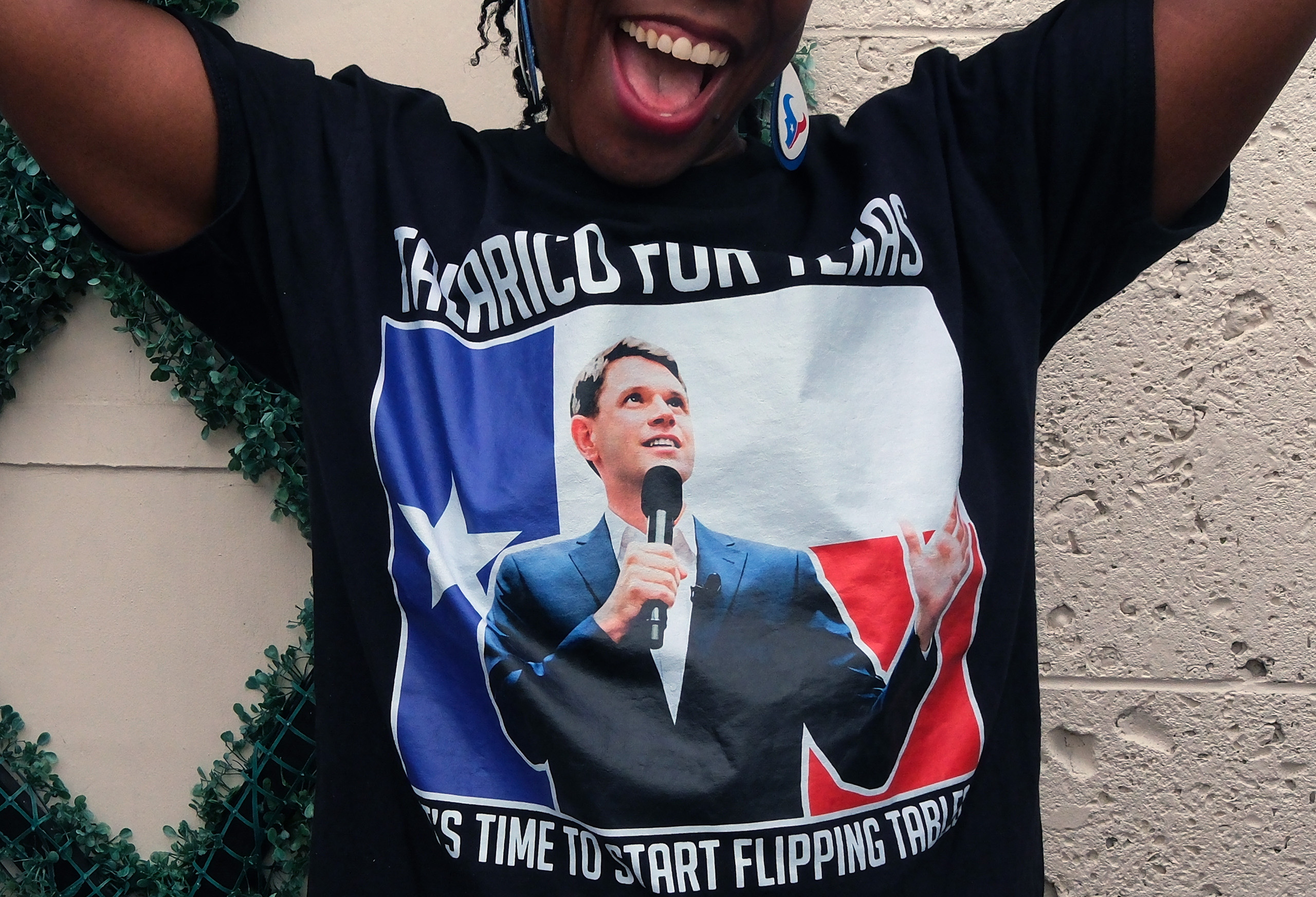
In Texas, James Talarico, the Democratic nominee for the Senate seat currently held by John Cornyn (who lost the Republican primary to Trump’s candidate Ken Paxton), is one of those new voices. Probably best described as a liberal Democrat, Talarico is a thirty-six-year-old state legislator appealing to Texans looking for an alternative to the corrupt status quo most obviously demonstrated by Paxton, who was impeached by the Republican-controlled Texas House in 2023.
Talarico’s campaigning is an interesting blend of religion and progressive Democratic politics and optimism. His campaign messages appeal because they are so unlikely in this partisan era. He is against greedy billionaires who want to divide people, and for the power of love; he has shown a willingness to embrace political difference and invites the support of independents and Republicans who once supported Cornyn. His appeal has translated into fundraising far outpacing Paxton’s and polls that suggest the race is too close to call. Worried Republicans have resorted to vicious personal attacks.
The mood of Democratic voters is exemplified in the results of the Colorado primaries, held late last month. A surge of primary voters, angry at a do-nothing Congress, picked candidates without ties to Washington. House member Diana DeGette, a thirty-year incumbent also best described as a liberal Democrat, lost her primary to a youthful and somewhat controversial Democratic Socialist, Melat Kiros, who ran a savvy social media campaign arguing that DeGette was part of the party’s out-of-touch establishment.
In the race to succeed Democrat Jared Polis as governor, Colorado attorney-general Phil Weiser decisively won against senator Michael Bennet. Weiser argued that the sixty-nine lawsuits he has filed or joined against the Trump administration makes him better equipped to protect the state and its communities than Bennet, who is well-liked but whose eighteen years in Congress didn’t persuade voters he is the governor they want.
Given the list of Trump’s egregious actions against the state, it’s easy to see why Weiser’s argument appealed to voters. Trump has shifted the US Space Command headquarters out of the state, is trying to shut down Colorado’s globally recognised climate research centre and vetoed a water pipeline for drought-stricken farmers. Now he is requiring states to change the way they conduct elections or risk losing tens of millions of federal terrorism-prevention funds. Colorado has had mail-in and email voting for more than a decade and so Trump’s efforts to have the US Postal Service implement voting restrictions is being strongly resisted.
Trump is deeply unpopular in the state and residents are telling candidates they are tired of combative, partisan, us-versus-them political battles that are not solving their problems. Once a Republican state, Colorado’s rapidly growing population has become younger and highly educated. Political analysts largely attribute the collapse of the Republican party there to the rise of MAGA, which has created fertile ground for Democratic Socialists. Four of the ten Coloradans serving in the US House of Representatives are Republicans; of these, only Jeff Hurd (District 3) and Lauren Boebert (District 4) are expected — without Trump’s support — to retain their seats. Jeff Crank is slightly favoured in District 5 and Gabe Evans’s race in District 8 is considered a toss-up.
But the midterm elections are still four months away. With fighting continuing between Ukraine and Russia, an unresolved war in the Middle East, petrol prices, food prices and employment fluctuating, and Trump’s increasingly erratic language and vindictive decision-making, it’s impossible to predict how the American electorate will feel on 3 November. And, as the implosion of Graham Platner’s campaign in Maine demonstrates, it impossible to predict how candidates from both parties, especially those who are untested politically, will appear to those they seek to represent.
In a nation where getting out the vote is essential, having candidates with voter appeal will be vital. In a nation where the president has threatened the upcoming elections multiple times by multiple means, it is essential that state election officials and voters take coordinated action to defend democratic processes. And in a nation where trust in the federal government is at an all-time low, it is imperative that capable, ethical, and community-driven individuals to step forward and are voted into political service. •