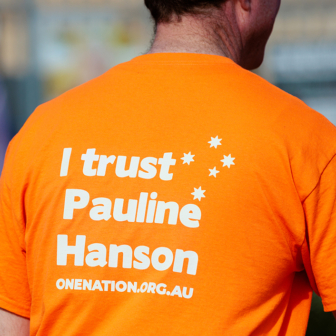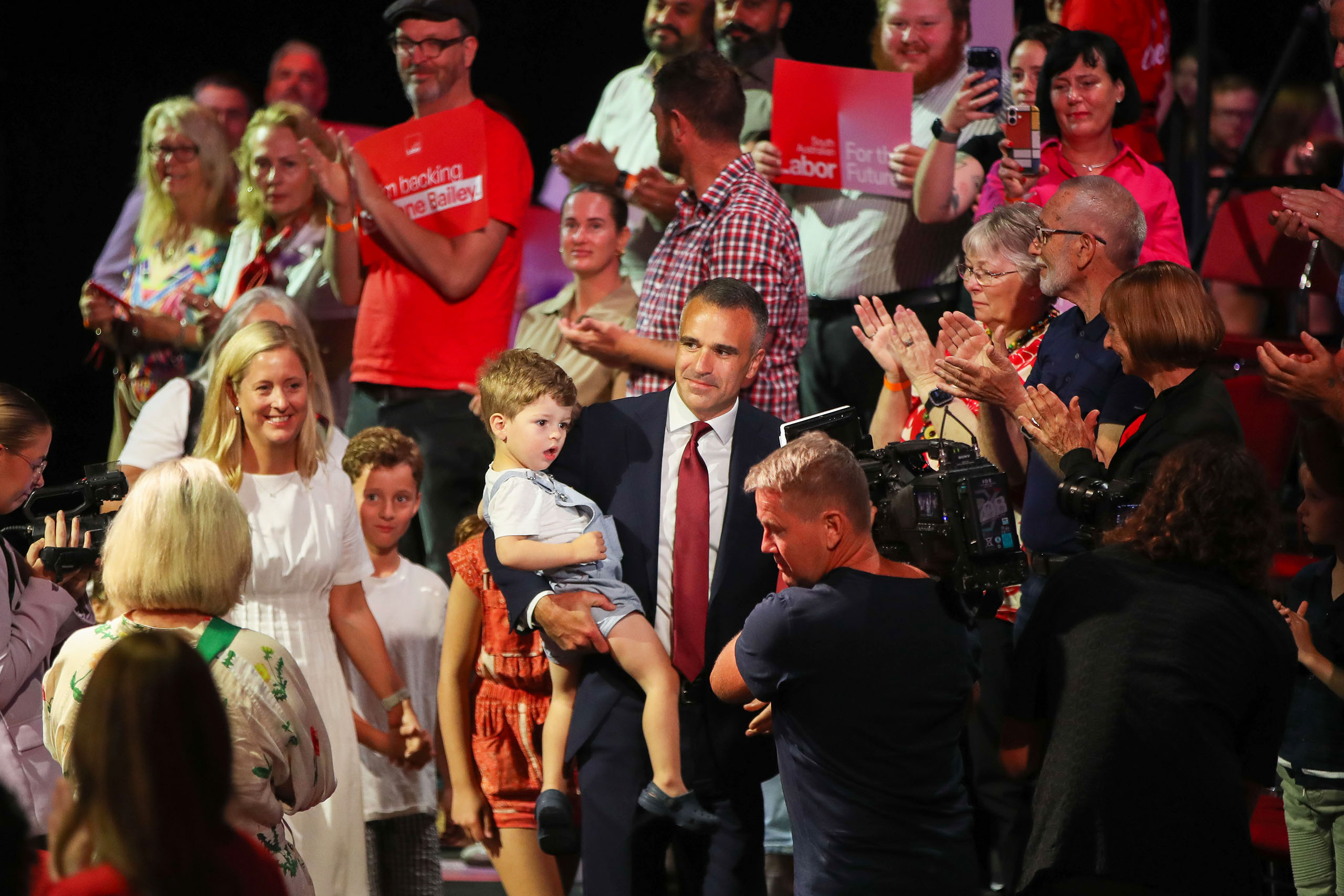
Opening his account of the latest Resolve Political Monitor (conducted 9–14 March), Age and Sydney Morning Herald chief political correspondent James Massola informed readers that “A rampant One Nation has begun taking support from the Albanese government.” A separate analysis opened in similar vein: “This is not a blip,” he wrote. “One Nation’s rise is real, and it is now stealing voters from Labor.”
The Resolve poll reported a three-point drop in support for Labor since February. But it didn’t show that One Nation had benefited. The Greens were up by one, independents by one, One Nation by one, and the Coalition down by one. One Nation’s gain might just as well have been at the Coalition’s expense. (Tracking the change is difficult: the figures in this poll added to 100; those in February added to 101.)
Even if One Nation was “stealing” votes from Labor, that wasn’t news. True, there was no evidence of Labor losing support to One Nation back in September, when Resolve’s polling showed support for One Nation reaching “double figures for the first time,” as Massola wrote. Support for One Nation had risen by five percentage points since the May election but Labor’s share hadn’t moved. Nor was there any evidence of it in October, when support for One Nation was a little higher; or in November, when the party’s support had risen by more than ten points since May but support for Labor still hadn’t moved.
From mid-December, however, there is evidence of Labor voters shifting to One Nation. Perhaps not between Barnaby Joyce’s defection to One Nation (8 December) and the Bondi Beach massacre (14 December), when Morgan was the only poll to show a slide in Labor’s support. But after the massacre, when the nine polls conducted between 17 December and 21 January (before the Coalition fell apart) showed a three-point shift, on average, away from Labor and a three-point gain by One Nation.
Whether that shift among Labor voters reflected concerns about Labor’s security measures, or Labor’s response to the massacre, or broader sentiments about Muslims or immigration triggered by the massacre — or even a combination of factors, including the impact of Joyce — we cannot tell. But during those weeks support for the Coalition, the Greens, or those lumped together by the pollsters as “others” barely moved.
The shift of Labor voters to One Nation showed up not just in the polls overall; it also showed up in Resolve’s own polling, which reported support for Labor dropping from 35 per cent (2–7 December) to 32 per cent (17–20 December) and then 30 per cent (12–16 January). One Nation’s support rose from 14 to 18 per cent. Labor lost five points and the Greens one, with One Nation gaining four and the Coalition two. It was back then that One Nation started “stealing votes from Labor.”
This swing from left (Labor) to right (One Nation) was exceptional. For the most part, One Nation’s gains have come not from the left but from the right — the Coalition — and “others.” The shifts have been within the combined right plus “others” rather than from left to right.
Between the 2025 election and the end of February (the start of the war on Iran), polled support for One Nation increased by eighteen percentage points. Over the same period, support for the Coalition fell by 9.5, support for “others” fell by 4.3, and support for Labor fell by 3.8. Support for Labor and the Greens, combined, fell by four points.
If we assume support lost by the Coalition and “others” shifted to One Nation, this would account for about 80 per cent of One Nation’s gains; shifts from Labor would then account for the other 20 per cent. While the shifts are unlikely to have been as clearcut as this — some of the Coalition’s support would have shifted to Labor, no doubt, and some of Labor’s support to the Coalition — a four-to-one ratio of non-Labor to Labor voters moving to One Nation may not be far off the mark.
Since the election, support for Labor has moved down as well as up; likewise, for the Coalition. Compared to its performance in 2025, One Nation has benefited least from Labor when the Coalition’s vote has gone down and Labor’s vote has gone up: after the Coalition split, One Nation appeared to have gained six votes from non-Labor for every vote it had gained from Labor since the election. When Labor’s support has dropped, the ratio has narrowed: after the Bondi massacre, One Nation looked to have gained about two votes from the non-Labor side for every vote it had gained from Labor, and since the war on Iran the ratio has looked very similar.
While some of Labor’s first-preferences have shifted to One Nation, at no stage has this had more than a marginal effect on its share of the two-party-preferred. Given a choice between Labor and the Coalition, Labor has maintained a lead somewhere between 54–46 and 55–45, its winning margin in May. Labor voters who have shifted to One Nation appear not to have thrown in their lot with the opposition.
Whether we have witnessed anything quite like this before — certainly on this scale — is doubtful. After Labor’s split in the mid-1950s, the voters lost to the newly formed Democratic Labor Party mostly directed their preferences to the Coalition. This helped keep Labor out of power. The One Nation phenomenon looks quite different: Coalition voters who have shifted to One Nation prefer the Coalition to Labor; but voters who have shifted from Labor to One Nation continue to prefer Labor over the Coalition. If this remains the case, those preferences will help keep Labor in power.
By mid-March, the view that One Nation’s support was not “a blip” was widely accepted. That One Nation had been “stealing” Labor votes, not just those from the Coalition, was equally well established. Whether the rise was “real” was no longer a question of whether the rise in One Nation’s polled support was a flash in the pan — a consequence, some had thought privately, of the sort of sampling problems that might arise around Christmas and the New Year.
Rather, it was a question of whether One Nation would do as well as the polls suggested at the state election in South Australia, at the by-election in Farrer, at the state elections in Victoria and New South Wales, and ultimately at the next federal election — and of how its flow of preferences would affect the results. •