“There is nothing more difficult to take in hand, more perilous to conduct, or more uncertain in its success, than to take the lead in the introduction of a new order of things. Because the innovator has for enemies all those who have done well under the old conditions, and lukewarm defenders in those who may do well under the new.”
Gough Whitlam quoted that passage from chapter six of Machiavelli’s famed but mostly misunderstood treatise on statecraft, The Prince, at the beginning of his sprawling 1985 account of his epic reformist government of 1972–75. As Anthony Albanese and his colleagues weather a headwind of cacophonous voices decrying the budget’s proposed tax changes, spearheaded by the Murdoch press, the timeless relevance of Machiavelli’s observation is reaffirmed.
Treasury data shows how radically disproportionately the capital gains tax discount, negative gearing and trust arrangements have benefited the top 1 per cent of income earners compared to the median income earner since 2000: about 123 times more. Perhaps nothing better explains the force of the campaign to thwart the government’s objective to claw back this scandalous gift to the wealthiest.
Ever since Albanese won the prime ministership a drumbeat has sounded: “What do we want? Reform. When do we want it? Now!” Yet when Labor does reach for the higher-hanging reform fruit and its opponents ferociously bare their ideological teeth, at least some of those who had been advocates of change have responded fickly or tepidly to the budget measures.
While Labor’s tax plan monopolises attention, another frontier of change conscientiously advanced under Albanese’s leadership risks being overlooked. With ramifications that may prove highly significant, it shows there is more than one way to bring about a new order of things.
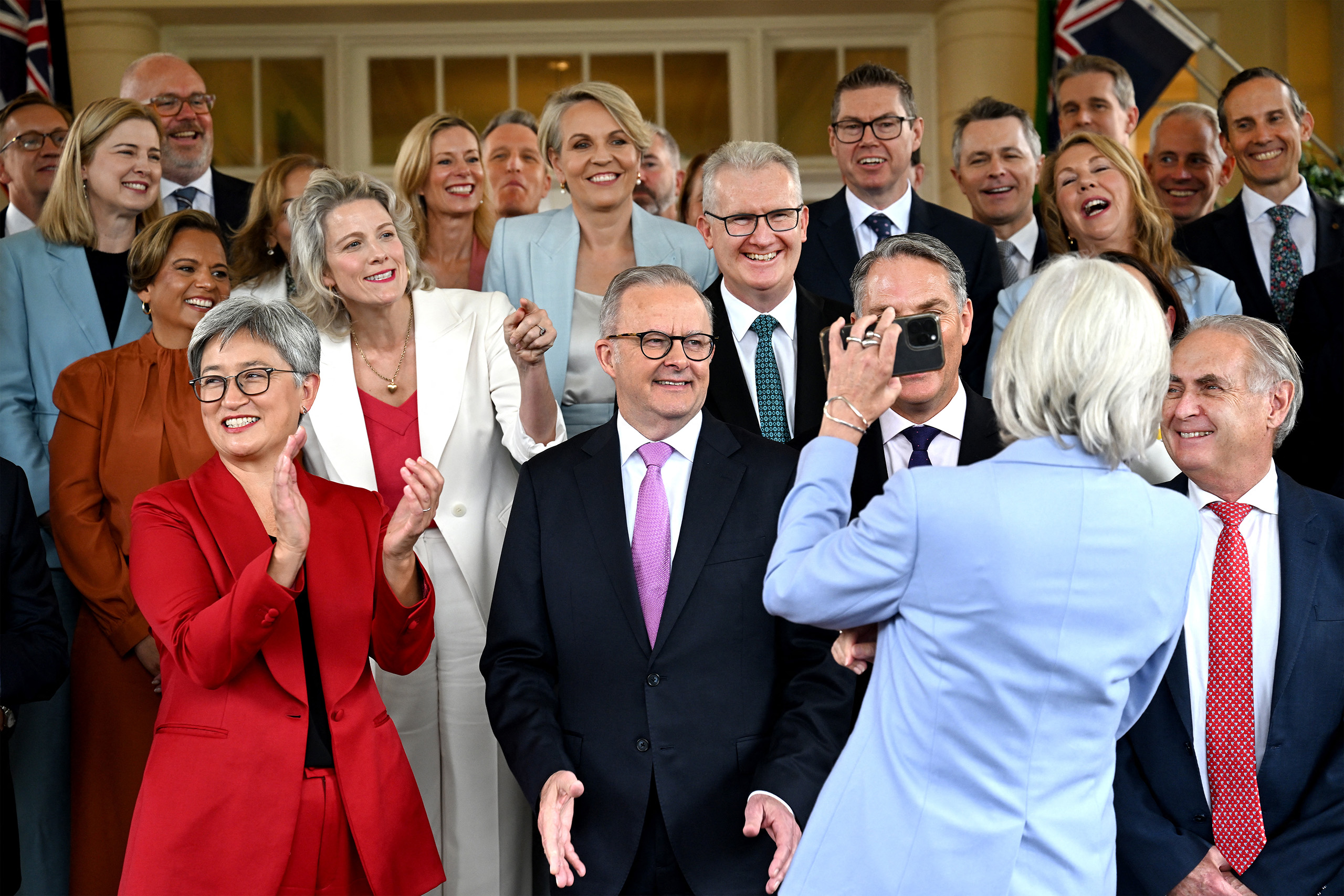
This is the Labor government’s deliberate and concerted strategy of appointing women to leadership positions in the public service and other key institutions and agencies. The championing of women under Albanese was something I first wrote about in the days after Labor’s resounding May 2025 election win — a result that underlined the trend of women’s votes skewing to the left-of-centre that had been evident since at least 2010, when the support of women effectively saved Julia Gillard’s prime ministership.
Suggesting that the “feminisation of Labor” was one reason for the Albanese government’s handsome return to office, I pointed to not just the record number of women in cabinet and caucus but also how the government was prioritising the interests of women in key policy areas: by moving towards universal childcare support, extending paid parental leave and supporting wage increases in care industries dominated by women workers.
I am conscious of the risks of characterising childcare as an issue of primary concern to women. But the reality is that mothers continue to shoulder the lion’s share of the responsibility for rearing the young and expanded childcare provision thus chiefly enhances their choice.
I also alluded to the operating style of the Albanese government, suggesting that its premium on collaboration and internal solidarity was consistent with a “feminalist” approach. A recent article by the Saturday Paper’s chief political correspondent Karen Barlow about how the prime minister manages the government’s record-sized caucus was striking in that context. The tight discipline of Labor’s party room can be attributed to several things. On the less flattering side, it is consistent with a longer-term marginalisation of caucus and centralisation of authority in the hands of the prime minister and senior ministers. On the positive side, it reflects a lesson learnt: a determination not to repeat the destructive and indulgent disunity of the Rudd–Gillard years.
In Barlow’s piece, an unnamed Labor MP — the absurd braggadocio of the quote all but gives away that it is a male speaking — ascribes the Albanese government’s internal discipline to the dictatorial control exercised by the Prime Minister’s Office. “PMO is like North Korea, right? They’re like Pyongyang.” No one can doubt that Albanese’s PMO, like the offices of all prime ministers at least since John Howard’s time, maintains strict oversight of the government. But Pyongyang, really?
More instructive was a reflection by an unidentified female Labor MP who contended that the government’s solidarity could also be explained by a caucus that comprises 56 per cent women: “There’s a lot of women and there is a much greater sense of working in a collaborative way… outcomes-focused, not ego-driven.”
Julia Gillard’s leadership illustrates the point. Unlike many of her male predecessors and successors, Gillard did not preen or chest-beat as prime minister. Her method was to put her head down and concentrate on managing her team and the nitty-gritty of the government’s legislative program. She let her deeds speak for her without much in the way of fanfare or flamboyance. A behaviour characteristic of women, Gillard’s disdain for the performative side of the job was ironically debilitating for her prime ministership.
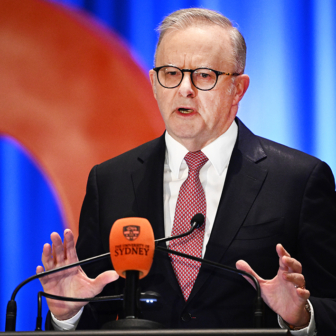
The Albanese government’s feminine bearing is also undoubtedly a reflection of its prime minister. As with all holders of the office, Albanese, the son of a single mother, exhibits a belief system and leadership style powerfully stamped by his early life. His was an upbringing in which women — his adored and adoring mother and to lesser extent his grandmother — were the dominant adult influences. This has manifest in what the political psychologist Graham Little categorised as a “group” leadership style: one orientated towards collaboration and cooperation. It is also revealed in the prime minister daring to speak of kindness and compassion as positive leadership traits — at a time when the norm worldwide is uber-aggressive — and by his frequent displays of emotion. Only a little over a week ago, at the Victorian state Labor conference, he barely suppressed tears while defending his government’s budget measures.
Let’s not be doe-eyed about Albanese. He is also the product of the bare-knuckled school of NSW Labor politics. While there is ample testimony to his close and nurturing relationships with female Labor colleagues — Penny Wong and Katy Gallagher in the current government, Linda Burney and Jenny Macklin in the past — his never fully explained lack of generosity towards his neighbouring inner-Sydney Labor MP and one-time potential leadership rival, Tanya Plibersek, has been less becoming. And on occasions his empathy has gone conspicuously missing. His gratuitously callous declaration earlier this year that he had “nothing but contempt” for the “ISIS brides” is an example.
Even so, the advancement of women on Albanese’s watch is unmistakeable. Another dimension of that agenda, perhaps at least equally significant, is the appointment of women to posts that have previously been exclusively male domains. This trend began in the government’s first term with, among things, the appointment of Michelle Bullock as governor of the Reserve Bank and Danielle Wood as chair of the Productivity Commission, followed by Albanese’s handpicking of Sam Mostyn as governor-general.
Australia’s twenty-eighth governor-general, Mostyn is the second woman to occupy the office — the first having been Quentin Bryce, who filled the post between 2008 and 2014. When she was invited by Albanese to become governor-general, a surprised Mostyn asked him, “Why me?” to which he responded: “I want to modernise the office.” That modernising process, as the Australian’s Troy Bramston revealed in his record of an interview with Mostyn in January this year, is based on the guiding principles of “care, kindness and respect.” It suggests a close alignment of (feminine-style) values between prime minister and governor-general.
The announcement of Mostyn’s appointment provoked a sour response from the Australian’s Janet Albrechtsen. Under the headline “Cushy Job for the Wokest of Women,” Albrechtsen bemoaned the “utter predictability” of Albanese’s selection and sneered that if Mostyn’s “chromosomes were XY she wouldn’t have been considered for the role.” That seems a peculiar complaint given the XY chromosomal profile has been a foremost consideration in the choice of the vast majority of governors general since 1901.
Still more bizarre was Albrechtsen’s assertion that Mostyn’s appointment was symptomatic of a “new group of oppressors putting the squeeze on a new group of oppressed.” Presumably men made up that rising class of downtrodden.
The Albanese government’s strategy of placing women in high offices has proceeded apace in its second term, many of them pioneering gender appointments. Among the key examples are:
• Jenny Wilkinson as secretary of treasury
• Sarah Court as chair of the Australian Securities and Investments Commission
• Meghan Quinn as secretary of defence
• Krissy Barrett as commissioner of the Australian Federal Police
• Susan Coyle as chief of army.
Announcing Court’s appointment in February 2026, treasurer Jim Chalmers observed that the Albanese government had “ushered in a wave of female leadership across Australia’s top economic institutions”: the Reserve Bank, the Productivity Commission, Treasury and now ASIC.
The storming of the upper echelons of the public service by women — who now head eight of the sixteen Commonwealth departments — and their appointment to other institutions and agencies partly reflects a longer-term evolution. But the Albanese government’s role has been to accelerate that trend purposely and assiduously.
Does this campaign to promote women matter? We ought, of course, be careful about surrendering to essentialist assumptions about the kind of leadership women provide and the cultures they nurture around them. Each woman will steer in her own distinctive way — and not all will lead well. Nevertheless, research indicates that women, generally speaking, tend to be collaborative, team-orientated leaders who privilege “soft” values. Measuring the impact on the fabric of the nation of the rush of appointments of females to senior positions will be difficult, if not impossible. Its effects will take time to mature and mainly materialise osmosis-like.
Make no mistake, though. We are witnessing a quiet revolution. It suggests there is more than one way to skin the cat of societal change. •