Rarely does an epigraph accomplish its function so neatly as the one William Easterly has chosen to begin Violent Saviours, his audacious history of the West’s “we know best” attitude to the rest of the world, and its frequently catastrophic consequences for the people who live there.
The quote is from William Graham Sumner, an economist and contrarian who opposed the American takeover of the Philippines at the turn of the last century. Sumner summed up the prevailing attitude of the American colonisers thus: “We know what is good for you better than you do yourself and we are going to make you do it.” Easterly’s contention is that such an attitude — haughty, high-handed, intolerant and with a distinct intimation of menace — has been all-prevalent over the past five hundred years.
Easterly is a former World Bank economist turned academic gadfly. He has been writing piquantly and unsparingly for decades about the arrogances, futilities and often-thin development outcomes rendered by foreign aid. He has long argued that aid is too top-down, managerialist and untethered from history.
A frequent cadence in his writing — and the focus of his previous book, The Tyranny of Experts — is that aid is too indifferent to the perspectives of people within the countries where it is delivered. The perspectives of experts in airconditioned rooms are preferred to those of the ostensible beneficiaries of assistance. As you can imagine, Easterly’s work is divisive. His admirers cheer his enunciation of inconvenient truths while his detractors accuse him of cherry-picking examples to boost his case.
Violent Saviours, a broader and deeper extension of these arguments, will probably divide his readers along similar lines. His case is that today’s prevailing attitudes aren’t new but, in many ways, are milder and less bloodthirsty strains of the intellectual ballast for centuries of conquest, colonialism and slavery. His is a disquieting story with many villains and far fewer heroes.
Easterly begins his tour du monde near present-day Boston with a chapter about the justifications used by John Winthrop, the first governor of the Massachusetts Bay Colony, to take over land effectively owned by the Indian tribes of the area. Winthrop was one of the early Puritan settlers and the man who coined the phrase “city on a hill.” A lawyer, he realised that he needed to develop an official rationale for doing what he was planning to do.
The argument Winthrop settled on was as self-important as it was self-serving. He and his fellow Puritans had a right to the land because they had the know-how to improve it. This was his contention and his contention alone; as Easterly explains, none of the Indian tribes of what we now think of as New England was consulted. Nor did things end well for the putative recipients of Winthrop’s “beneficence.” Tribes that resisted the colony’s expansion were brutally put down and their members banished to slave plantations in the Caribbean, where they were subjected to similar rationalisations about positive economic ends justifying the means.
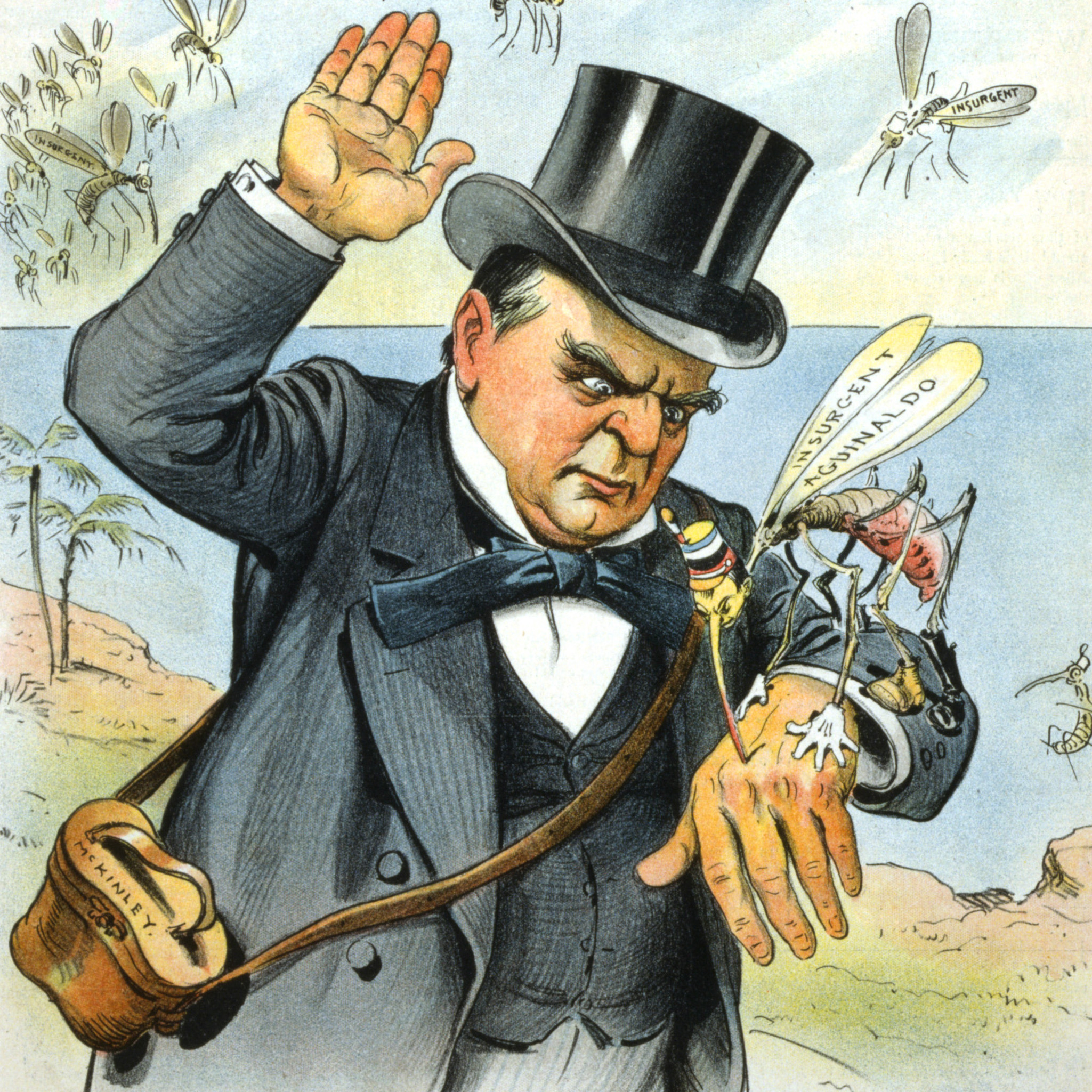
Easterly calls the wordplay of Winthrop et al “the Development Right of Conquest.” By this he means the “for the greater good” rationale used by people or companies that regarded themselves as enlightened to justify their rule over lands or control of other peoples. As a line of thinking it was seductive. It was used to justify slavery, create colonies across the world and turf native peoples off their lands. It served as the ideological basis for the atrocities that punctuated the early years of the United States’ “civilising mission” in the Philippines so scathingly critiqued by Sumner.
Even ostensibly charitable benevolence generated ghastly outcomes, as Easterly shows in chapters about efforts by American and British leaders to set up homelands for returned slaves in Liberia and Sierra Leone respectively. Neither the slaves nor the people indigenous to those lands were consulted. So awful were both places that many freed slaves in America and Britain wanted to stay put rather than take a free ticket to these malarial corners of Africa.
As the twentieth century progressed, some of the world’s most notorious leaders took the West’s self-serving argument and tauntingly served it back against them with interest. Lenin and Hitler pushed the examples of the Development Right of Conquest to ever more murderous extremes. Hitler was “delighted to cite some American precedents” such as the treatment of native Americans as justifications for his own racial policies, Easterly writes, and Stalin deployed similar arguments. Easterly sees a positive trendline but stop-start progress in the years since the war. The tendency to aggregate groups into “us” and “them” remains powerful.
At one level, there is nothing particularly new in Easterly’s argument. Elements of it are an abiding theme in the reading list of many postgraduate colonial and development studies course. What sets this book apart is its sheer intellectual verve and the depth of reading and understanding that powers it. Easterly hopscotches across centuries of world history but never in a way that feels like he is skimping on facts or overpowering or hectoring the reader. His tour lands on shores as varied as British India, Bandung, Caribbean islands and Vietnam.
I can see why detractors will argue this book again bundles too many diverse examples into one argument. Yet the prose is so compelling that I for one found myself swept along with it. Easterly is a joy to read, his style an engaging mixture of narrative, anecdotes and puckish asides. He particularly enjoys poking at the absurdities, arrogances, hypocrisies and stupidities of ruling classes and their intellectual and bureaucratic enablers throughout history.
American president William McKinley, for example, who presided over the takeover of the Philippines on the basis of the need to “uplift and Christianise” the locals. “God forgot to tell McKinley that devout Filipino Catholics were already Christian,” observes Easterly. He is particularly droll when drawing impish parallels between the past and the present ways development aid is organised. Recalling a young Cherokee activist, Easterly writes that he was “in a role familiar today in development efforts: the local working for a foreign NGO whom nobody listens to.”
Yet there is a profound pathos to the book, especially when he name-checks fellow stirrers through history. A few are still relatively well-known — the novelist Joseph Conrad, the anti-slave campaigner Frederik Douglass and the humourist Mark Twain, who lampooned the US colonisation of the Philippines — but most are forgotten. Poking at dominant narratives results in professional, personal and financial detriment.
At times, the book left me feeling me despairing about the state of the world. Easterly shows a bit too well how the game stays mostly the same, no matter the epoch. I found myself applying the Development Right of Conquest when I was reading news stories: I’d take in US posture on Canada, Cuba, Greenland, Iran and Venezuela and recall McKinley, an often-cited role model for Donald Trump. On social media, I’d see government officials trumpet weasel words about the “partnerships” they were creating, strengthening and building on, and see the term as poor camouflage for the real power dynamics at play.
Thus, the book seems well-timed for this present ruptured era. It offers us no easy answers, which is maybe just as well. As Easterly shows, it is those through history who have offered the most beguiling answers who we should probably worry the most about. •
Violent Saviours: The West, the Rest, and Capitalism Without Consent
By William Easterly | John Murray | $34.99 | 448 pages