Updated with new poll data on 4 June
“One Nation surges ahead of Labor as budget flops,” said the Australian Financial Review’s headline on Monday, and it was mostly correct.
The bit about the budget is old news and entirely true. But it’s important to note that One Nation’s poll lead was in primary votes only, and we all know that’s not the full story under our electoral system. The concept of national two-party-preferred support might be outliving its usefulness, but that doesn’t mean primary votes now rule. Preferences are no less important than they ever were. And in fact the pollster, Redbridge/Accent, estimated Labor’s two-party-preferred support was 51 per cent regardless of whether its main opponent was One Nation or the Coalition.
The poll has 31 per cent for One Nation, 28 for Labor, 20 for the Coalition and the Greens on 12 (with 9 per cent for the rest). Since then another outfit, YouGov, has replicated the order if not the exact numbers, and Roy Morgan Research has Labor and One Nation tied. (An earlier Morgan poll put One Nation ahead, but as psephologist Kevin Bonham pointed out it was one of its less reliable SMS polls.)
How would these numbers, replicated at the ballot box, translate into House of Representatives seats? That’s awfully difficult to say, but it’s very likely no party would enjoy a majority. Labor would probably have a plurality (more than anyone else), with One Nation second and the Coalition third. Perhaps the ALP would retain government with support from the Greens and independents. Or One Nation plus the Coalition might be in a majority.
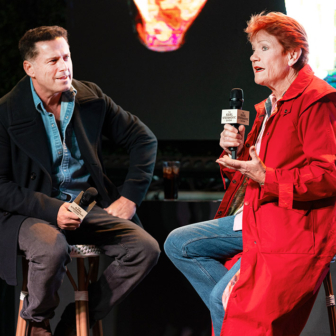
Could One Nation, during this parliamentary term, be in a polled position that translates into a likely majority all by itself? It’s possible; another five points at Labor’s expense, with all the others kept constant, would probably do it, assuming the Coalition continues to treat Pauline Hanson’s party favourably on their how-to-vote cards.
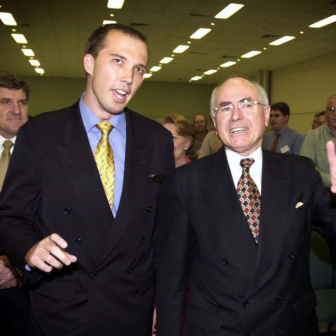
Late last century, prime minister John Howard was dragged kicking and screaming to “preferencing” Labor ahead of One Nation across the country, but that was a different time, a different electorate landscape — and a different Liberal Party. Preferencing Labor today would cause serious anger in the party membership and push more of them into the arms of the insurgent.
South Australia’s vote in March, the country’s first general election since the One Nation surge, showed us a few things. One was the durability of the party’s polled support all the way through to — and then on — election day. It happened in a particular context: a popular Labor premier and government widely viewed as certain to win (which it did very handsomely). This might have freed some people up to use their vote to send a message to the established parties, particularly the Liberals.
And it was a state — not federal — election, which probably means less at stake than a federal vote. Running a country is about the big items, particularly pulling and pushing those economic levers. Yes, many, perhaps most, people believe business as usual is no longer working, but when push comes to shove we know voters can be scared of changes that might affect their economic security. And Hanson has now discussed moving to the House of Representatives with a view to taking those levers. The other information South Australia provided was how seat-by-seat distributions of preferences play out with a large One Nation vote.
At the 2025 federal contest, when it received just 6.4 per cent nationally, One Nation picked up a quite strong flow of preferences from the Coalition. The Coalition dropped out of the three-candidate-preferred count against the ALP and One Nation in just one federal electorate, Hunter in New South Wales. When its primary vote (plus the preferences it had picked up from minor parties and independents) was distributed according to voters’ instructions between Labor and One Nation, it flowed a whoppingly one-sided 80.1 per cent to One Nation.
A year later in South Australia, the flows were noticeably weaker. Across the eleven electoral divisions in which the contest came down to Labor versus One Nation, the Coalition’s distributed preferences in the final round of counting favoured the latter by a much more modest 66.6 per cent.
More evidence came from electorates where Labor’s accumulated vote was distributed to the Coalition and One Nation. In the one 2025 federal where that happened, those votes went 58.9 per cent to the Coalition and 41.1 to One Nation. In South Australia in March, the percentages in the two such contests were favoured the Coalition much more, 71.5 to 21.5 per cent. This makes intuitive sense: if most “right-wing” supporters have shifted their first preference to One Nation, the rest will generally be relatively unenthused by the party.
These numbers matter when we’re trying to make sense of national polls — and even more so when we look at seat-by-seat ones such as Redbridge/Accent’s most recent MRP, a much larger, slightly earlier survey that still has Labor leading the primary vote. Pollsters and others must make assumptions when they simulate full seat-by-seat counts, eliminating parties one by one and distributing their preferences.
Redbridge/Accent’s estimates from that poll put Labor on 76, One Nation on 53 and the Coalition on 12. My estimates, mostly relying on South Australia’s flows, are quite different: 86, 43 and 12 seats respectively. For what they’re worth, that is. With lots of caveats. And with two years to go until the election. (Estimating preference flows to and from independents is the hardest part of the exercise.)
Victoria’s election in November will provide another big information dump, and will probably be more relevant to the federal sphere, given the absence of a popular Labor incumbent.
For the government in Canberra, two years is a long time, particularly from a budget as detested as this. The key date is 1 July 2027, when most changes come into operation and the fear of them starts to subside. But even before the budget, One Nation didn’t look like it was going away. •
This article was updated on 4 June 2026 to include subsequent poll results and a clarification of how One Nation was “ahead” in the Financial Review poll.