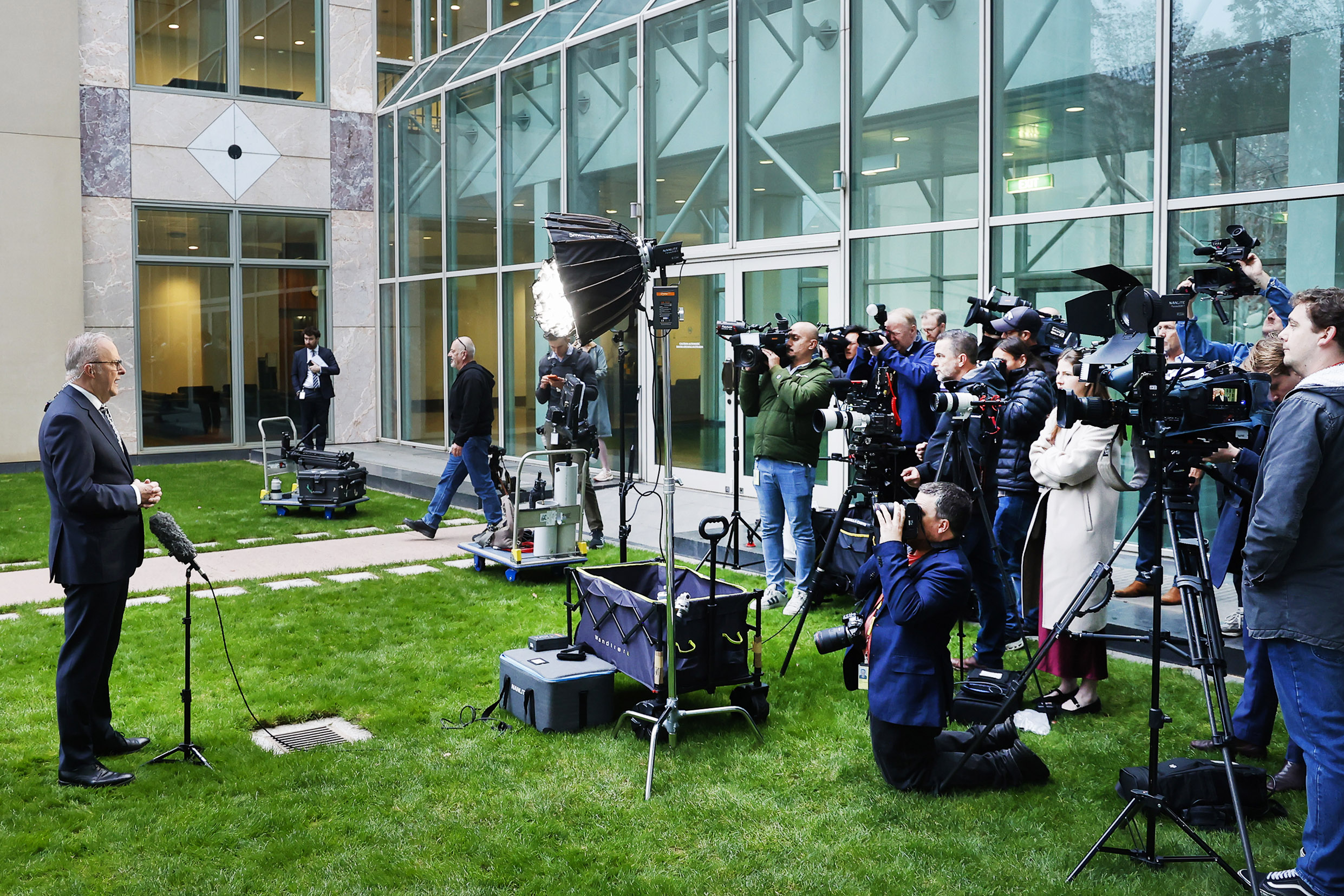
The relentless rise of One Nation is posing major problems not just for the Coalition but also for Labor. One Nation’s primary vote has surpassed Labor’s in a succession of polls, and Anthony Albanese’s rating as prime minister has fallen. Nor has Labor’s recent budget been received well.
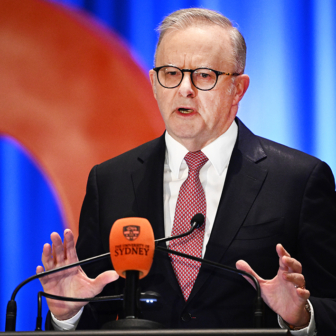
An exchange on Sky News last week summed up the mood, and the government’s response. Journalist Andrew Clennell asked Albanese whether Labor’s broken election promises on negative gearing and capital gains tax had contributed to One Nation’s rise. “There’s never been less trust in the major political parties,” said Clennell, “and One Nation support is rising. Is it really ideal to be breaking promises like this? Because that looks like something that could fuel the rise of —”
Albanese broke in. “I’ll tell you what’s not ideal,” he said. “It’s to see the rise of populism… [I]f people think the economy isn’t working for them and they’re working their guts out and they’re not getting opportunity, I tell you what, they will turn to more simplistic grievance-based politics. And that is the context in which my government is saying, ‘No, no, we’re going to deliver real change for the better. This is what we’re doing. This is why we’re doing it.’ Because it is real, the frustration that people have out there.”
The government argues its budget tax changes will help young first-home buyers and stop the tax system from favouring those with investment income over those whose earnings come from wage labour. But that doesn’t answer the question of whether such measures will be effective in countering populism or whether a broken election promise has backfired at a time of rising distrust in government and the major parties. One Nation obviously thinks the latter, and has launched a major funding campaign using the slogan “Fire the Liar.”
It was not just One Nation’s rising poll numbers that should concern the federal government. Labor had a major wake-up call at the South Australian election back in March. As political scientist Luke Mansillo pointed out, SA Labor’s massive victory came with warning signs. He detected “enough places that Labor has suffered losses to One Nation for the federal government to worry about. Peter Dutton’s strategy of outer urban and regional seat targeting is coming off for One Nation, who can peel off voters the Liberal Party could not.”
Mansillo was referring to the Coalition’s populist strategy at the 2025 election, when Liberal leader Peter Dutton depicted himself as more in touch with ordinary working-class voters than Labor, which he accused of pandering to racial and ethnic minorities and woke elites.
Albanese depicted his government’s 2025 victory as a decisive vote against Dutton’s politics of division: as a vote for a socially inclusive national unity based on “fairness, aspiration and opportunity for all.” The implication was that right-wing populism doesn’t work in twenty-first century Australia.
But various commentators, including me, questioned Albanese’s analysis. He was telling part of the story, but many additional factors contributed to the Liberals’ massive election loss, from an unpopular leader to campaign own-goals and even the impact of Donald Trump.
Far from rejecting Dutton’s strategies, the Coalition is doubling down on issues like immigration, while leaving open the possibility of preference deals and a closer relationship with One Nation. It’s true that Angus Taylor has (for the moment at least) ruled out the suggestion of his “close confidant and numbers man,” South Australian MP Tony Pasin, that the Liberals should make a deal with One Nation to carve out the seats each party will contest so as not to compete with each other. Pauline Hanson has made clear One Nation will be targeting outer-suburban seats currently held by Labor.
Meanwhile, the more equal, diverse and socially inclusive society Albanese espouses can still be depicted as a woke-elite project by his opponents. It is an old Labor problem.
This is not the first time Albanese appears to have underestimated the influence and political effectiveness of right-wing populism. He also did so during the (failed) Voice referendum campaign in 2023.
Albanese’s attitude seems to go back to a view of Australian politics he held early in his term as prime minister. He apparently believed he would be managing a socially inclusive, idealistic, collaborative and progressive new politics that would favour Labor and groups such as the teal independents. He returned to that vision of Australian politics in his 2025 election victory speech.
One Nation’s rise since then should have made it clear that, while politics is changing and the old two-party system is under threat, the old politics of culture wars and right-wing populism is alive and well. Albanese is now more aware of the danger — how could he not be given recent opinion poll results? — but he seems to see the difference between his earlier depiction of the state of Australian politics and the unexpected rise of One Nation as primarily a reflection of changed economic circumstances.
In a time of global economic uncertainty with rising inflation, a major cost of living crisis and a housing crisis, a significant number of voters will feel disenchanted with traditional political parties and turn to populist alternatives. Many One Nation voters may also genuinely believe that reducing immigration numbers will help fix Australia’s housing and infrastructure crisis yet have no desire to see the reduction take racially or religiously discriminatory forms. The breadth of One Nation’s appeal is reflected by the newly elected South Australian MP who spoke lovingly of his Indonesian Muslim same-sex partner
But One Nation’s rhetoric can also appeal to those who do support discriminatory policies, to the “dark angels in our nation” famously referred to by former Labor leader Kim Beazley when he lost the 2001 “Tampa election” to John Howard. Right-wing populism can fuel the resentment of various social groups who feel their previous racial, religious, gender or sexuality privilege is under threat.
Some Labor figures emphasise the economic roots of discriminatory attitudes, and former treasurer and party president Wayne Swan has blamed rising economic inequality for the rise of populism internationally. But we should remember that Kim Beazley tried to counter Howard’s populist culture wars and mobilisation of national security issues by focusing on the largely economic “kitchen table” concerns of ordinary Australians. Furthermore, the White Australia policy and blatant discrimination against Indigenous Australians flourished during the economically privileged postwar boom of the 1950s and 1960s.
Admittedly, Labor has had limited success in selling all it has done to tackle cost-of-living issues, including tax breaks, wage increases, increased government subsidies for healthcare and childcare. Although its efforts have also been undermined by rising inflation, fuel costs and a housing crisis, this failure doesn’t adequately explain Hanson’s resonance with substantial sections of the Australian population.
How else do we explain the electoral success of a women who flies around the country in a plane given to her by Australia’s richest woman, Gina Rinehart, and who also accompanied Rinehart to party at Mar-A-Lago with the US president, whose war in the Middle East has contributed to Australians’ economic hardship?
Surely it is time for Albanese to reconsider his positive take on the new politics In Australia. We live in a time when the old politics of culture wars and division are very much still with us. As social democratic parties around the world have found, there are no easy ways of countering right-wing populism. But a first step is to correctly analyse populism’s nature and causes, and economic distress is only part of the explanation.
If it is to succeed in winning back mainstream voters, Labor also needs a better strategy for countering culture wars, including One Nation’s clever use of social media platforms. It also needs to be better at countering the populist framing of issues, and not just immigration. For example, it needs to make a stronger case that its broad equality agenda on issues from race to gender is not “woke,” “elite” or anti-worker but actively supports disadvantaged sections of Australia’s diverse working class. Above all, Labor needs to become better at anticipating the populist reaction to its actions and planning accordingly. •