If the aim of the federal Liberal Party was to seal the breach that was allowing surveyed support to pour to One Nation, it would have installed Andrew Hastie as leader. His very conservative, anti-establishment, dare we say Trumpian positions, along with some innate qualities, would have been just the ticket. The former SAS captain’s star power might also have generated wider excitement, contrasting with a dreary, rhetorically limited prime minister, and seriously narrowed the two-party-preferred gap.
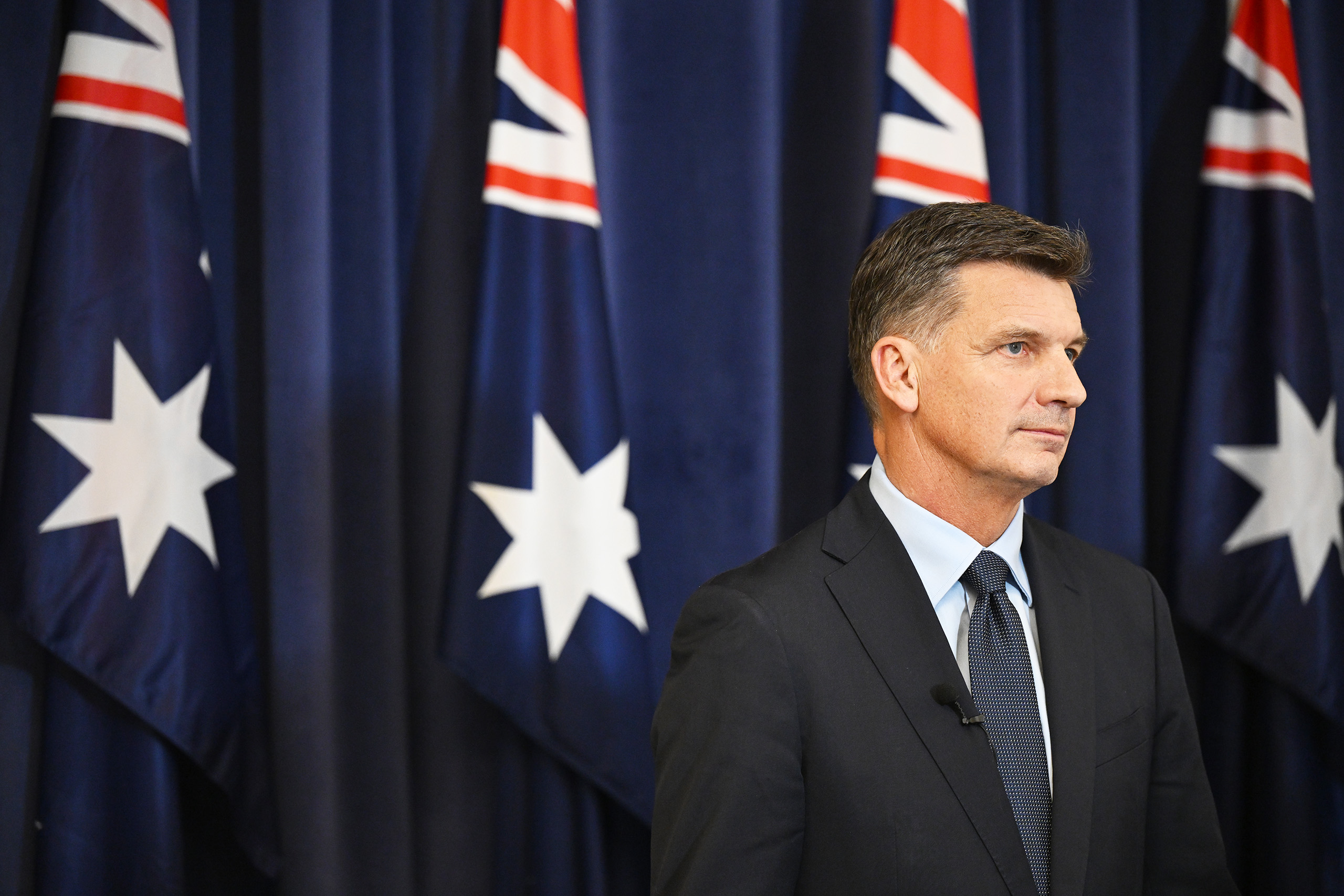
But his policies and rhetoric on immigration, climate change and government intervention in the economy would also have created problems on the party’s moderate flank. And, in the end, with the electorate: namely because, as the 2025 federal election suggested, most Australians really don’t like anything that reeks of Donald Trump and chaos. The fire-breathing Hastie, with his ostentatious religiosity, would have made Peter Dutton look like a mild-mannered accountant. So the party has gone for Angus Taylor — Rhodes scholar, scion of landed gentry, but also very right wing — to replace Sussan Ley.
Ley’s tenure began ten days after the 3 May 2025 landslide loss, and from the beginning she was under pressure. The defeated right-wing forces supporting Taylor didn’t even bother mouthing standard niceties about how, oh certainly, she would be leading them in 2028. Rather, they told journalists off the record that she’d get a fair run for a few months, and they probably wouldn’t bring her down until, well, the following year (which is where we are).
From the outset she faced a balancing act, trying to appeal to metropolitan Australians who had run so far and hard from Dutton while not upsetting the Liberal partyroom, which on average is much more conservative than the general electorate. And there’s also the Coalition partner, more right-wing again.
The pressure on Ley has been exacerbated over the past six to eight months by a gradual but dramatic surge in One Nation support, which by the time of the spill hadn’t peaked, and was almost certainly mostly at the expense of the centre-right parties. One Nation now routinely comes second in polled primary-voting intentions, and in the recent YouGov survey was just two points behind Labor.
All this means Taylor is a better fit than Ley for federal Coalition MPs, which means he’s a worse one for Australian voters. Still, elections are not simply about occupying the middle ground. History (Tony Abbott in 2013 is a fine example, Anthony Albanese in 2022 a less dramatic one) shows voters will tolerate many flaws if they’re determined to boot out a government they’ve come to revile.
Ever since entering parliament in 2013 Taylor has cut a slightly comical figure prone to fumbles. Former prime minister Malcolm Turnbull’s description of him on ABC TV on Friday as “the best-credentialled idiot you’ll ever meet” might be unfair, but it’s hard to see him lasting until the 2028 election.
Senator Jane Hume, who after a dreadful election campaign was dropped by Ley from the frontbench, is now deputy, the first senator of either major party to occupy that position since Western Australia’s Fred Chaney in 1989–90. Hume has an opportunity to shine as the cheerfully stoic understudy who cleans up after the boss’s mess.
What has driven One Nation’s rise? The easy answer is immigration, but is it that simple, given the government’s huge win less than a year ago?
The unravelling of centre-right support is this and last year’s story, but the longer-standing context is the decline of the two-party system, and while the two-party-preferred seesaw currently favours Labor, that will change at some point. One day people will tire of the Albanese government, it will lose its majority, and something else will take its place. In the meantime, the prospect of a Coalition–One Nation government must mean an extra point or two for Labor from the electoral middle.
At his first press conference Taylor prioritised immigration and the cost of living. Compared to Hastie he is the cautious choice, but as an establishment figure is not likely to satisfy voters who crave drastic rightward change.
Ley has announced she’s leaving parliament. The by-election in her electorate of Farrer, and particularly One Nation’s performance, will fun to watch, but it won’t really tell us much about an actual election. By-elections rarely do that, because the fates of governments are not at stake.
Much more useful will be the South Australian election next month. It won’t be a pointer to the next federal outcome (state contests never are) but it will give some clues about how well pollsters are measuring One Nation support, both in terms of the minor party’s polled trajectory between now and then, and the final pre-election polls versus actual results.
But first, there are federal polls to come. Will Angus as leader stop the One Nation rot? He just might, somewhat. But not as much as Captain Hastie would have. •